Predator-proof livestock shelters – A step towards human-wildlife coexistence
“Mone, vaḷare santhoṣam, ith vaḷiyoru upakaramayi” was the common consensus after several months of hard work. In Malayalam, the local language, it translates to “Son, I am so happy. It has been a great help”. It was an expression of relief, a lifting up of a burden. We were among the locals of Panavally, a village that has been grappling with increasing instances of human-wildlife conflict, resulting from the loss of livestock, one of the main sources of income for the locals. For the past year, the Wildlife Trust of India (WTI) has been working towards the engineering and installation of predator-proof shelters, and today those efforts are beginning to show results.
“People are now able to sleep comfortably at night, averaging seven hours of proper rest. They no longer see tigers and leopards as a threat to their livestock and feel much safer. Locals are confident enough to consider increasing their cattle numbers. Livestock owners and their families now have hope to be free from the mental and financial strain they once faced”, exclaims Shajan M.A., a sociologist with WTI who has been working closely with the community to understand their challenges and needs.
In Wayanad, where the project is based, livestock depredation by big cats, such as tigers and leopards, is a major cause of human-wildlife conflict, contributing to a negative attitude and sometimes retaliation towards wildlife in human-dominated areas. This ongoing issue has fostered a deep-seated sense of fear within the villagers, which in turn has shaped their negative perceptions towards wildlife conservation efforts. As a pilot initiative, WTI’s team established five predator-proof shelters in the region. The shelters were designed to protect livestock from attacks by carnivores, enhancing the safety and livelihoods of local farmers.

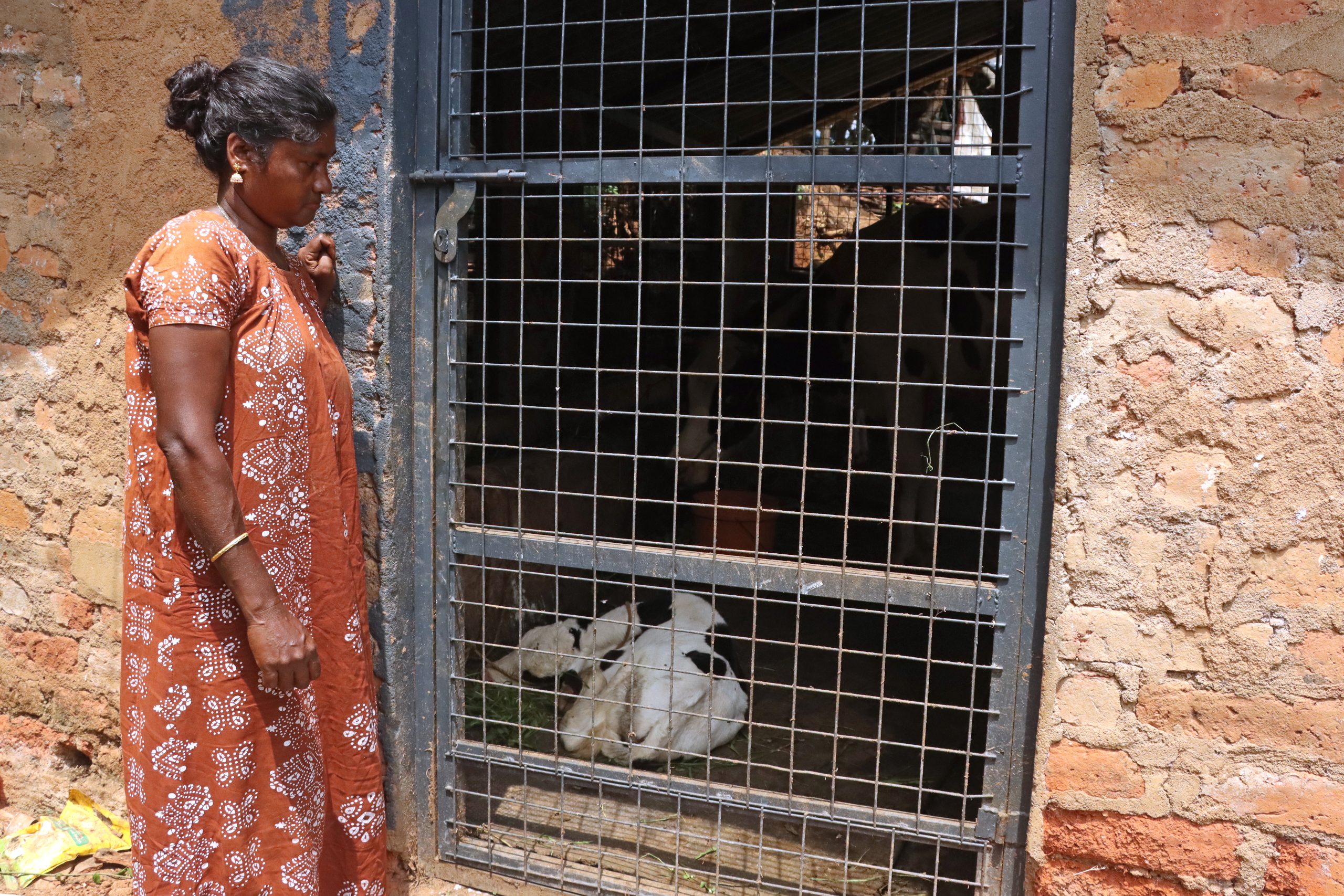
Predator-proof livestock shelter of Malla in Panavally, Thirunelly Village | Photograph by Sujnan M.K./WTI
Predator-proof livestock shelters in Wayanad
Forty households across Wayanad were selected for the study, of which twenty had previously experienced livestock depredation by big cats in or near their sheds in 2023-2024. The remaining twenty were chosen based on their proximity to locations of prior attacks. Data from these households was collected through intensive surveys over months by the team.
When designing these shelters, we took into account the financial constraints and the feasibility of replicating them in other areas. The goal was also to motivate other livestock owners to build similar shelters to protect their animals, if the effort was successful. Specifically designed to prevent predator access and ensure the safety of the livestock, the shelters were designed to provide maximum security while being cost-effective. Galvanised iron (GI) wire mesh fencing has been installed around the shelters to prevent predators from entering, while reinforced iron poles at the corners provide additional structural stability. The shelters are also equipped with secure entry and feeding doors, designed to allow farmers to care for their livestock without exposing them to potential risks from predators.
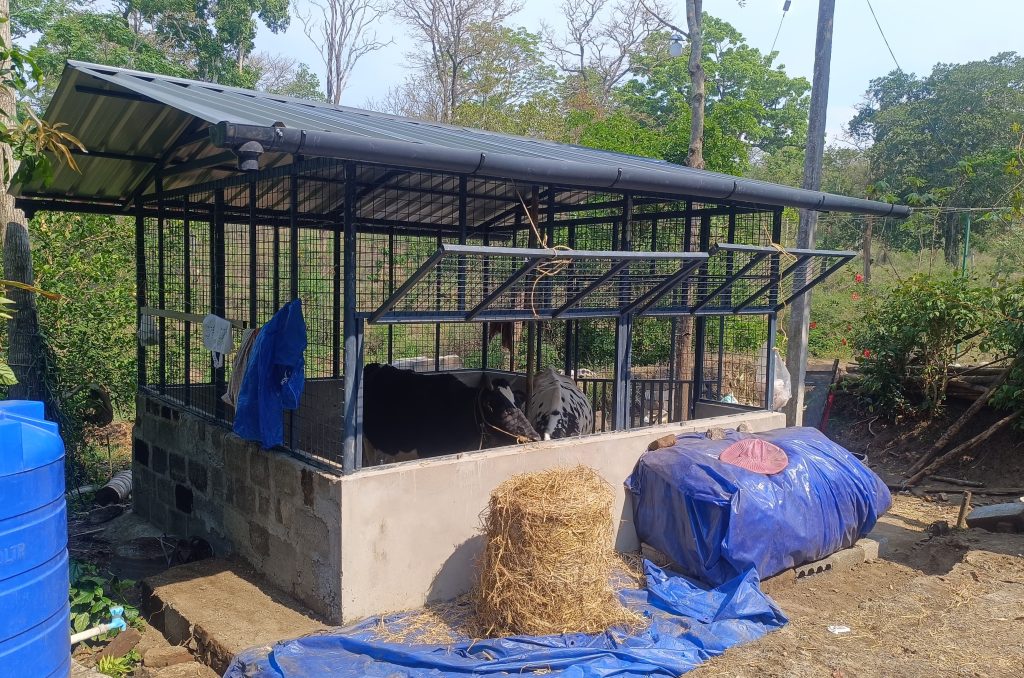
Renewed livestock shelter in Pulpally Village, Wayanad | Photograph by Anurag VM/WTI
The team had reached out to varied experts and took into consideration the recommendations of the locals when ideating the design. “Predator-proof livestock shelter is a tried and tested tool to prevent human-carnivore conflict. However, the exact structure and design can vary considerably depending on local context. In Wayanad, we didn’t intend for the complete construction of a shelter, but rather for strengthening an existing shed to ensure that no predator could enter. However, for shelters that were in poor condition, renovating the primary structure became necessary. In the latter case, the design included all the essential elements required for a cattle shelter, and the budget varied according to the condition of the existing structure and the number of cattle,” explained Dr. Abhishek Ghoshal, the Head for WTI’s Human-Wildlife Conflict Mitigation Division.
Who was it for?
Since its establishment, Malla from Thirunelly village has purchased two more cows. Inspired by her experience, neighbours and other cattle owners in the area are also eager to receive similar support. Malla now has a calf in the shed, and although this period typically brings heightened concern about tiger attacks, the construction of the shelter has instilled a sense of calm. “Thanks to WTI’s intervention, the community feels much more secure and stress-free”, she expressed.
Similarly, Kaveri from Panavally village, Thirunelly, feels relieved that her cattle now have a safe shelter. Since the installation, she wakes up joyfully every morning to milk her cows, free from the constant worry of an attack, as she lives right next to the forest boundary and has regularly seen tigers and leopards nearby. Just three weeks after the construction, she bought three more cows. She no longer fears big cats and can now sleep peacefully—unlike before, when her family had to stay up all night, keeping watch around a bonfire. Kaveri is satisfied with the shelter’s design, especially the feeding doors, which she finds much more convenient.

Cattle inside the newly constructed predator-proof shed in Pulpally Village | Photograph by Anurag VM/WTI
The predator-proof livestock shelters were prioritised for areas that were highly prone to big cat depredation on livestock and households that were financially constrained, ensuring that those most at risk benefited from the project. The selection also accounted for households that were located in Big Cat Conflict Hotspot Villages (based on the Forest Department’s ex-gratia data; 2017-2022). The beneficiaries also included households with Below Poverty Line (BPL) cards, as well as those whose primary livelihood was cattle rearing.
For Sunny of Pulpally village, the predator-proof shelter represents a sense of freedom. Previously, he couldn’t leave his home, constantly living in fear that his cattle might be attacked by tigers. His house, like Kaveri’s, is located right next to the forest, and he often hears tigers and other wildlife nearby. Even the slightest noise would wake his family, sometimes three to four times a night. He has three dogs, and every time they barked, he would rush outside. But now, with the shelter in place, Sunny no longer fears tigers. He sleeps peacefully, and so do his dogs.
The way forward
In the initial year of assistance, three households from Thirunelly and two from Pulpally village were selected from the forty surveyed, due to their proximity to the Nagarahole Tiger Reserve and Bandipur National Park, respectively. The beneficiaries also contributed a part of the installation costs, including human resources for transportation of construction materials, vehicle expenses and logistical support. Overall, each household agreed to cover between 2% and 10% of the total costs, either through human resources or financial contribution. An agreement that was drawn out also indicated that the household was responsible for maintaining the shelter for at least the first five years. In the coming months, WTI will be extending and upscaling the initiative to more households, while continuously monitoring the effectiveness of the current shelters in place.
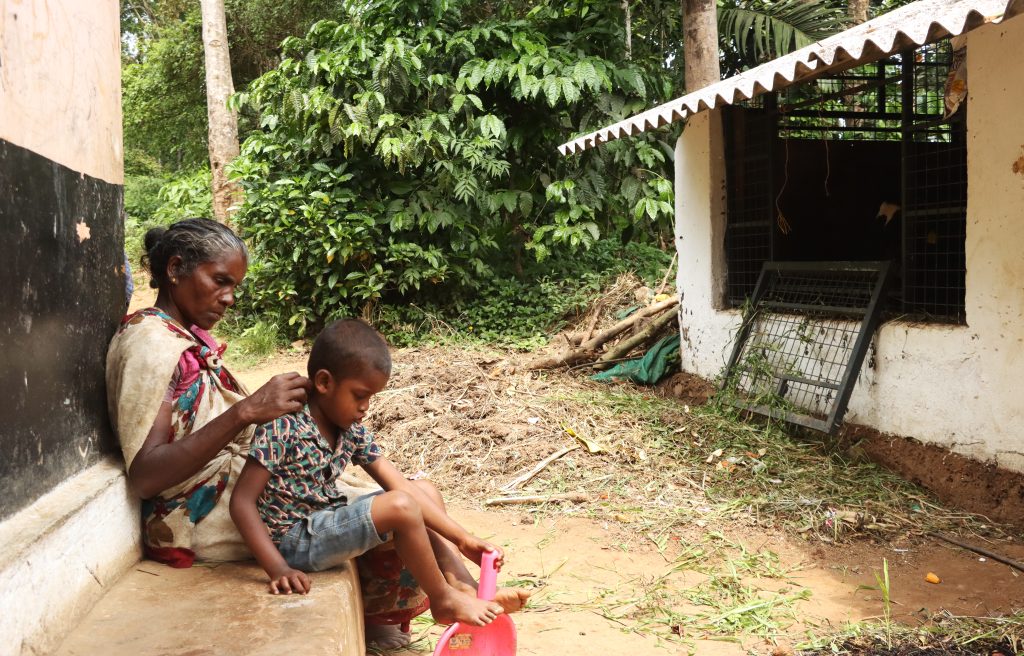
Predator-proof livestock shelter in Thirunelly Village | Photograph by Sujnan M.K./WTI
The predator-proof livestock shelters have not only protected livestock but also restored peace of mind, encouraged economic growth through cattle expansion, and improved the overall well-being of families. By eliminating the fear of livestock loss, these predator-proof shelters address the root cause of human-wildlife conflict in this area. As communities begin to feel safer and experience the tangible benefits of coexistence, their perception of big cats is starting to shift, from viewing them as threats to recognising them as vital parts of the ecosystem. This transformation is fostering a more compassionate and sustainable relationship between people and wildlife, replacing fear and resentment with respect and tolerance for tigers and leopards.
While humans and wildlife have long coexisted, habitat loss and increasing anthropogenic pressure on forests have led to shrinking spaces for wildlife. Conflict arises as a result of increased interactions. These predator-proof shelters are one of the several ways to mitigate the negative interactions. In Wayanad and several such landscapes across the country, WTI has been working closely with local communities and government authorities to restore social capacity for wildlife tolerance and explore solutions to reduce losses for both humans and wildlife.
by Sujnan M.K., Biologist, Wayanad Conflict Mitigation Project