WTI Facilitates workshop on Compensatory Measures in Wildlife Crime Cases in Cuttack, Odisha
Cuttack, 20th December 2025: A one-day workshop on compensatory measures in wildlife crime cases was organised on 20th December 2025, by the Wildlife Trust of India (WTI) in collaboration with the Odisha Judicial Academy, Cuttack, with the support of Lancaster University, and IWT Challenge Fund.
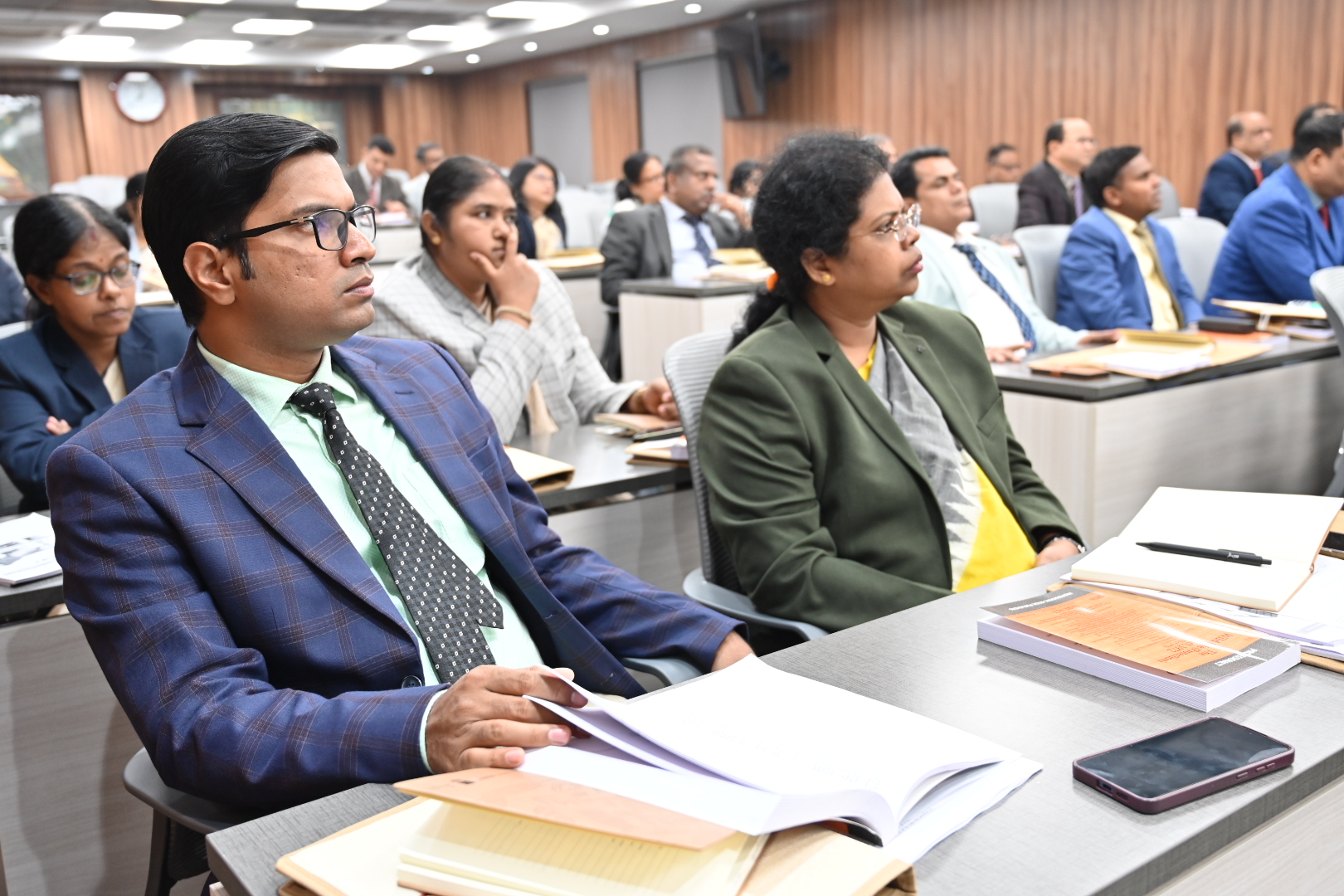
32 magistrates took part in the workshop, from across the state, which was inaugurated by the Hon’ble Shri Bidyut Kumar Mishra, Director of the Odisha Judicial Academy, Cuttack.
Technical sessions on the subject were led by Mr Praveen Srivastava, Advocate, Bar Council of Maharastra and Goa, Mr. Darak Ullah, District and Sessions Judge (Retd.), Assam Judicial Service, Dr. Jacob Phelps, Senior Lecturer, Lancaster University, UK, Mr. Lovish Sharma, Advocate, High Court of Delhi, Mr. Jose Louies, CEO, Wildlife Trust of India and Mr. Jacob Phelps, Senior Lecturer, Lancaster University, UK.

Judiciary Workshop in Odisha Judicial Academy, Cuttack | Photograph by Madhumay Mallik/WTI
The workshop also covered the Wild Life (Protection) Act, 1972, along with its recent amendments, analysis of the existing laws relating to victim compensation in wildlife crime cases etc. The one-day session witnessed technical discussions and case studies on the overview of wildlife crimes, Indian wildlife laws, compensatory measures in environmental crimes, the legal approach of foreign jurisdictions in wildlife crime cases and critical analysis of the Indian laws pertaining to compensation awards for the loss/injury to wild animals and its habitat on account of wildlife and forest crimes.
Wildlife offences pose significant and cascading threats to biodiversity, ecosystems, and human well-being, yet they often go unnoticed or are underestimated. There’s a growing need for stronger actions to hold offenders accountable, beyond penal actions. As wildlife crimes continue to harm wildlife and its habitat, legal experts and conservationists are urging for a more pragmatic judicial approach to protect and conserve wildlife for future generations.
To address this, experts are calling for a shift in how we approach wildlife offences. Instead of just focusing on punishment, there is a need for legal measures that require offenders to monetarily compensate for the harm/injury caused to wildlife and its habitats by their criminal acts. This will ensure that offenders are held accountable not only through penalties but also by monetarily contributing to the restoration of the wildlife and protected forest covers.

Jose Louies addressing in the Judiciary Workshop in Odisha Judicial Academy, Cuttack | Photograph by Madhumay Mallik/WTI
Existing criminal laws already have compensation provisions to attach liabilities to offenders, compelling them to monetarily pay for the ecological and environmental damage caused by their criminal actions. By adopting this approach, the judicial system can better balance punitive measures with restorative justice, ensuring a fairer outcome for both wildlife and society as a whole. The sessions further explained the finer nuances of the Wildlife (Protection) Act, including key definitions and their legal interpretation, and illustrated these aspects through real-life wildlife crime cases, thereby providing practical insights into the application of law in conservation-related prosecutions.
Hon’ble Shri Bidyut Kumar Mishra from Odisha Judicial Academy highlighted the crucial role of judiciary in wildlife conservation and ensuring protection for our country’s natural heritage. Shri Praveen Kumar Srivastava, IFS (Retd.), emphasised that compensation in wildlife related cases can never restore a lost life; it can only attempt to create balance while we collectively work towards the larger goal of saving wildlife and human lives together.

Participants in the Judiciary Workshop in Odisha Judicial Academy, Cuttack | Photograph by Madhumay Mallik/WTI
Mr. Lovish Sharma, Advocate, High Court of Delhi, highlighted the provisions under criminal procedural law that empower judicial officers to award monetary compensation to victims in criminal cases culminating in conviction. He elaborated on the evolving judicial approach to compensation by referring to significant judgments of various High Courts and trial courts across India, with particular emphasis on the grant of monetary compensation to the Forest Department in wildlife crime cases. He also added that “The Wildlife (Protection) Act treats wildlife not as property to be used, but as a legally protected trust of the State—where even momentary possession, movement, or negligence can constitute an offence”.
Mr. Jose Louies, CEO, WTI thanked the Judicial Academy for hosting the event and the judges for their proactive involvement in the workshop while highlighting that “Wildlife crime in India is organised, transboundary, and deeply embedded in criminal syndicates—whether a tiger is celebrated on the pages of National Geographic (referring to the melanistic tiger from Similipal National Park) or lost to poaching ultimately depends on our collective responsibility to act decisively against these networks”.