Enhancing Wildlife Law Capacity of Judiciary and Enforcers in Bihar & Uttar Pradesh
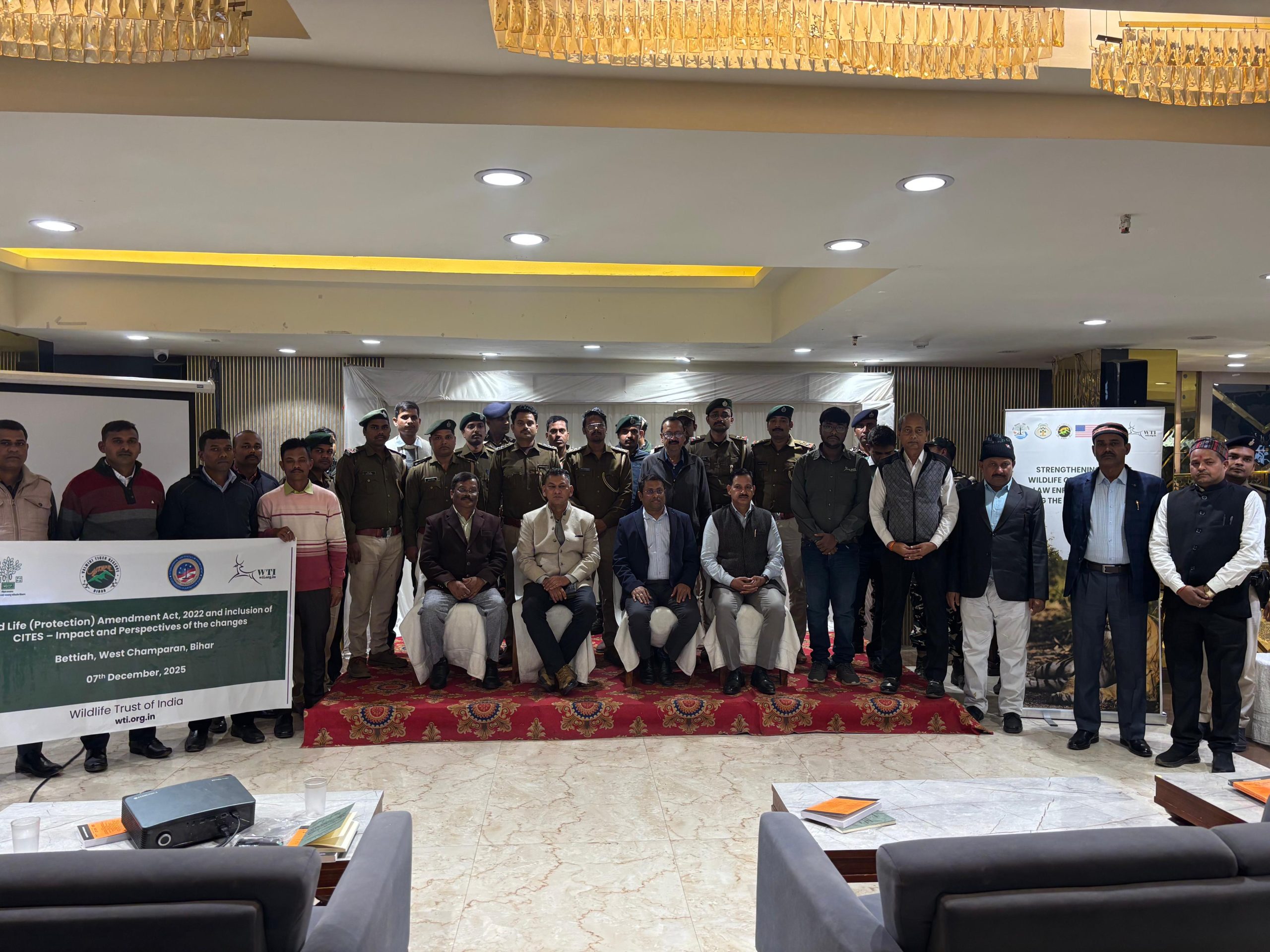
The Wildlife Trust of India (WTI), with the support of the Department of Environment, Forest and Climate Change, Government of Bihar, organised a judicial capacity-building workshop on 7 December 2025 at Bettiah, the headquarters of West Champaran district and the gateway to Valmiki Tiger Reserve, Bihar. On the same day, a similar workshop was held in Balrampur district, Uttar Pradesh, in collaboration with the Department of Environment, Forest and Climate Change, Government of Uttar Pradesh, to strengthen the legal and operational capacities of frontline enforcement and judicial officials.
These workshops were part of WTI’s ongoing efforts to enhance wildlife crime prevention and strengthen judicial processes, with a focus on improving conviction rates, reducing unnecessary bail in serious wildlife offences, and promoting restoration-based judicial outcomes, including compensation in wildlife crime cases. Both programmes were conducted under the project Strengthening India’s Wildlife Crime Prevention and Law Enforcement Measures along the Indo-Nepal Border, supported by a grant from the Bureau of International Narcotics and Law Enforcement Affairs (INL), United States Department of State.
In Bettiah, the workshop commenced with a session conducted by Mr. Pavel Ghosh, Senior Field Officer, Wildlife Crime Control Division, WTI, where he provided an overview of national and global wildlife crime trends, highlighting illegal trade in a wide range of species, from high-profile fauna to lesser-known species such as plum-headed parakeets, sea fans, tortoises, and products derived from mongoose hair. The discussion also explored cultural drivers of wildlife exploitation and the growing risks posed by cyber-enabled wildlife crime and illegal online pet trade in the post-COVID-19 period. Participants were trained on the role of CITES and the identification of commonly traded wildlife species and wildlife derivatives.
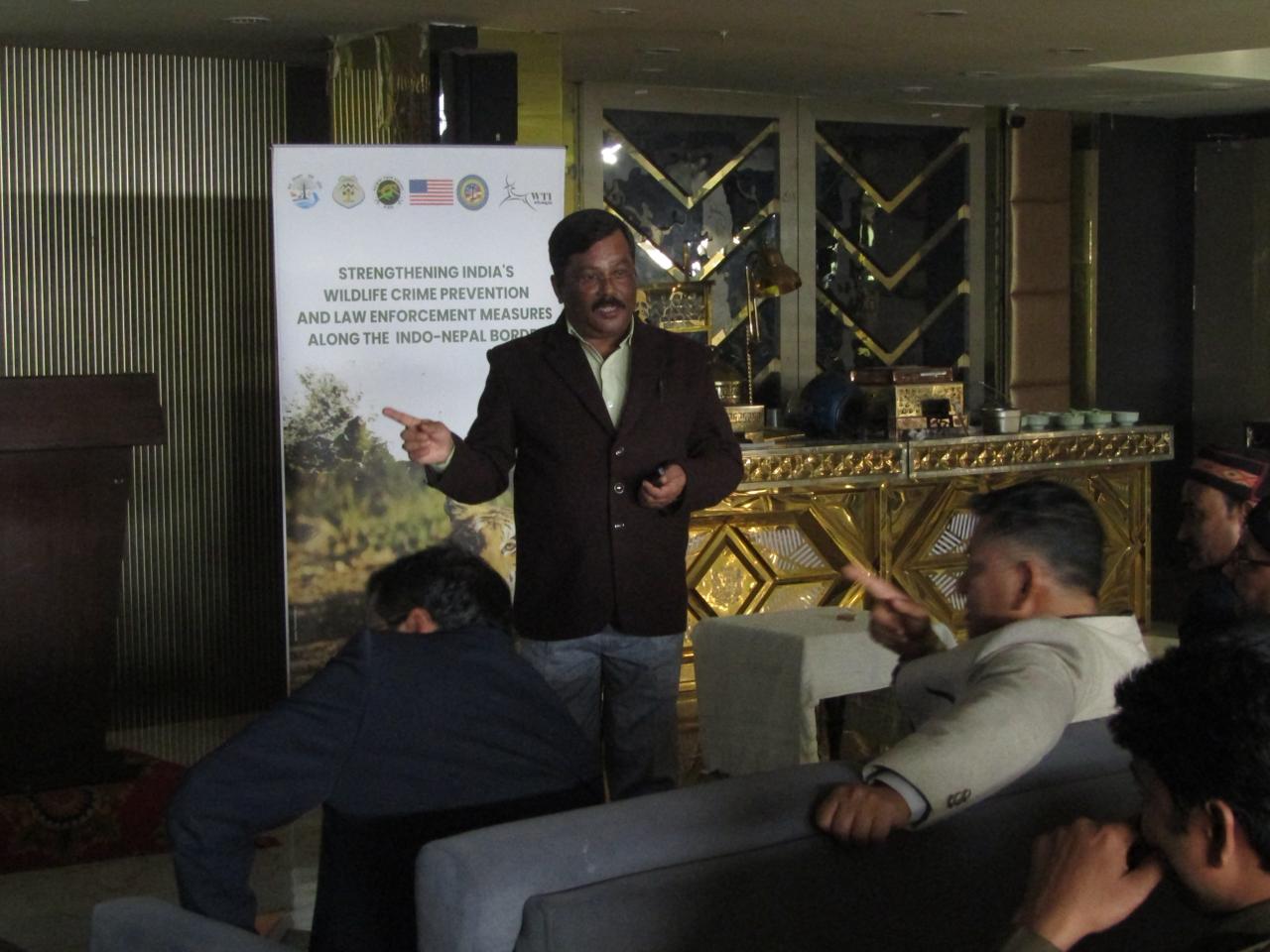
Mr. Yash Kumar Soni, addressing the participants at the judiciary workshop in Bettiah | Photograph by Sunil Kumar/FA VTR
Adv. Yash Kumar Soni led a detailed session on wildlife conservation law, emphasising how strong convictions act as a powerful conservation tool. He guided participants through the stages of wildlife crime, key provisions of the Wild Life (Protection) Amendment Act, 2022, and critical legal definitions. The session also highlighted practical aspects of case documentation, gaps in investigations, and the importance of maintaining robust case diaries, along with guidance on compensation procedures, particularly relevant to Valmiki Tiger Reserve.
The Bettiah workshop saw the participation of 35 officials, including personnel from the Forest Department, Sashastra Seema Bal (SSB), and members of the judiciary. Participants included the Divisional Forest Officer, Bettiah Forest Division; Range Forest Officers; Foresters; senior officers and personnel from the 44th, 65th, and 21st Battalions of SSB; and Government and Special Public Prosecutors (Forest) from Bettiah and Bagaha courts. The initiative was warmly welcomed by forest, judicial, and SSB officials.
Mr. Pankaj Kumar, BFS, Divisional Forest Officer, Bettiah Forest Division, appreciated WTI’s efforts and highlighted the programme’s relevance for strengthening conservation enforcement. Mr. Balwant Singh Negi, Commandant, 44th Battalion, SSB, reiterated the critical role of SSB in preventing wildlife crime along the Indo-Nepal border and stressed the importance of stronger inter-agency coordination in sensitive border landscapes.
In Balrampur, technical and legal sessions were delivered by Mr. Hareesha Shastri, Mr. Rakesh Kumar Shrivastav, and Mr. Sanjay Rai. Their sessions focused on important provisions of the Wild Life (Protection) Act, 1972 and its 2022 amendments, the importance of CITES, and recent changes in species schedules and statutory definitions. Each session was followed by interactive question-and-answer discussions that allowed participants to engage directly with the resource persons.
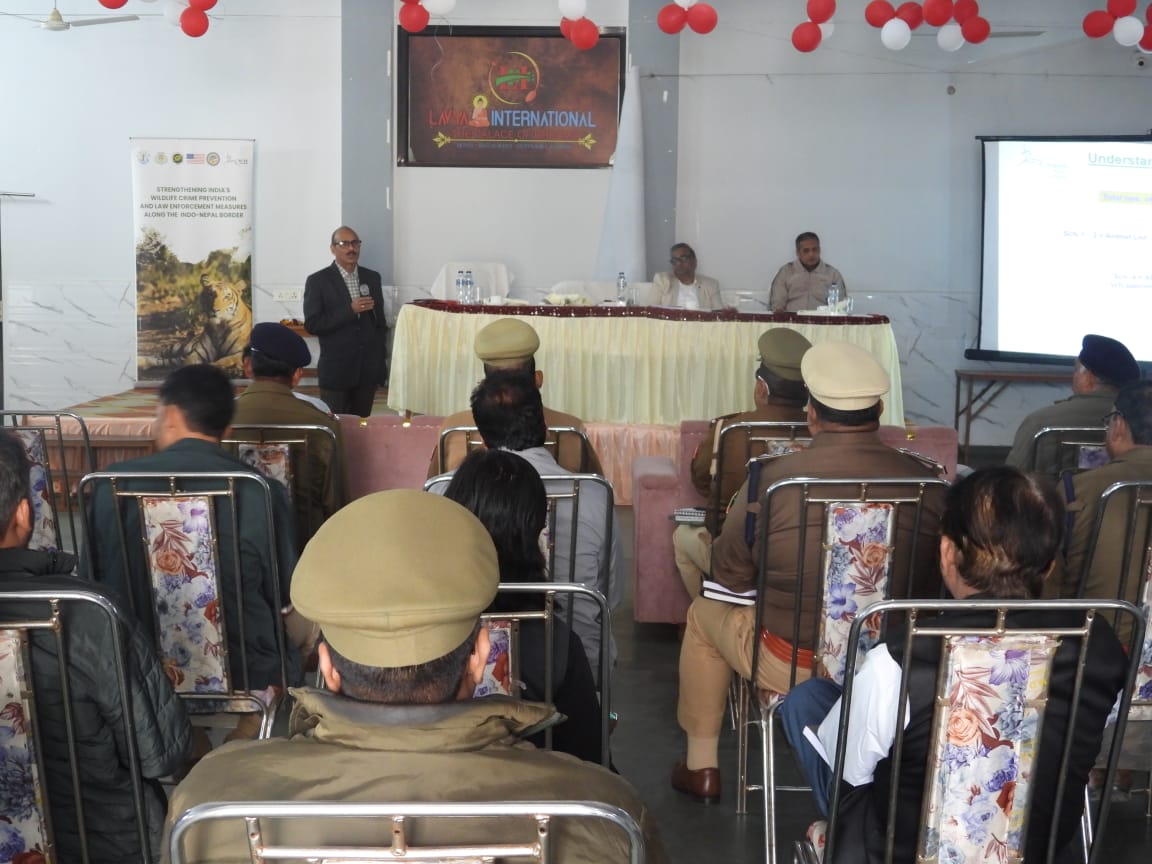
Mr. Rakesh Shrivastav conducting an insightful session on the 2022 Amendments to WPA 72 at the Judiciary Workshop in Balrampur.
| Photograph by Sarvesh Patel
The Balrampur programme concluded with a formal vote of thanks by Mr. Navroze Manekshaw, Senior Field Officer (SFO), followed by an open discussion session led by Mr. Sumit Premi, Additional District Judge (ADJ), and Mr. Rakesh Kumar Shrivastav. The discussions touched upon different types of cognisance, practical challenges faced by the police in handling wildlife crime accused, and operational difficulties faced by the Forest Department in implementing the Indian Forest Act, 1927.
The Balrampur workshop was equally well received, with 19 participants (18 men and 1 woman) including an Additional District Judge, senior and junior advocates, an Additional Prosecution Officer, police inspectors, a police constable, Range Forest Officers, and Foresters. The Additional District Judge appreciated the initiative and its practical utility for judicial and law enforcement functions.
Together, these workshops marked an important step towards strengthening institutional capacity and inter-agency coordination to combat wildlife crime along the Indo-Nepal border. By improving understanding of legal frameworks, international conventions such as CITES, and evidence-based prosecution among enforcement and judicial stakeholders, the programmes are expected to contribute to more effective investigations, stronger prosecutions, and conservation-oriented judicial outcomes. WTI reaffirmed its commitment to continue supporting state governments in building collaborative and robust mechanisms to protect India’s wildlife and biodiversity.