Project Info



Project Description
Amphibians are the most threatened group of vertebrates globally, with over 40% of known species in decline. India is home to more than 450 species of amphibians, of which 136 are listed as Threatened by the IUCN, and another 96 are Data Deficient. Despite this, focused efforts to conserve Indian amphibians are few and far between.
The Munnar landscape in the Western Ghats of Kerala is both a Key Biodiversity Area (KBA) and an Alliance for Zero Extinction site, meaning it is a critical region for conservation of unique and endangered species, including frogs. Out of the approximately 45 species known from this landscape, a number that keeps going up every year, 41 are endemic to the southern Western Ghats. This amphibian diversity is not limited to the Protected Areas of Munnar, but is spread across the vast matrix of forest fragments, plantations of tea, cardamom, and other crops.
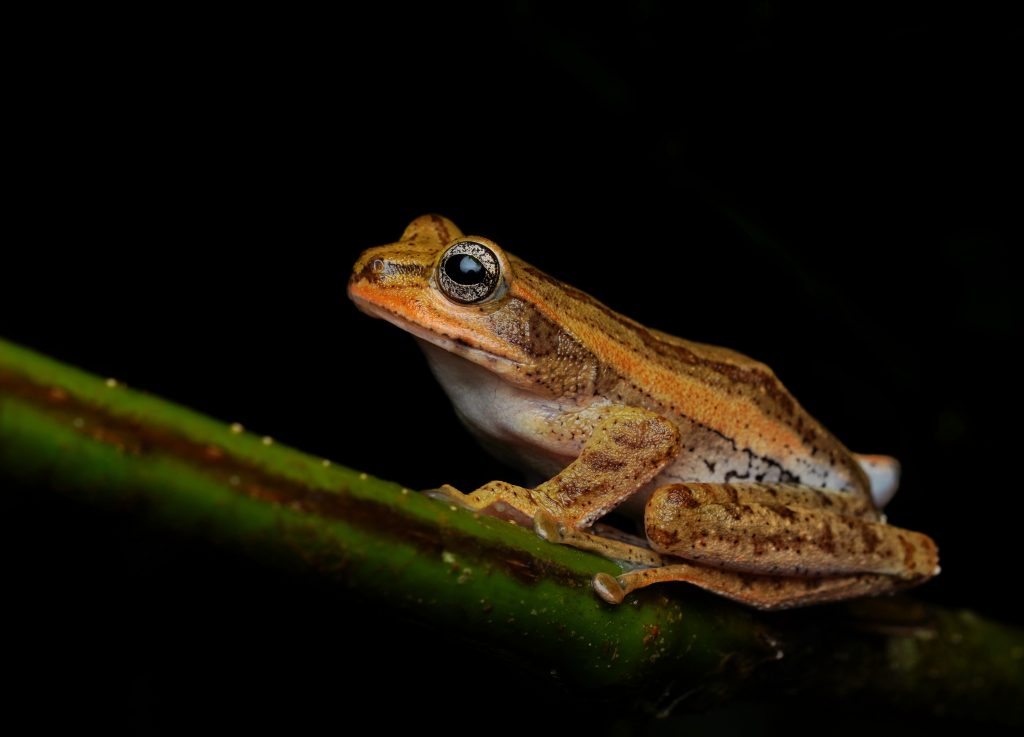
Kadalar swamp tree frog (Beddomixalus bijui) | Photograph by Abhijith Vijay/WTI
The urgency of conservation
Habitat loss is the leading cause of amphibian declines around the world, and Munnar is no exception. Prior to the establishment of plantations in the late 19th century, the landscape consisted of vast tracts of mid and high elevation wet evergreen forests, criss-crossed with streams, swamps, and grasslands. Today, outside of the Protected Areas (PAs), these original habitats survive as isolated fragments. Even these remnant habitats host an impressive biodiversity, but threats such as unregulated infrastructure development, road expansion, poor waste management, and invasive species continue to pressure local frog populations.
Worryingly, none of the endemic species from Munnar is currently listed under India’s Wildlife Protection Act, leaving them vulnerable, especially outside the PAs. Given that over 30% of India’s amphibians are threatened, urgent and focused conservation action is essential.
What do we do?
Under WTI’s ‘Big Idea’ of ‘Species Recovery’, the Amphibian Recovery Project was launched to protect and recover threatened amphibians in this landscape. There are currently 15 Endangered and 10 Vulnerable frog species in the Munnar landscape. The project aims to halt and reverse the decline of these species through targeted research, habitat protection and restoration, disease monitoring, stakeholder partnerships, training and awareness building.
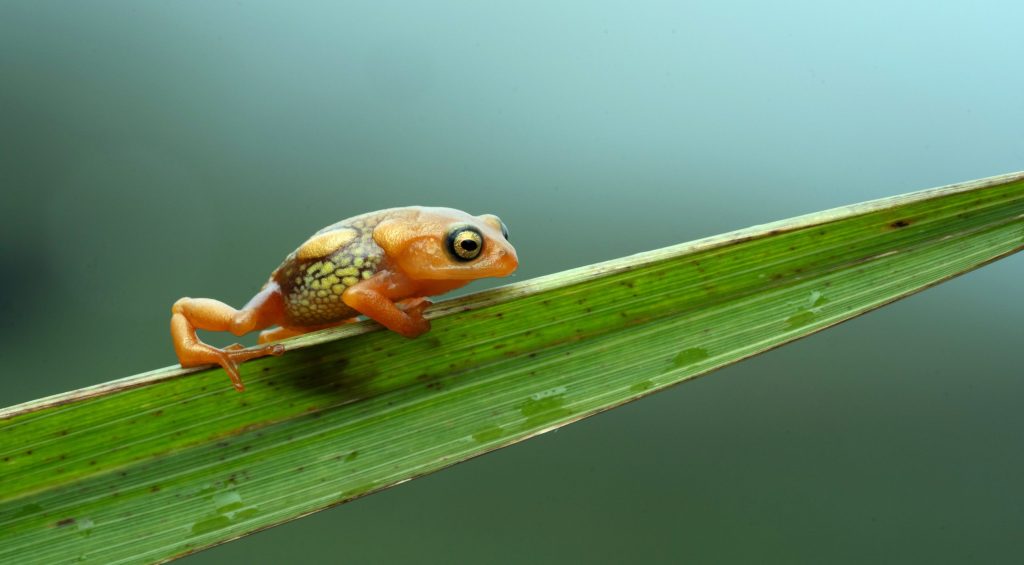
Resplendent Grass Frog (Raorchestes resplendens) in Munnar | Photograph by Sreenanth K/WTI
Keeping in mind the long-term goals of the project, we have partnered with key stakeholders in the Munnar region:
- Windermere Estates and Blackberry Hills Estate collaborate with us to protect and restore amphibian breeding habitats within their properties.
- A formal MoU with KDHP (Kanan Devan Hills Plantations Company Pvt. Ltd.), the largest private landholder in the region, has enabled amphibian conservation in their 16857 ha of land.
- We also have an MoU with the Anamudi Forest Development Agency – Munnar Wildlife Division, Kerala Forests and Wildlife Department, to extend our amphibian conservation work into the six PAs in Munnar.
Key species that we focus on:
| Scientific Name | Common Name | IUCN Red List Status |
| Beddomixalus bijui | Kadalar Swamp Tree Frog | Endangered B1ab(iii) |
| Raorchestes resplendens | Resplendent Grass Frog | Endangered B1ab(iii) |
| Nyctibatrachus deccanensis | Shola Night Frog | Endangered B1ab(iii) |
| Rhacophorus pseudomalabaricus | Anamalai Gliding Frog | Vulnerable B1ab(iii) |
| Nyctibatrachus poocha | Meowing Night Frog | Near Threatened |
Our work in the Munnar landscape falls into the following major categories:
Generating baseline data & long-term monitoring
Most threatened amphibians in India have very little population, distribution, and ecological data available, which is essential for effective assessments and conservation planning. Recognising this, we initiated baseline surveys and ecological studies on threatened amphibians in the Munnar landscape in 2023. Currently, we have surveyed all seven tea estates under KDHP in this landscape, and Windermere Estate’s cardamom plantation, collecting valuable information on species distributions, key habitats, and threats. We also identified and monitored several key breeding habitats for threatened species in these plantations. In collaboration with LACONES-CCMB, Hyderabad, we have also been monitoring for Batrachochytrium dendrobatidis (Bd) in amphibians, a deadly fungus that is responsible for amphibian extinctions in many parts of the world.
Threat mitigation, habitat improvements and restoration
We have identified several threats, such as roadkills, invasive species, and habitat degradation. As mitigation measures, we are currently experimenting with creating additional breeding habitats, removal of invasive species, and restoration of degraded breeding habitats such as swamps. We have implemented breeding habitat improvements/threat mitigation measures in three sites in the cardamom plantation landscape (Windermere estates & Blackberry Hills), and three within the KDHP plantation estates, with seven more sites identified for such interventions. Additionally, we are piloting frog-friendly cardamom plantation practices, with promising early results.
Capacity building and sensitisation of stakeholders
Through our MoU with AFDA, we have organised eight amphibian capacity strengthening events for the field staff of the protected areas of Munnar. Additionally, we have been organising Munnar Frog Assembly, a citizen science/capacity building event in Munnar since 2023. We have also established a long-term field station in Munnar to facilitate conservation work in the landscape. We also organise nature and amphibian education events for local school students.
To achieve long-term and sustainable action towards conserving the amphibians in India, there is a need for better-trained individuals who can use their expertise to further the conservation of amphibians in India. WTI plans to develop a Conservation Hub in the Munnar landscape, to further the amphibian conservation initiatives, along with showcasing other wildlife conservation projects in the landscape, where Wildlife Science graduates trained well in amphibian ecology, monitoring and understanding of emergent diseases can build capacity in planning and executing conservation action projects.
RESOURCES:
PARTNERS: Kanan Devan Hills Plantations Company Pvt. Ltd (KDHP), Synchronicity Earth, Windermere Estates, Blackberry Hills, and Kerala Forest & Wildlife Department.
PROJECT LEAD: Dr. Harikrishnan S