Project Info



Project Description
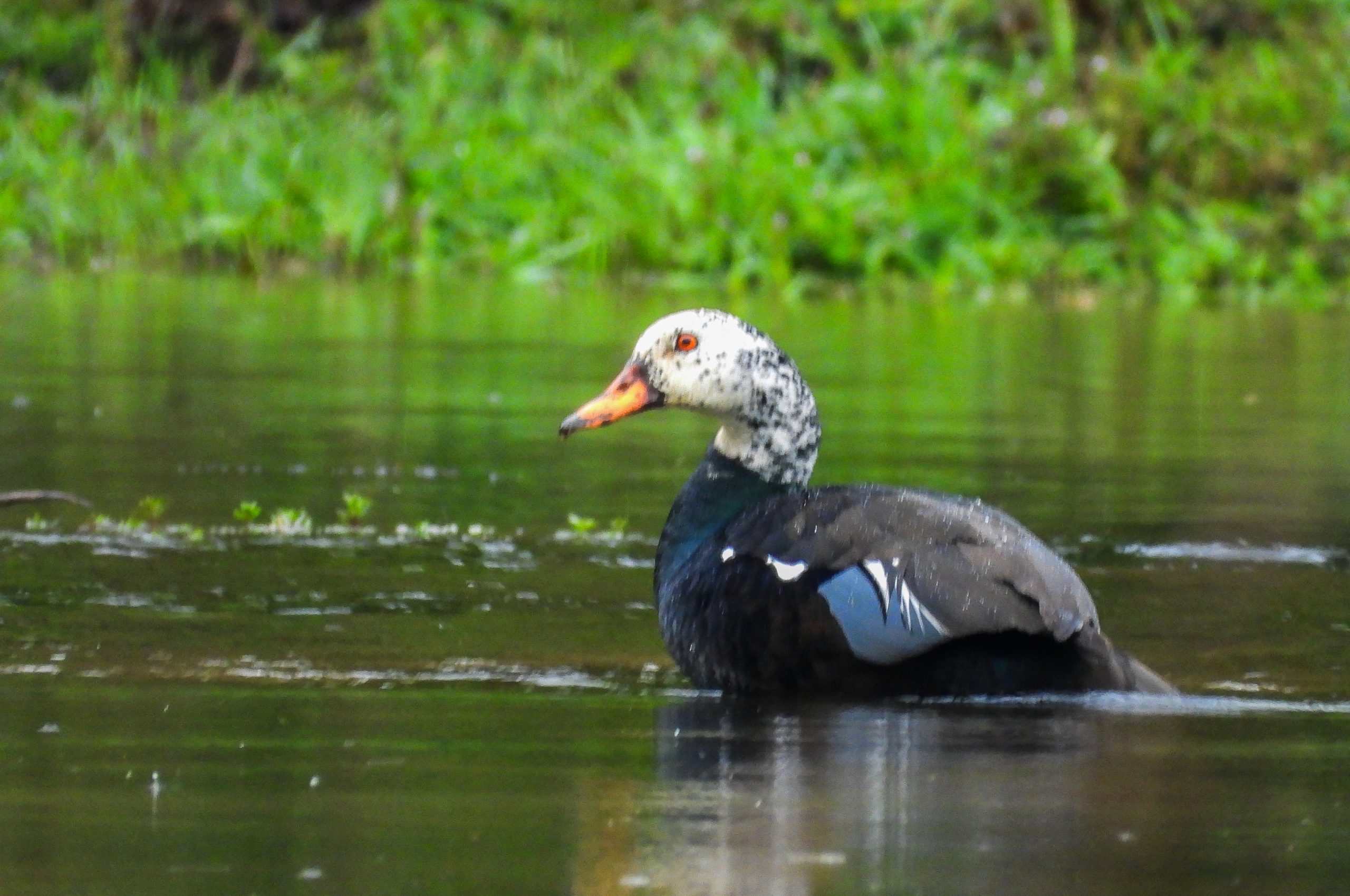
White-winged duck (Asarcornis scutulata), also known as “Deo hanh” in Assamese, was once widely distributed in northeast India and Southeast Asia. As per the assessment of BirdLife International in 2024, this species has been categorised as ‘critically endangered’ in the IUCN Red List due to the small and fragmented population (c. 150-450 mature individuals).
In India, the white-winged duck (WWD) primarily inhabits the dense forests and secluded water bodies of Assam and Arunachal Pradesh, but its population has drastically declined due to habitat loss, hunting, and fragmentation. These threats have led to a fragmented population concentrated in a few protected areas and small forest fragments, increasing the risk of local extinction, with an estimated c. 50-150 individuals in India. The WWD is highly susceptible to anthropogenic activities, and its survival in northeast India now depends on urgent and focused conservation efforts. The species’ distribution range has been significantly reduced, with habitat destruction posing the greatest threat to its continued existence.
According to the latest studies conducted in the early 1990s, 21 protected areas were known to support their population globally. The Dibru-Saikhowa National Park and Dihing-Patkai Wildlife Sanctuary were established specifically to conserve the species, the State Bird of Assam. Despite these efforts, the species continues to decline, and concerted efforts across its range, particularly in India, remain insufficient, largely due to a lack of updated information and a synchronous, concentrated effort.
Major Threats for the species in India include: –
- small, fragmented, and isolated populations
- loss of habitat – forested waterbodies and roosting/nesting trees
- loss of population due to hunting and egg/duckling poaching
- lack of awareness and initiative among local communities for its conservation
A lack of knowledge about their population status and site-specific conservation requirements are major bottlenecks in its conservation and actions for recovery. This project aims to bridge the information gap and outline and execute a long-term recovery plan in collaboration with the forest department, local stakeholders, and experts.
To begin with, ground surveys will be conducted to address the information gap regarding the species and its habitat. Identifying threats and their drivers would form the basis of the species recovery planning for Assam and Arunachal Pradesh. The next phase would target the implementation of recovery measures and monitoring changes across both states.
Based on field surveys and ecological assessments, several sites have been identified across Assam and Arunachal Pradesh to focus recovery efforts for the white-winged duck. These include forest complexes with confirmed species presence and suitable lowland habitats.
To strengthen support for the species recovery process, targeted awareness campaigns will be conducted in Assam and Arunachal Pradesh. Activities will include outreach activities across schools, media, and local communities. The campaign incorporates a Pride component to highlight the white-winged duck’s cultural and ecological importance, especially as Assam’s State Bird. These efforts will be supported by trained local youth and naturalists, who will help carry out citizen rallies, consultations with forest departments, and other community-engagement events.
In parallel, the project engages closely with local communities and the Forest Department to strengthen on-ground conservation efforts. Community volunteers are involved in awareness, habitat monitoring, and threat reduction activities, fostering a sense of stewardship for the species and its habitat. Collaboration with the Forest Department ensures alignment with ongoing conservation priorities and facilitates effective implementation and long-term support.
The long-term objective of the project is to recover the population of the white-winged duck by working towards stabilising and eventually increasing the number and sites of occurrence of the species in Assam and Arunachal Pradesh.
Department of Environment & Forests, Government of Assam, Department of Environment, Forest and Climate Change, Arunachal Pradesh, Fondation de France, Oracle, Durrell Wildlife Conservation Trust
PROJECT LEAD: Aftab Ahmed