Project Info



Project Description
The Sundarbans Delta, situated in the state of West Bengal in eastern India and south-western Bangladesh, comprises a vast mangrove-dominated landscape of numerous islands amidst a network of rivers, streams and estuaries, branching out from the Ganges, Brahmaputra and Meghna rivers.
The Sundarbans delta is considered a high-priority Class I Tiger Conservation Unit (TCU), and constitutes one of the largest available contiguous tiger habitats globally. It covers an area of approximately 10,000 km2, with about 60% of the mangroves in Bangladesh (5,990 km2) and 40% in India (4,260 km2).
Tiger population and density in this landscape are estimated to be 101 (SE 10) tiger individuals and 4.27 tigers per 100 km2, respectively, on the Indian side (All India Tiger Estimation, 2022). Other than tigers, the landscape also has 49 species of mammals, 50 species of reptiles, 261 species of birds, and 400 species of marine fishes. The mangrove forests also have a high diversity of vegetation with over 350 species of vascular plants. On average, about 20 human-tiger negative interactions are reported from Sundarbans annually. Of these, the majority are reported from within the tiger reserve.
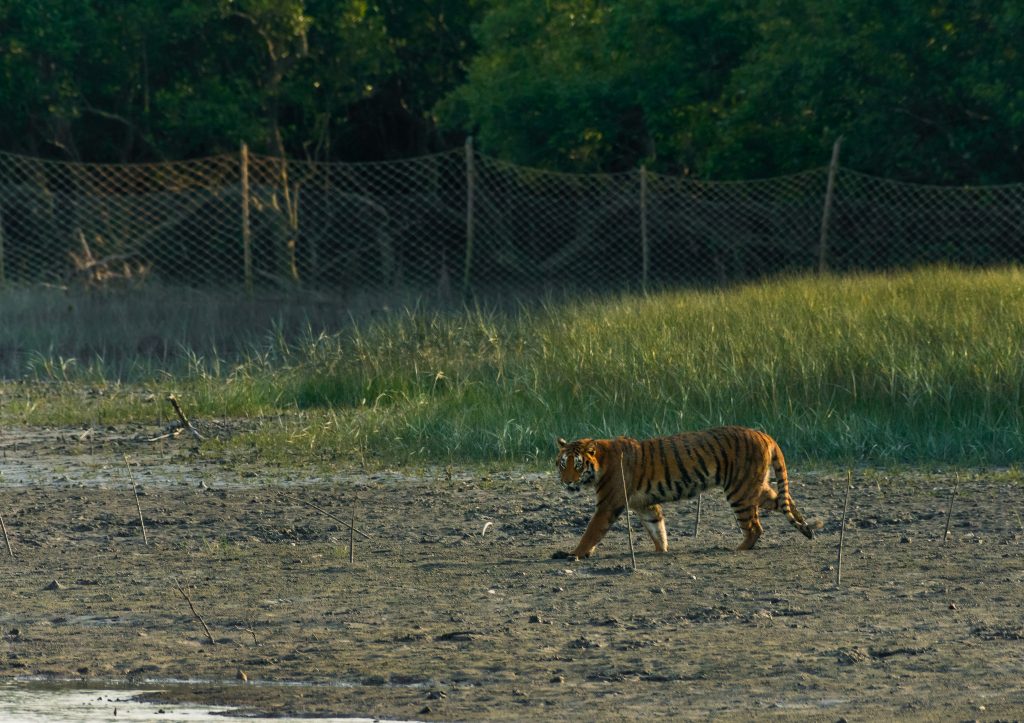
Bengal tiger in Sundarban mangroves (India) with nylon net fencing in the backdrop | Photo © Satyaki Naha
A large proportion of tiger attacks occur in fringe areas, and a smaller proportion of attacks occur in creeks/rivers. Out of the human-tiger interactions, human deaths have been reported in about 80% of incidents, while humans were injured in about 20% of incidents. The majority of tiger attacks on humans occur during crab harvesting, followed by fishing, honey harvesting and prawn harvesting. In retaliation to human-tiger interactions, occasionally, local people kill tigers. Kultali block is the second-most impacted by human-tiger interactions, comprising about one-fifth of all reported incidents of human-tiger conflict in the Indian Sundarbans.
Till 2018-19, there were multiple instances of public aggression towards the state forest department and/or wildlife conservation organisations during tiger ingression incidents in villages. However, since the implementation of the Integrated Tiger Habitat Conservation Programme (ITHCP) in 2018-19 with support from the International union for Conservation of Nature (IUCN) and KfW Development Bank, all the tiger ingression incidents have been peacefully and scientifically addressed through combined efforts from the West Bengal Forest Department (WBFD), WTI’s Primary Response Team (PRT) members and project team, and local people. We work closely with Lokamata Rani Rashmoni Mission (LRRM) and the WildTeam, Bangladesh, for implementation of the project. The project has been recognised as a model trans-boundary initiative for human-tiger conflict mitigation and coexistence by the World Bank.
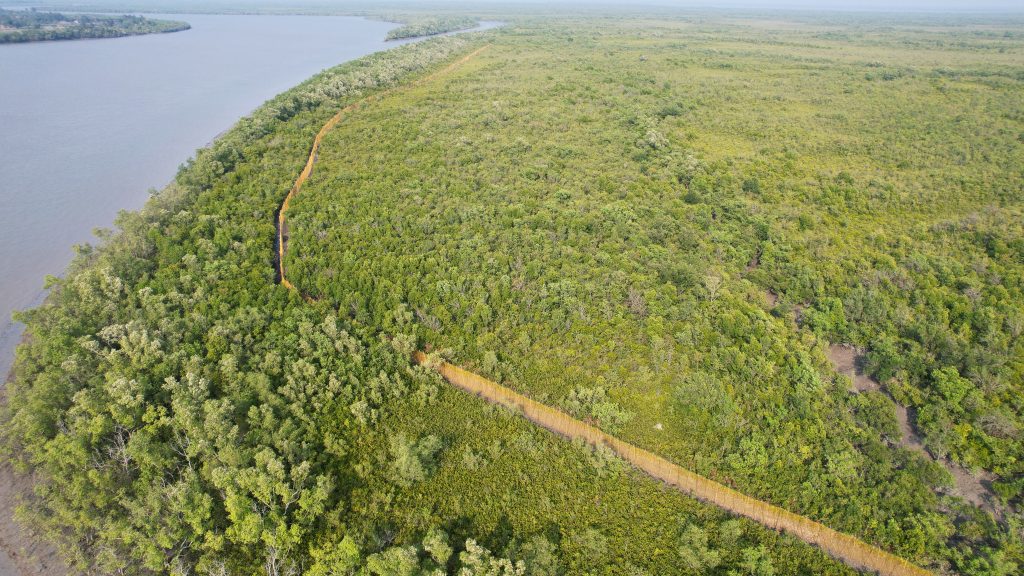
Nylon-net fencing along forest-river interface is helping reduce tiger ingressions into villages, thereby reducing human-tiger negative interactions |Photo © Tamajit Das
Primary Response Teams (PRT) are offering immediate ground support to local people and the forest department with safe passage to tigers and monitoring and maintenance of nylon-net fence on a voluntary basis. Additionally, Artificial intelligence-enabled (AI) camera traps and ANIDERS (Animal Intrusion Detection & Repellent System) have been installed to help detect tigers early and raise alerts such that accidental negative interactions between humans and tigers can be avoided.
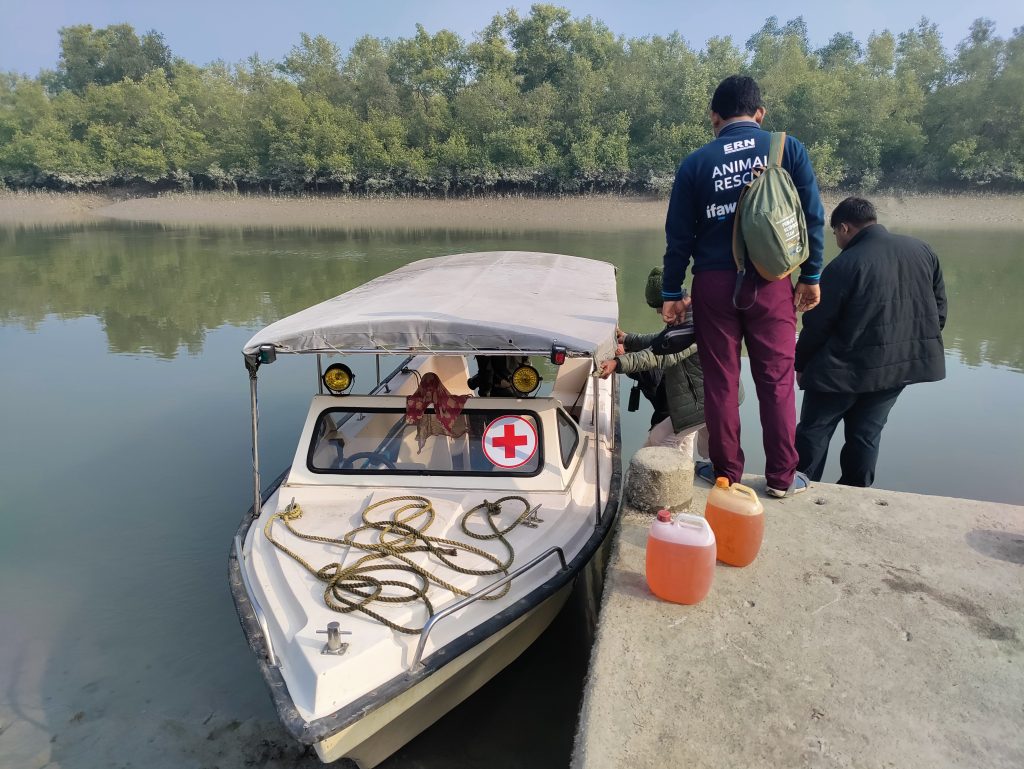
GPS-enabled SOS alarm devices and speedboat-based community support are offering urgent evacuation support to tiger attack victims |Photo © TeamWTI
Recently, we launched a GPS-enabled SOS Alarm System & Speed-Boat Community Support Unit to improve the safety of livelihood practices of local communities in the Kultali Block of Sundarban Biosphere Reserve.
You can find the “Environmental and Social Management Plan” of the project prepared in consultation with the stakeholders here
Resources:
PARTNERS: German Corporation, IUCN, KFW
For more information about the project : Dr. Abhishek Ghoshal