
Project Info



Project Description
Centers for Species Survival (CSS) are collaborative partnerships between leading national wildlife conservation organisations and International Union for Conservation of Nature Species Survival Commission (IUCN SSC), a network of over 10,000 conservation experts worldwide. These centers are hosted by prominent zoological and botanical organizations actively involved in protecting key species and critical habitats.
The Center for Species Survival: India, established in 2023, is the first-ever Center for Species Survival in South Asia. It is a partnership between IUCN SSC and Wildlife Trust of India (WTI), aiming to provide a platform for conservation practitioners to network and share best practices, as well as to contribute to species status assessments using IUCN Red List of Threatened Species and amplify the impact of species recovery efforts across the country. This collaborative effort aims to enhance conservation efforts by wildlife experts and specialist groups and safeguard the rich biodiversity of India.
The center facilitates coordination among IUCN SSC members for species assessments and the creation of action plans to conserve and recover endangered species. It also works closely with the Ministry of Environment, Forest and Climate Change (MoEF&CC), the Zoological Survey of India (ZSI), the Botanical Survey of India (BSI), and various research institutions to ensure effective conservation.
Our Current Priorities
Similar to other Centers for Species Survival (CSS), CSS: India follows the Assess-Plan-Act cycle to guide its initiatives. Presently, CSS: India is concentrating on the ‘Assess’ phase, assisting in the Red List Assessment of species for India. This process will be followed or run concurrently with the ‘Plan’ phase, ensuring a seamless progression within the Species Conservation Cycle.
Crisis of Species Survival: how to prioritize which species to save first?
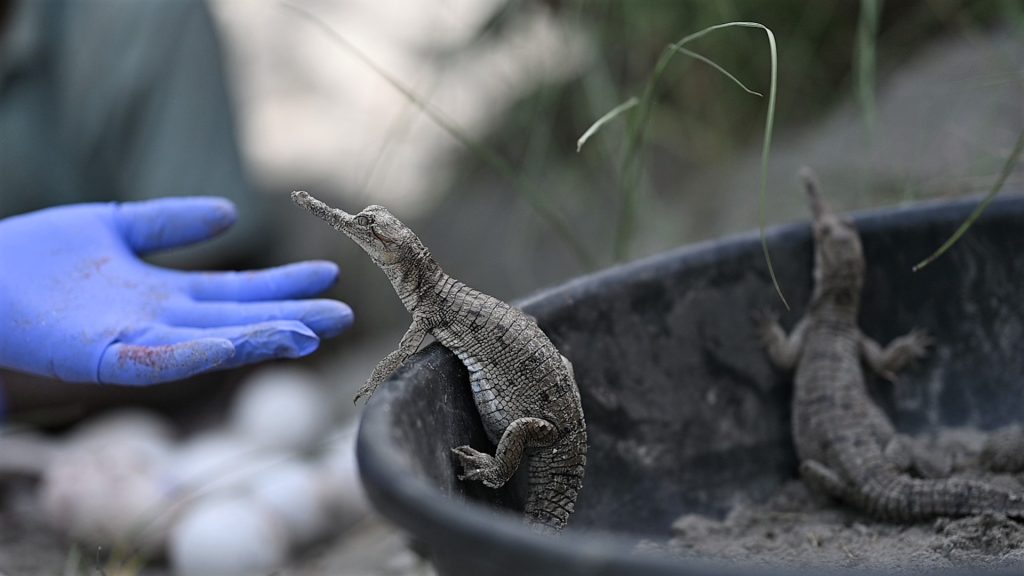
Gharial hatchling in Gandak River Basin | Photograph by Sreenanth K/WTI
Species are classified into one of nine Red List Categories: Extinct, Extinct in the Wild, Critically Endangered, Endangered, Vulnerable, Near Threatened, Least Concern, Data Deficient and Not Evaluated. Vulnerable, Endangered, and Critically Endangered species are considered to be threatened with extinction. The IUCN Red List also includes the IUCN Green Status of Species, which assesses the recovery of species’ populations and measures their conservation success. There are eight Green Status Categories: Extinct in the Wild, Critically Depleted, Largely Depleted, Moderately Depleted, Slightly Depleted, Fully Recovered, Non-Depleted, and Indeterminate.
Is the Global Red List enough?
While global Red List assessments are increasingly recognized as vital tools for guiding and prioritizing global conservation efforts, their utility at the national level can be limited, particularly for peripheral populations that may be locally small yet significant but globally common.
Transboundary species like the Markhor and Tibetan gazelle highlight the importance of a locally relevant national red list in establishing national-level conservation priorities.
India is recognized as one of the world’s megadiverse countries, home to approximately 7-8% of all recorded species globally (Goyal & Arora, 2009). The Zoological Survey of India has recently documented a list of over 100,000 species of animals and over 50,000 plants and allied forms that offer a formidable base of biological diversity. Hence, it is important to provide evidence-based information on the status of several such species and subspecies to help draw attention to the magnitude and importance of threatened biodiversity and influence national and international policy and decision. As per IUCN, over 160,000 species have been assessed but to be convincingly able to inform policy makers, a total of 260,000 species must be assessed by the year 2030. Of the 160,000 species assessed, only about 7,000 from India feature in global red list assessments.
Facilitating a national red list
Addressing this gap in assessments requires a collaborative and comprehensive nationwide approach. The Ministry of Environment, Forest and Climate Change, Govt. of India has taken up the challenge and proposed the formulation of a National Red List. To accomplish this nationwide task effectively and within a desirable timeframe, it is essential to mobilise resources not only from government agencies, but also from the broader network of universities, research institutions, and civil society organisations, including IUCN Species Survival Commission network in India. This effort requires a robust networking platform to connect experts and organisations and facilitate the involvement of entities such as Specialist Groups, Zoological Survey of India, Botanical Survey of India, Central Marine Fisheries Research Institute, Central Inland Fisheries Research Institute etc. engaged in these assessments.
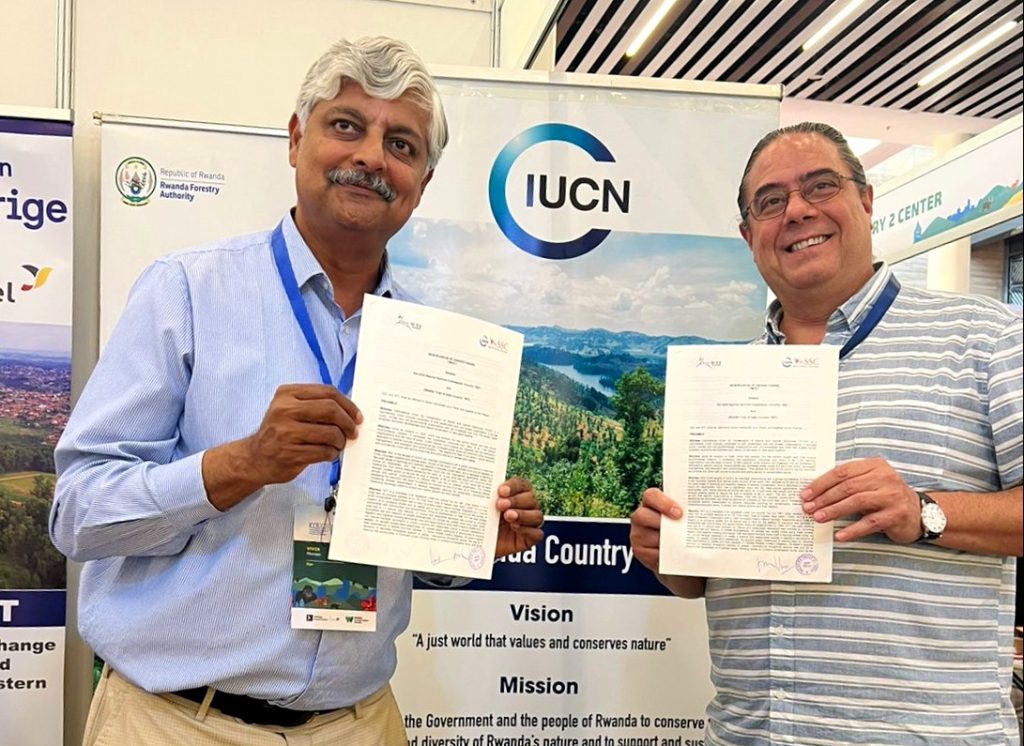
L-R-Mr. Vivek Menon (Executive Director WTI) and Prof. Jon Paul Rodriguez (Chair IUCN-SSC) sign the MoU for the first ever regional Center for Species Survival in India
Red List Assessment Activities:
CSS: India has assisted in conducting:
-
A five-day training session on Red List assessment for Indian Flora and Fauna in August 2024, involving 35 trainees representing the Zoological Survey of India (ZSI) and the Botanical Survey of India (BSI).
-
Five satellite events on Markhor (Jammu and Kashmir), Gharial (Bihar), White-winged duck (Assam), Wild buffalo (Chhattisgarh), and Amphibians (Kerala) during the first-ever World Species Congress, hosted by Reverse the Red. In this inaugural global event, CSS; India also hosted five online sessions on various endangered species of India.
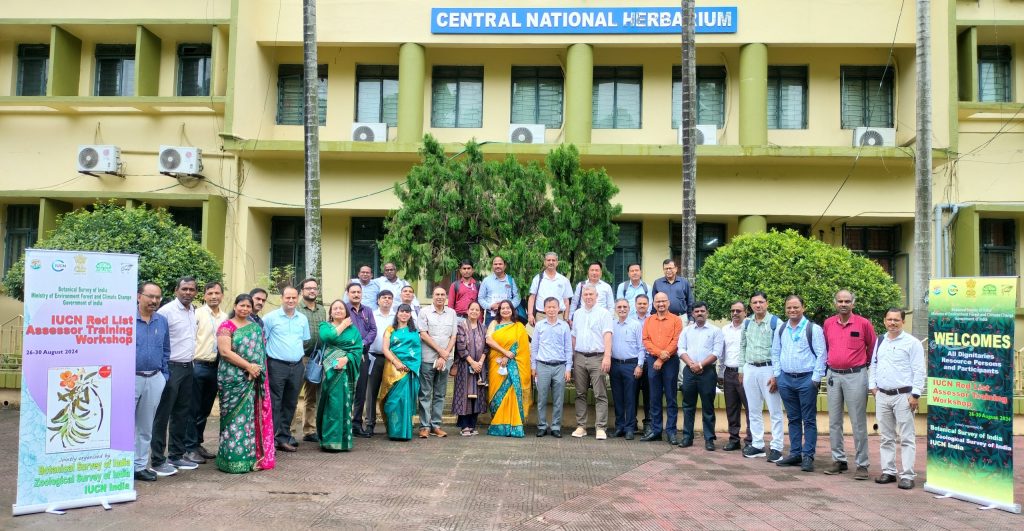
IUCN Red List Assessor Training Workshop (August 2024, Kolkata, India)
- Work with the Red List Authorities, IUCN SSC Conservation Planning Specialist Group (CPSG), other Centers for Species Survival, IUCN members and other institutions and entities engaged in Red Listing species conservation efforts to understand the status of assessments, conservation action plans and conservation priorities globally, or within priority regions, for India’s biodiversity
- Convene and catalyse the SSC members in India to engage with assessment, planning and action efforts for Indian species, including exploring the possibility of forming an India Species Specialist Group
- Address gaps in species assessments for species Red Lists and ensure that these assessments are aligned, where possible, between national and Global IUCN Red Lists.
- Work in close partnership with CPSG to act as a catalyst to mobilise diverse stakeholders in planning and action for priority species.
- Provide an annual report of the activities of CSS: India to support understanding and promotion of the partnership.
- Join key meetings from time to time with the SSC Chair’s Office; the international network of Centers for Species Survival partners and other key stakeholder groups as necessary under an agreed work plan.
With a combined effort of the CSS: India and the Ministry of Environment, Forest and Climate Change (MoEFCC) and its agencies, we hope to publish the Red Data Book for Indian Species by the year 2030.
PARTNERS: IUCN SSC, Ministry of Environment, Forest and Climate Change
PROJECT LEAD: Dr. Prajna Paramita Panda
DIRECTOR: Dr. Rahul Kaul