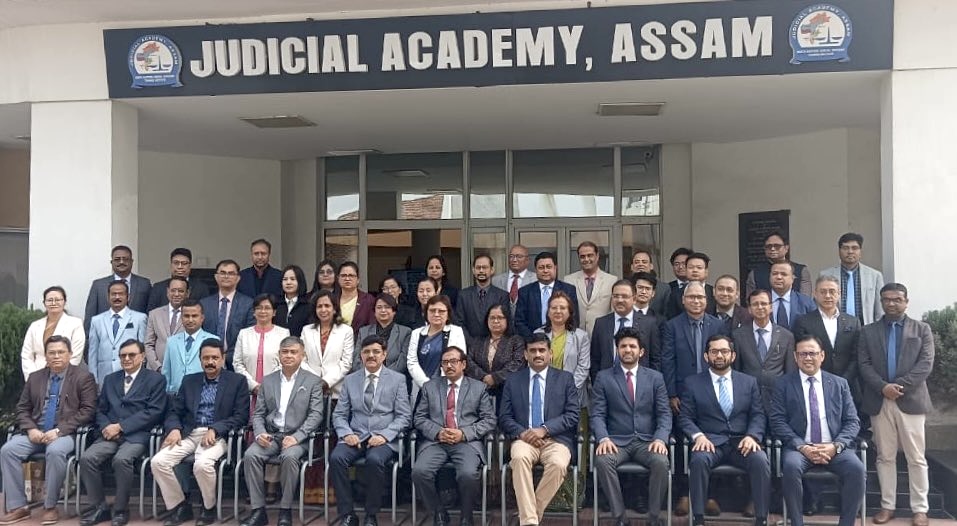
Experts gather in Guwahati for workshop on compensatory measures in wildlife crime cases
Guwahati, 25th January 2025: A one-day workshop on compensatory measures in wildlife crime cases was organised by the Wildlife Trust of India (WTI) in collaboration with the Judicial Academy, Assam, with the support of Lancaster University, and DEFRA, UK.
35 participants i.e. 28 judicial officers from Assam judicial service (currently presiding over courts trying wildlife crime cases), 6 Trainee Judges from Arunachal Pradesh and 1 trainee judge from Mizoram participated in the workshop aimed at championing justice in wildlife crime cases and encouraging victim compensation under the Wild Life (Protection) Act, 1972 and the Criminal Procedural Laws.
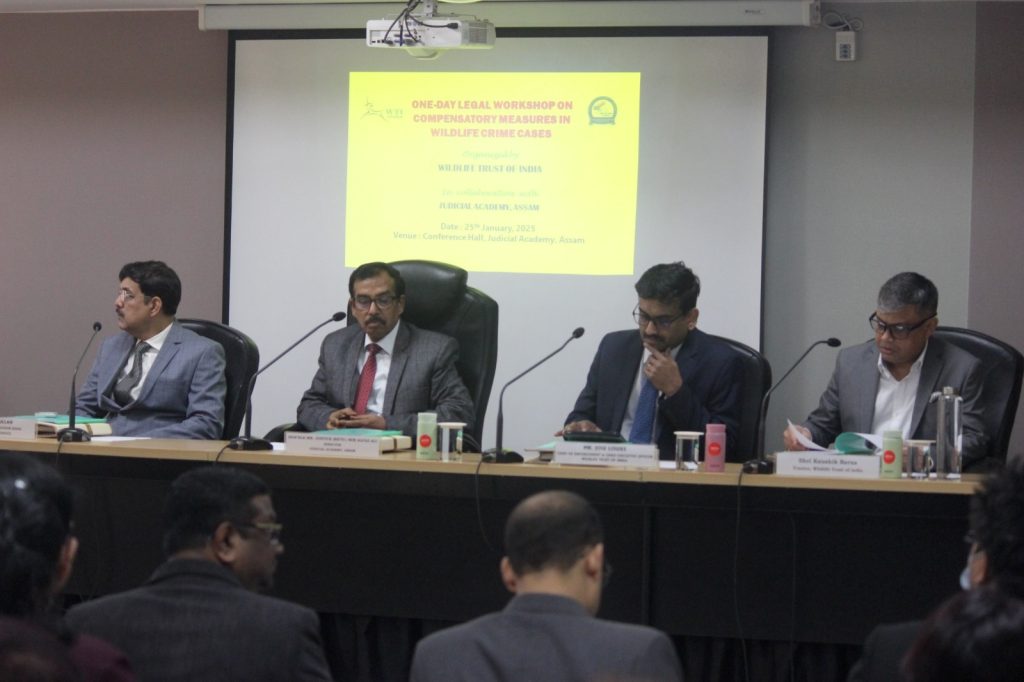
Experts Gather in Guwahati for Workshop on Compensatory Measures in Wildlife Crime Cases | Photo by Debobroto Sircar/WTI
The workshop was inaugurated by the Hon’ble Mr. Justice (Retd.) Mir Alfaz Ali, Director of the Judicial Academy, Assam. Technical sessions on the subject were taken by resource persons namely Mr. Darak Ullah (Retd. District and Session Judge, Assam Judicial Service), Mr. Lovish Sharma, Advocate, High Court of Delhi, Mr. Ankit Roy, Standing Counsel for Govt. of Assam at the Supreme Court of India, Mr. Jose Louies, CEO, Wildlife Trust of India and Mr. Jacob Phelps, Senior Lecturer, Lancaster University, UK.
The workshop witnessed technical sessions on the overview of wildlife crimes, Indian wildlife laws, compensatory measures in environmental crimes, the legal approach of foreign jurisdictions in wildlife crime cases and critical analysis of the Indian laws pertaining to compensation awards for the loss/injury to wild animals and its habitat on account of wildlife and forest crimes.
Wildlife offences pose significant and cascading threats to biodiversity, ecosystems, and human well-being, yet they often go unnoticed or are underestimated. There’s a growing need for stronger actions to hold offenders accountable, beyond penal actions. As wildlife crimes continue to harm wildlife and its habitat, legal experts and conservationists are urging for a more pragmatic judicial approach to protect and conserve wildlife for future generations.
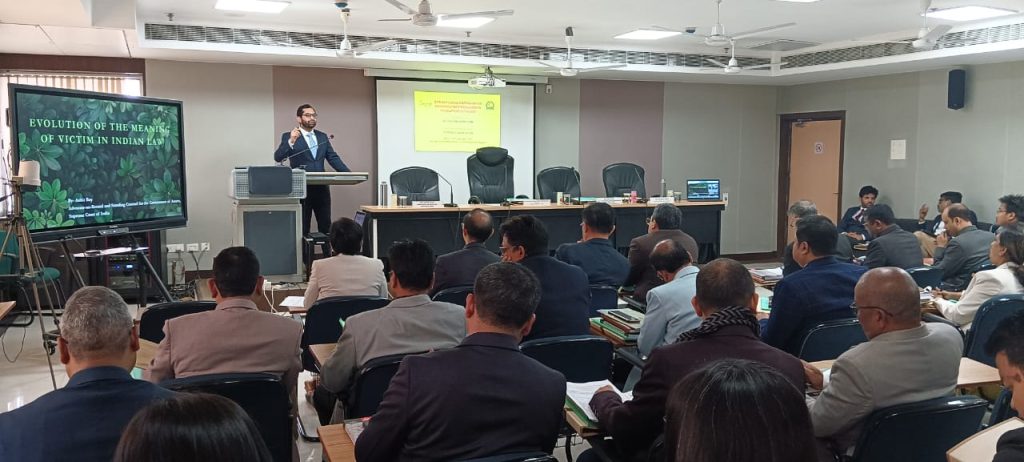
Mr. Ankit Roy, Standing Counsel, Govt. of Assam delved into the compensation provisions under Indian law | Photo by Debobroto Sircar/WTI
Mr. Lovish Sharma, Advocate, High Court of Delhi emphasised on the criminal procedural laws governing the powers of judicial officers to grant monetary compensation to the victims in criminal cases ending in the conviction of offenders. He deliberated upon case laws from various High Courts & Trial courts across India about the grant of monetary compensation to the Forest Department in wildlife crime cases.
Mr. Ankit Roy, Standing Counsel, (Govt. of Assam) discussed the evolution of laws relating to victim compensation in India and landmark cases of the Hon’ble Supreme Court on the grant of compensation to the victims under the criminal law.
Mr. Darak Ullah, District and Session Judge (Retd.), Assam Judicial Service, was the key resource person for the workshop. Mr. D. Ullah delivered a presentation on the wildlife trial cases presided over by him in the capacity of Additional Sessions Judge, Sonitpur, Tezpur, Assam, wherein monetary compensation was awarded to the Assam Forest Department. Mr. Ullah urged the participating judicial officers to invoke victim compensation provisions under the Cr.P.C/B.N.S.S and direct offenders to compensate for the loss/injury done to the wildlife on account of their criminal acts.
Dr. Jacob Phelps from Lancaster University took a session on a global approach to remedial measures in wildlife crime cases, emphasizing the importance of other remedies apart from monetary compensation. He highlighted global legislative examples and case studies, such as the Calanques National Park case and Shandong Catering Company cases, demonstrating various remedies like environmental restoration, public apologies, and compensation for ecosystem services. The session also discussed how judges can employ different remedies, underscoring the need for comprehensive legal strategies to address environmental harm effectively.
Jose Loiues, CEO, WTI, expressed that “Now is the time to act”. Strengthened legal tools and innovative enforcement strategies are critical to curbing wildlife crimes and safeguarding our planet’s ecological future.