Wild piglets successfully hand-raised in WTI’s Western Assam MVS unit
7th September, 2025, Kokrajhar: In a first, three hand-raised wild piglets were successfully rehabilitated back into the wild in Raimona National Park by Wildlife Trust of India’s (WTI) Mobile Veterinary Service (MVS) unit based in Kokrajhar, Assam. Separated as a result of a failed hunting attempt by locals, the piglets were placed under our care for more than five months.
Three wild pigs (Sus scrofa), including 2 males and 1 female, were rescued from the fringe area of Dainimari Sankosh, located under the Western Range of Raimona National Park (NP), Assam, in February 2025. According to the residents and forest officials, they were left behind during an illegal hunting attempt. While the mother managed to escape, the piglets were left to fend for themselves. Upon receiving the information, forest staff immediately rushed to the spot and successfully rescued them. A reunion attempt was made but proved unsuccessful, since the mother had fled the area and could not be located.

The three piglets upon admission | Photograph by Nazrul Islam/WTI
The piglets were subsequently admitted to WTI’s MVS unit in Kokrajhar, Western Assam, on 1st March 2025. At the time of admission, they were estimated to be around 20–25 days old and weighed between 900 and 1100 grams. The piglets were hand-raised at the rehabilitation centre using a pig milk replacer, which was gradually reduced after 2 and a half months. Over approximately five months of care in the wildlife transit home, the piglets remained in good health and received all necessary welfare provisions as part of the rehabilitation process.
Following the IUCN protocol for wildlife rehabilitation, a soft release method was employed to return the hand-raised piglets to the wild in Raimona National Park. On 8th August 2025, they were relocated to the release site within the Western Range of Raimona NP for soft-release. Before the release, they were screened for African Swine Fever (ASF) using rapid diagnostic kits and fitted with ear tags to facilitate post-release monitoring in the wild.
As part of the soft release process, the piglets were kept in a large, spacious temporary holding paddock constructed near the Jamduar Anti-Poaching Camp. They remained in this semi-wild environment for three weeks to acclimatise to the new surroundings and develop site fidelity. The soft release methodology is a gradual and controlled approach designed to reduce stress and improve the likelihood of successful adaptation and survival in the wild.
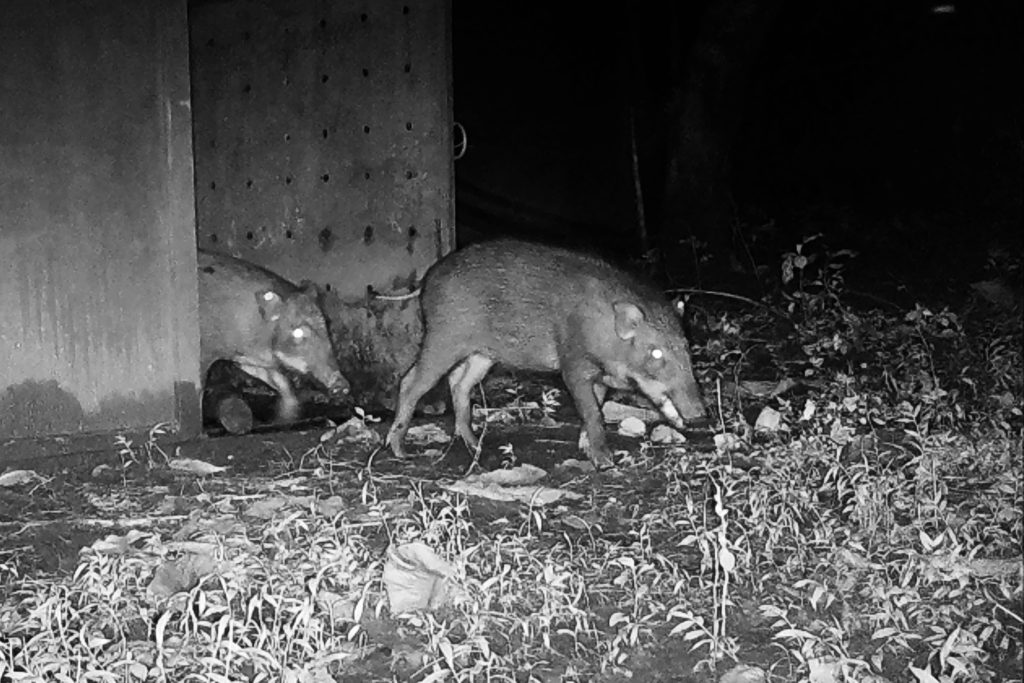
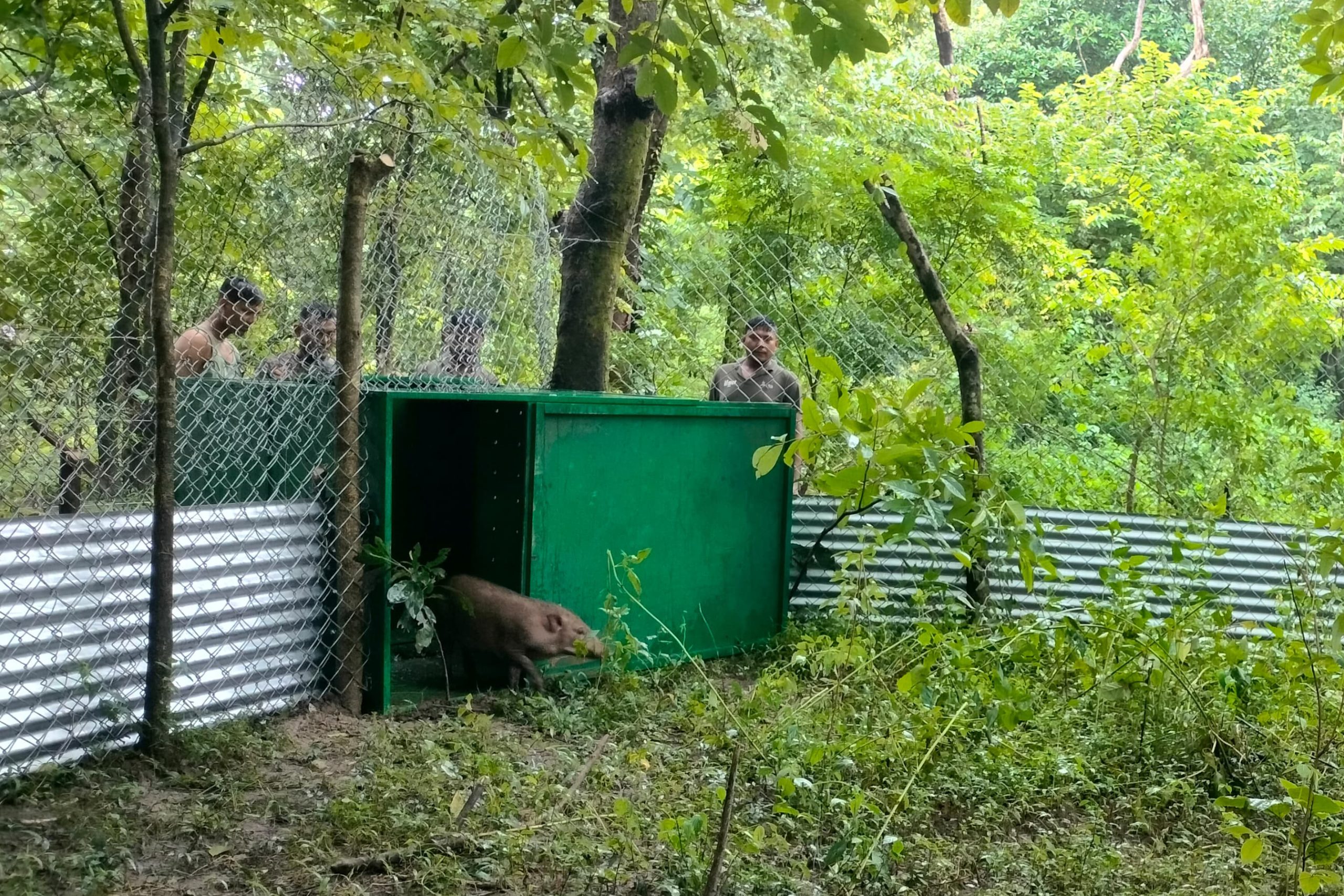
Camera trap photograph of the wild pigs making their way out of the holding crate and into the boma
On 29th August 2025, after completing the three-week acclimatisation period, all three piglets were released from the temporary holding Boma (enclosure), and the animals gradually ventured into the forest. They did not return to the site until 2nd September. Camera traps have been installed at strategic locations to opportunistically record their presence.