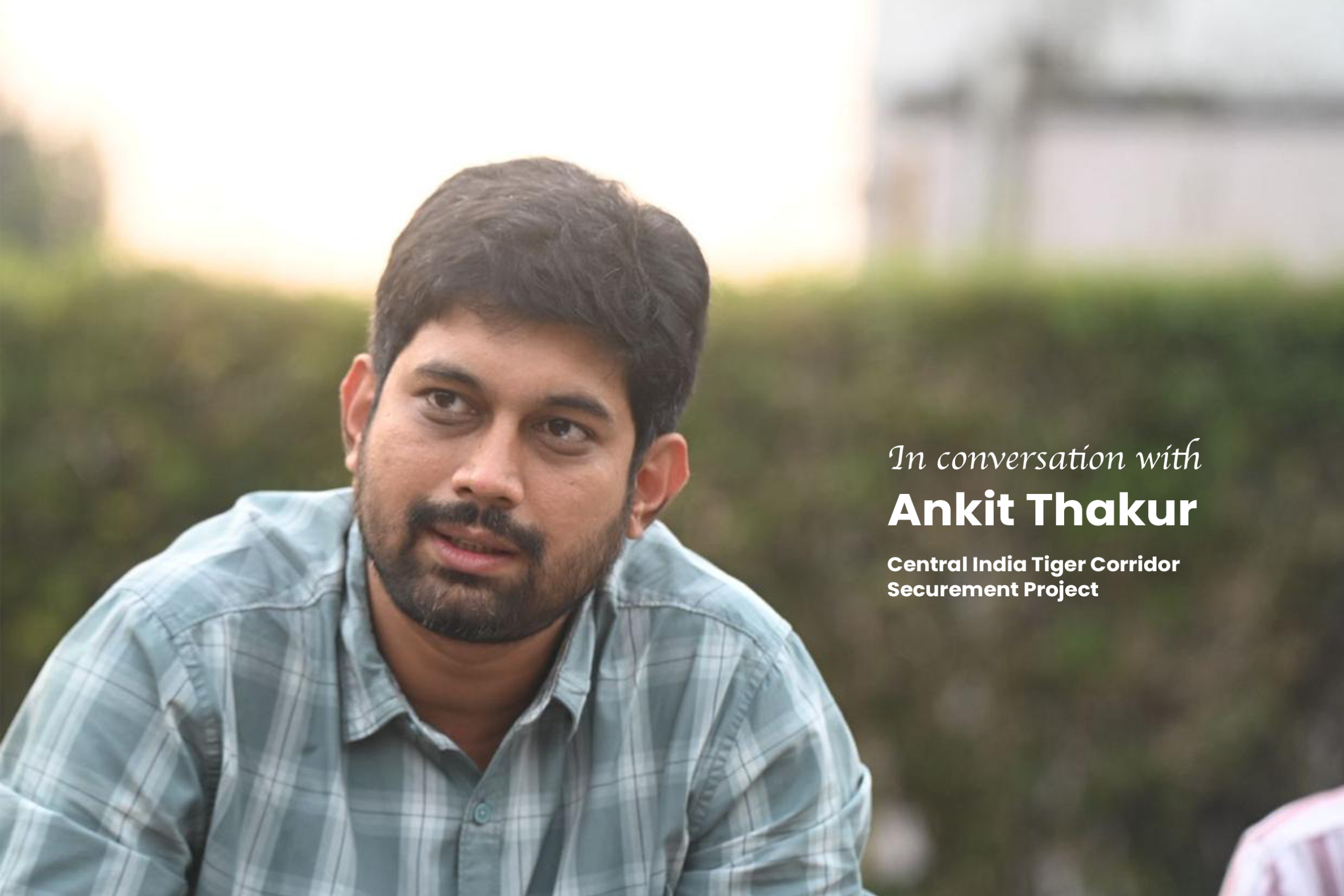
Between Home and Wilderness: In Conversation with Ankit Thakur
Most field days for Ankit Thakur often begins before sunrise. After a long drive from his base in Gondia to the forested landscapes of Central India, he and his team leave the vehicle behind and continue on foot, till the sun signs off foe the day and sometimes, even beyond. The hours that follow is spent walking through wilderness, searching and documenting – information that help reveal how animals navigate the landscape. The short breaks in between are for simple snacks, perhaps a packet of murmura or poha carried inside his backpack and ate under the shade of a tree.
The work is physically demanding, but for Ankit, it represent something much deeper than a routine field survey. It is an opportunity to protect the forests he grew up with and the wildlife that first inspired him to enter conservation. As the Project Head of the Wildlife Trust of India’s (WTI) Central Indian Tiger Corridor Securement Project, Ankit’s work ensure that tigers can move safely between forest habitats that are increasingly getting fragmented. Yet behind the technical language of corridor conservation lies a much more personal story – one rooted in childhood memories and a deep connection to a place he calls home.
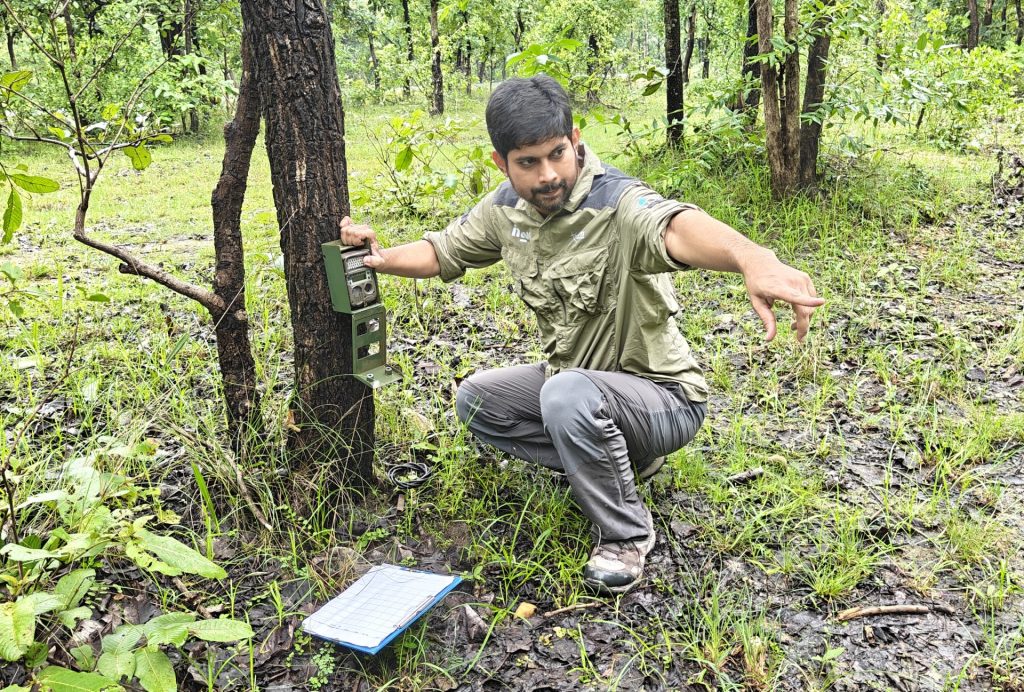
Deploying camera trap for wildlife monitoring in Nagzira Tiger Reserve
Growing Up in a Land of Tigers
Ankit’s journey into conservation began in Gondia, Maharashtra, where forests and wildlife were a natural part of his everyday life. As a child, he grew up listening to stories from his father and relatives about accidental encounters with tigers in nearby forests. Those stories sparked his imagination and nurtured a curiosity about the wildlife that lived beyond the edges of his town.
That curiosity only deepened during his college years. Bike rides with friends through nearby forests often became opportunities to look for tiger pugmarks, listen for alarm calls of deer and other species, and experience occasional sightings. These encounters helped him develop a stronger understanding of the landscape around him. For Ankit, conservation eventually became more than an interest. It became a way of giving back to the place that shaped him. Today, sixteen years into a career in wildlife conservation, that connection remains at the heart of his work.
“For me, it is not just about conserving an ecosystem, but about protecting the forests and wildlife of the place I belong to.”
Keeping Forests Connected
When people think of tiger conservation, they often picture protected areas such as national parks and tiger reserves. However, Ankit’s work focuses on the spaces in between. The Central India Tiger Corridor Securement Project aims to protect wildlife corridors that connect tiger population across the region. These forest linkages allow animals to move between habitats, maintaining healthy populations and genetic diversity.
The project currently works across important landscapes including the corridor between the Nagzira Wildlife Sanctuary and Nawegaon National Park (now a part of the Tiger Reserve), the Kanha-Achanakmar Corridor, and the Kanha-Nawegaon Corridor. Protecting these corridors requires far more than monitoring wildlife. It involves working with government agencies, local communities, and multiple stakeholders to address threats and identify practical conservation solutions.
“The primary responsibility of securing these corridors involves adopting a participatory approach by engaging multiple stakeholders and addressing anthropogenic activities,” Ankit explains. As Project Head, he leads a multidisciplinary team of wildlife biologists, sociologists, and enforcement officers while also coordinating closely with the Forest Department and other administrative agencies.
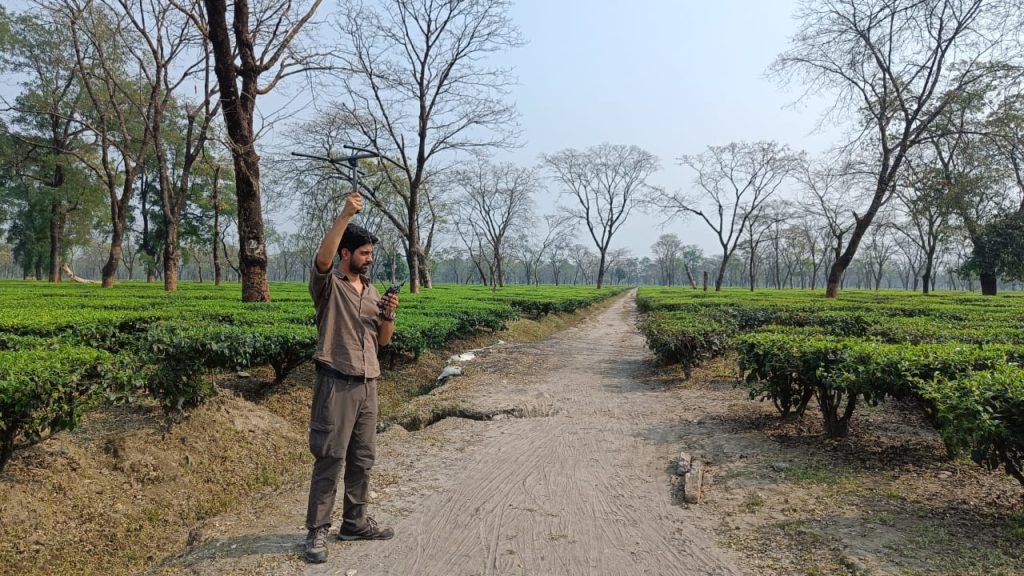
Ankit checking out a tracking device in the field
Life Between the Field and Desk
In the field, his days involve documenting signs of wildlife along forest trails, highways, and railway tracks, assessing human disturbance, or installing camera traps. These surveys provide critical information about how animals use corridors and where conservation interventions may be required. “Field days are physically exhausting, but they are also the moments that fuel the motivation to remain committed to this work,” he says. Back at the field station, his work continues. Hours are spent analysing data, interpreting findings, and preparing reports that help guide conservation action.
“While fieldwork brings excitement and adventure, the often-overlooked desk work of analysing data and writing reports provides a sense of fulfilment, knowing that it contributes meaningfully to conservation.” Together, these two sides of conservation – fieldwork and analysis – help build a clearer picture of how wildlife and people share the landscape.
Challenges of Coexistence
Working in wildlife corridors means working in landscapes where forests, villages and livelihoods intersect. One of the biggest challenges Ankit faces is helping communities understand why tigers need safe passage through forests, even when their presence can sometimes create hardships for them.
“The biggest challenge is explaining to and convincing local communities that a species like the tiger – which can potentially cause significant financial losses through cattle depredation – needs to move freely through the forests.”
Many of the communities he works with have lived alongside wildlife for generations and possess a deep understanding of the natural world. However, when livestock losses affect household incomes, coexistence becomes very complicated. Conservation is therefore not simply about protecting wildlife. It is about finding ways to balance ecological needs with the realities faced by local communities.
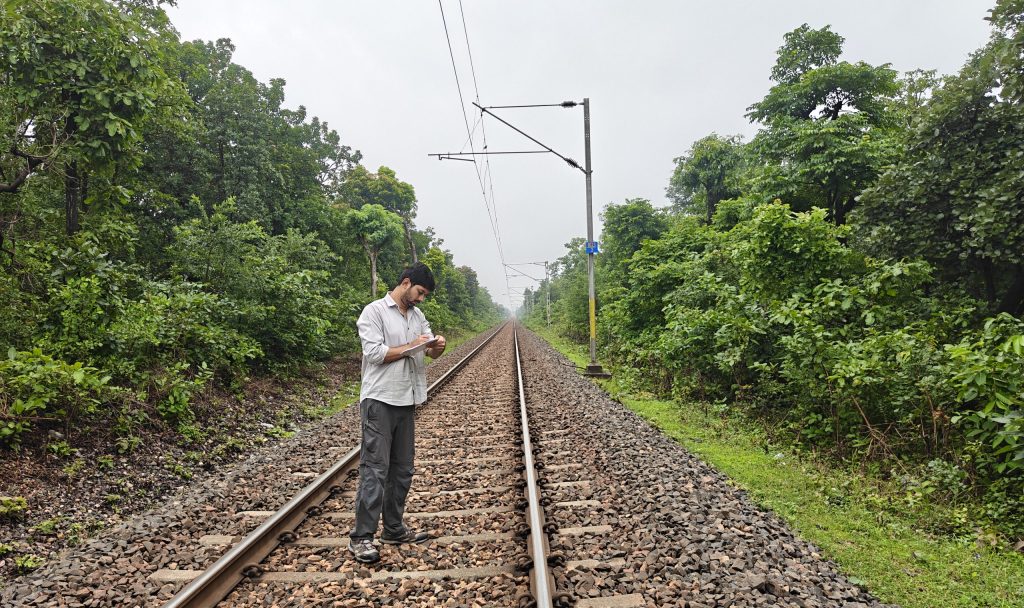
Data collection along railway tracks passing through protected areas of Central India
Lessons That Stay with You
Certain experiences leave a lasting mark on a conservationist. One such moment occurred in 2012, when Ankit was assisting the Forest Department in tracking a tigress involved in a series of fatal human attacks in the Nawegaon-Nagzira landscape. While working in the field, he received news of another attack nearby and rushed to the scene. He was among the first responders to arrive and witnessed the aftermath of the horrific incident. The capture operation that followed was tense and emotionally challenging, with the tigress still close to the site. “Experiences like these leave a lasting emotional impact and are extremely difficult to cope with,” he reflects. Yet the experience also reinforced a powerful lesson.
“They reinforce the importance of working harder to prevent such situations from occurring in the future.” For conservationists working in shared landscapes, such moments are a reminder of the delicate balance between protecting wildlife and ensuring human safety.
Looking Ahead
Despite the challenges, Ankit remains optimistic about the future. Over the years, he has witnessed a gradual but significant shift in the attitudes of the communities living alongside forests. These changes are encouraging because they demonstrate that conservation is most effective when local people become active partners in the process. What motivates him most, however, is knowing that his work contributes to protecting the landscapes he calls home.
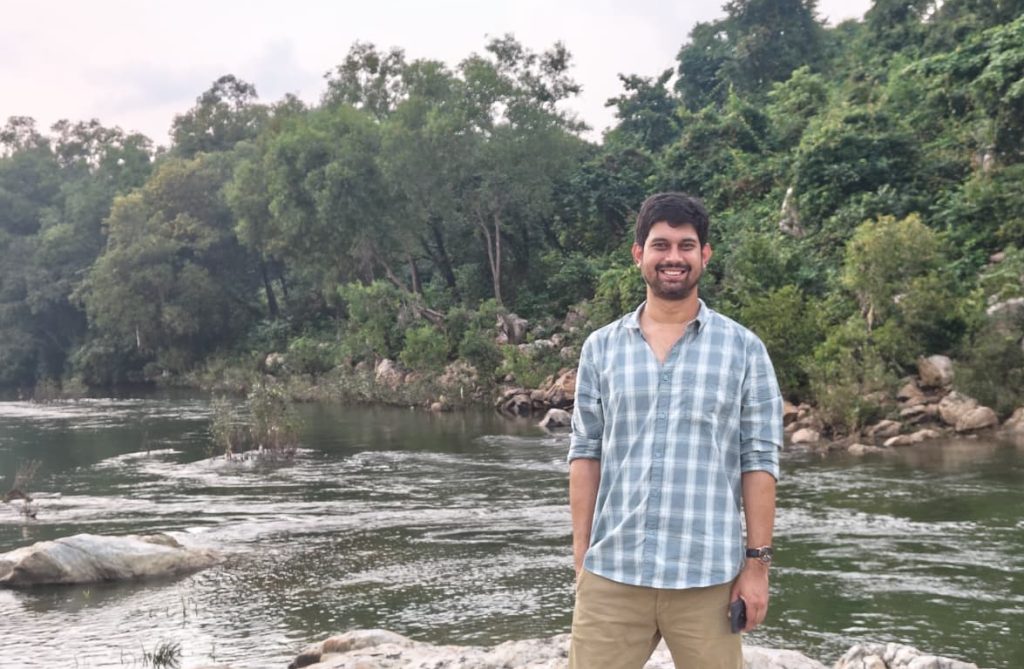
Ankit on the banks of
“Being able to contribute to conserving the forests I come from and protecting the species I deeply admire gives me immense satisfaction. My Karmabhoomi and Matrubhoomi are one and the same.”
As wildlife habitats become increasingly fragmented, he believes that protecting corridors will play an essential role in the future of conservation. For young people interested in entering the field, his advice is rooted in experience.
“Wildlife conservation in India demands a very high level of self-motivation and perseverance. Stay true to your work, remain committed to your values, and never stop learning.”
After sixteen years in conservation, Ankit Thakur continues to walk the forests that first inspired him as a child. His work may focus on securing corridors for tigers, but at its core, it is about something more enduring – ensuring that the forests he calls home remain connected, resilient, and alive for generations to come.
Story by Pallavi Ghosh, Intern, Wildlife Trust of India.