Lessons in Coexistence: People, Tigers and a Shared Landscape
Recently, I received a distress call from a member of the Primary Response Team (PRT) in Jambhulpani-Sodlagondi, a village where our team from the Wildlife Trust of India (WTI) has been working for more than a decade now. A tiger had reportedly charged at a person travelling on a two-wheeler along the Sodlagondi- Garada Road, adjoining a dense forest.
Accompanied by our team’s biologist, Vedang, I immediately headed to the village to collect more information. A meeting was called, and the President of the Eco-Development Committee (EDC), Self Help Group (SHG) members and other villagers joined in. Though the forest department had already started their patrols in the area, there was an understandable anxiety. The individual who had encountered the tiger recounted the incident in detail, while some villagers worried about cattle that had not returned for two days now. This was unusual, and the tiger was inadvertently the potential reason. We assured the villagers of our support and reiterated the usual precautions to follow. This was not a drill, as has been exercised in the past.
“The tiger is here, so we need to be cautious and give it the space to move safely”, recounted Mrs Ushatai Pisade, member of Nagzira SHG.
For me, those words meant much more than a safety message.
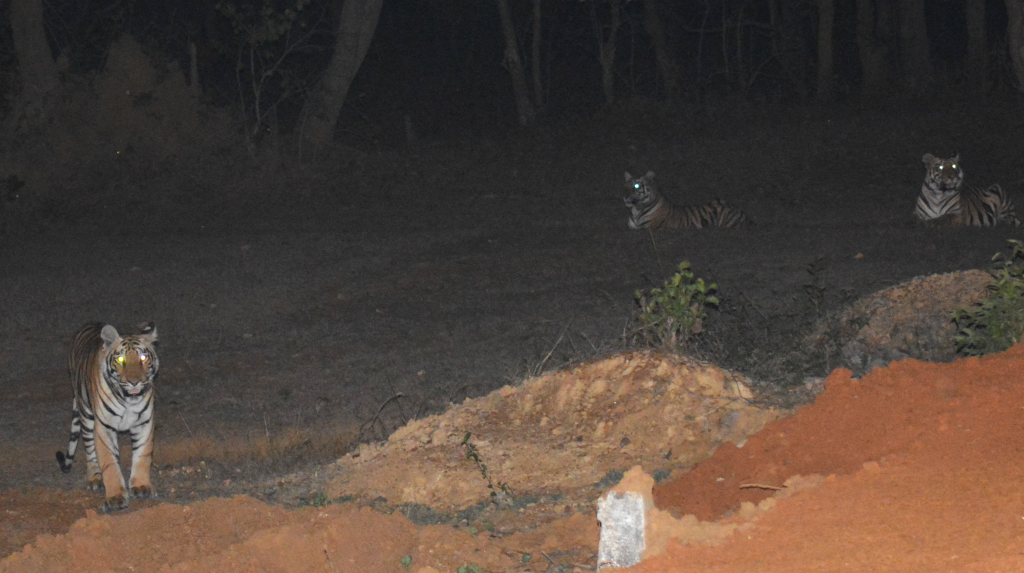
Tigers at the side of the road in Nawegaon-Nagzira Tiger Reserve | Photograph by Mahendra Raut/WTI
Having worked in this landscape for nearly one and a half decades, I remember a time when the presence of a tiger or similar predators would immediately send villagers into panic. What followed was fear, anger and retaliatory strategies. To hear such a measured response from a community member this time was deeply reassuring. While the risk had not disappeared, the way people understood and responded had certainly changed for the better.
For me, this is where the story of coexistence begins.
From fear to understanding
Wild animals damaged crops, livestock was sometimes lost, and incidents of attacks had always created fear. I vividly remember a fatal sloth bear attack in my village and incidents where leopards have fatally injured people and livestock. Naturally, wildlife was often perceived through the lens of fear, risk and loss of livelihood. Having been born and lived in a similar village close to Jambhulpani, within the same forested landscape, the recent incident consequently also felt personally familiar. Long before I began working as a wildlife conservationist, I had experienced what living close to wildlife meant for local communities.
I also remember accompanying my elder brother into the forest to collect mahua flowers. Back in those days, practices such as setting snares to trap wild animals were not uncommon. Forest dependence was high, and people regularly entered forests to collect fuelwood, Non-Timber Forest Products (NTFPs) and other resources essential to their lives and livelihoods.
Working alongside biologists, sociologists, veterinarians, Forest Department personnel, and local communities has gradually taught me to view this familiar landscape through two inseparable perspectives: the needs of wildlife to survive and move safely, and the livelihoods, safety and aspirations of people sharing the same space.
Building coexistence with communities
WTI initiated its corridor conservation efforts in the Nawegaon-Nagzira landscape back in 2006. The landscape faced, and still faces, a multitude of challenges. This includes roads and railway lines intersecting wildlife habitats, a high forest dependence of locals and frequent movement of people into forests for fuelwood and NTFP collection.
When we initially began working, there was understandable apprehension. Many viewed conservation organisations and forest department representatives as outsiders and feared that conservation might eventually restrict their access to resources or lead to relocation. During our earliest visits, some people were reluctant, even to attend meetings.
We realised that conservation had to begin by listening.
Most villagers remained engaged throughout the day in agriculture, collecting forest resources, and other livelihood activities, making it difficult to bring everyone together to build a consensus. Therefore, our sociologist, Ms. Greeshma, Anil, and I began holding meetings in the evenings, often around eight o’clock, when people had returned from work.
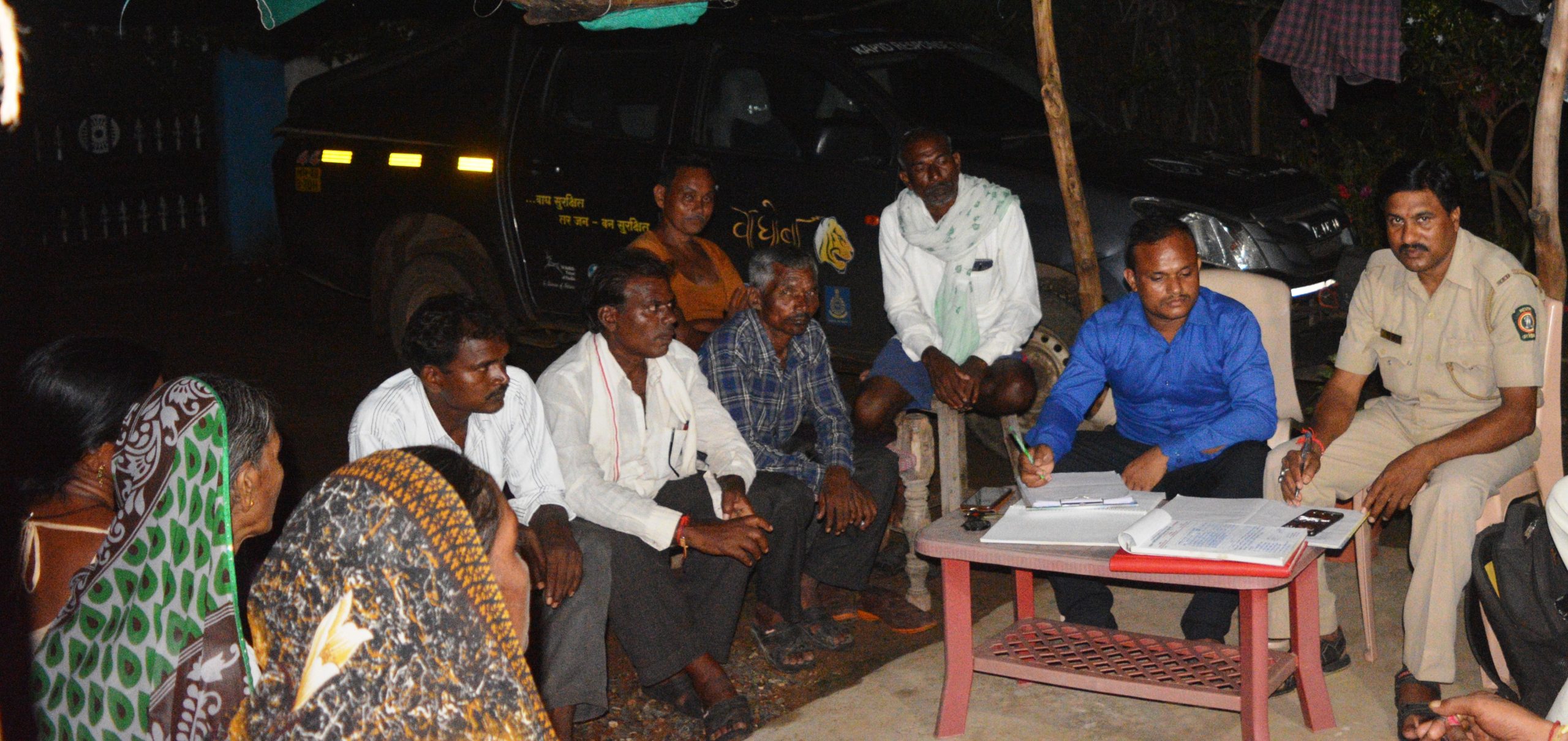
Coexistence meetings conducted during evenings | Photograph by Team WTI
Over time, these repeated conversations helped build trust. We discussed wildlife and safe behaviour, but equally importantly, we listened to people’s concerns about livelihoods, forest dependence, crops, livestock and human safety. This experience taught me that coexistence cannot simply be communicated to communities; it has to be built with them.
Livelihood interventions became an important part of this process. Improved cookstoves were introduced to reduce household fuelwood requirements, while biogas units were installed in villages like Jambhulpani and Sodlagondi. Communities were also facilitated in accessing LPG connections through government schemes. Project assessments subsequently indicated substantial reductions in fuelwood consumption, thereby reducing the need for frequent forest visits.
At the same time, communities were trained in sustainable NTFP collection, value addition and livelihood development so that forest produce could generate higher income without increasing extraction pressure. Community members began developing products for local and external markets, including through small Nisarga Stores. Women became important partners in this process. The Nagzira Self Help Group, initially formed with both men and women, later evolved into a women-led group after being linked with UMED- Maharashtra State Rural Livelihoods Mission. The group strengthened its enterprises and received recognition through the Government of Maharashtra’s Hirkani Award, along with seed support for micro-enterprise development.
The transformation is particularly meaningful when compared with our earliest interactions. People who were once reluctant to participate in conservation meetings are now involved through SHGs, EDCs, PRTs and other community institutions and cooperate with the Forest Department in wildlife conservation activities.
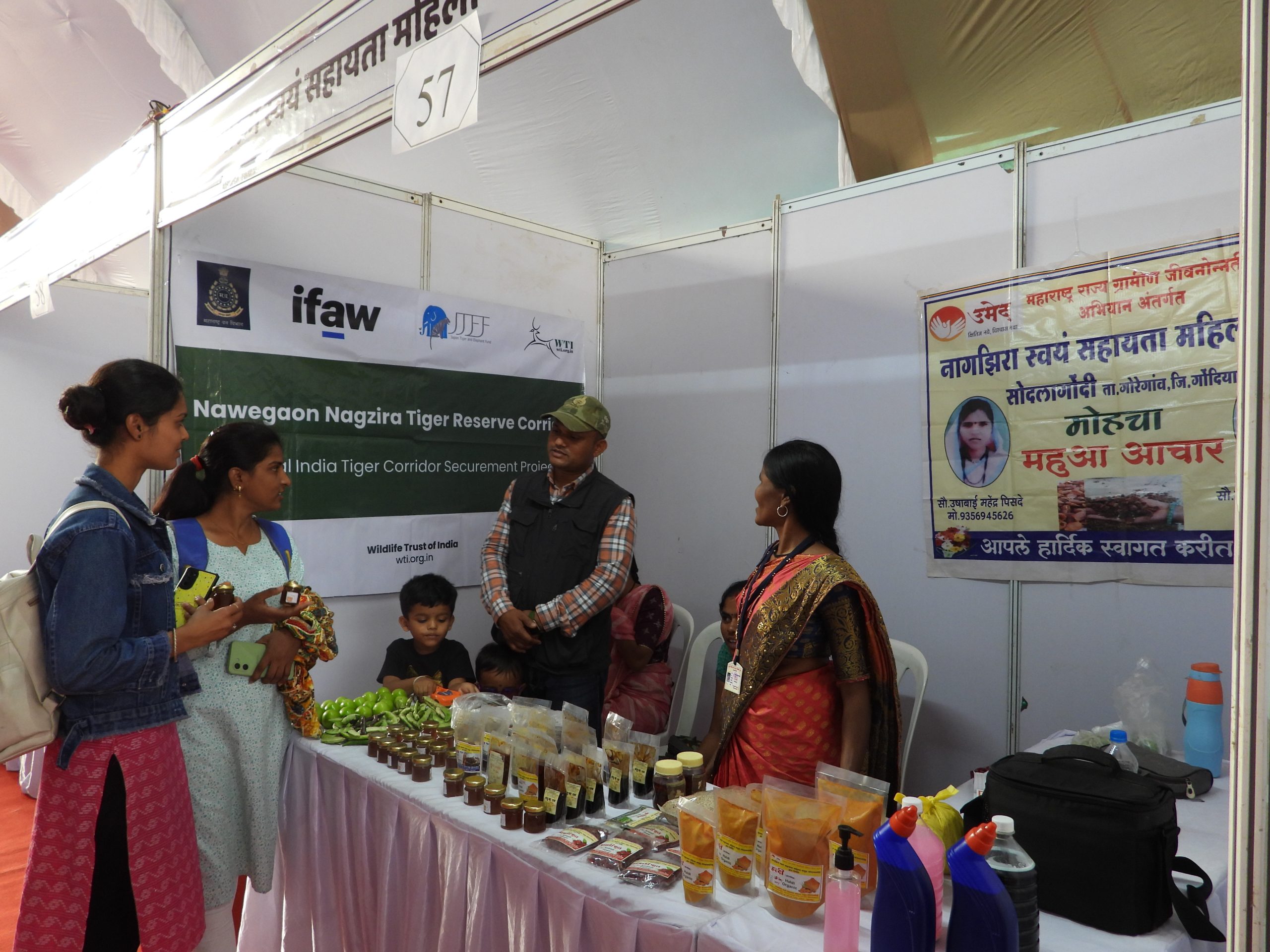
Nagzira SHG enterprises have showcased their products at various events | Photograph by Team WTI
Coexistence does not mean the absence of conflict
These experiences of Jambhulpani and Sodlagondi do not mean that negative human-wildlife interactions have disappeared. Human fatalities due to tiger attacks have continued to occur in this landscape. Livestock losses, crop damage and accidental encounters remain genuine concerns, and with each such incident, it is a reminder that coexistence with large carnivores comes with real challenges and risks.
Coexistence in such scenarios does not mean expecting communities to simply tolerate losses. It means reducing avoidable encounters, improving awareness and preparedness, strengthening community-based response mechanisms, supporting livelihoods, addressing genuine losses, and creating institutions through which people can actively participate in conservation.
This is why Ushatai’s words remain so significant: “The tiger is here, so we need to be cautious and give it the space to move safely.”
The statement does not suggest an absence of fear. Instead, it reflects a gradual shift from fear and hostility towards awareness, caution and a more informed response to wildlife presence.
Corridors as shared landscapes
Wildlife corridors are often represented on maps as lines connecting forest patches. But on the ground, those lines pass through villages, agricultural fields, roads and railway lines. They include places where people collect mahua flowers (Madhuca longifolia), graze livestock, travel to school and earn their livelihoods.
For a tiger, the landscape may provide a pathway between habitats.
For people, the same landscape is home.
My own journey from growing up in a village close to Jambhulpani- Sodlagondi and experiencing wildlife largely through fear and livelihood concerns, to working as a conservation professional in the same landscape has reinforced this understanding. Today, when I think of a tiger moving through a corridor, I do not see only the tiger. I also think of the farmer working beside the forest, the woman collecting mahua, the Forest Department staff patrolling the landscape, the PRT member responding to an incident, and the family travelling along a road passing through tiger habitat.
They are all part of the same landscape.
The most important lesson I have learnt during these years is that people living alongside wildlife are not merely beneficiaries of conservation; they can become some of its strongest partners.
Tigers will continue to need forests and connected corridors to survive. Communities living in those landscapes will continue to need safety, livelihoods, education and opportunities for a better future.
Conservation must therefore create space for both.
Perhaps that is why Ushatai’s simple words stayed with me. They reflect something that took years of engagement to develop: a recognition of risk, an understanding of wildlife and a willingness to share space.
Mahendra is an Assistant Manager in the Central India Tiger Corridor Securement Project