
Pochury Naga community safely releases Chinese pangolin back into the forest
24 November, 2026, Meluri: In a heartening display of wildlife stewardship and community-led conservation, a critically endangered Chinese pangolin was successfully rescued and released back into its natural habitat in Meluri through the timely intervention of vigilant local community members and personnel from the Nagaland Department of Environment, Forest and Climate Change.
Just weeks after the commencement of the Pangolin Cup football tournament in Meluri, Nagaland, members of the community were able to safely rescue and release a Chinese pangolin that had been spotted around a residential area, crossing a road. Recognising the ecological importance of the species and its protected status, Ngoushutho Ngouri, a local resident, had immediately alerted local forest officials instead of disturbing the animal, ensuring it remained unharmed until the rescue team arrived. A rapid response team from the Meluri Forest Range arrived at the site and took custody of the animal. After a thorough physical examination confirmed the pangolin was healthy, uninjured, and fit to survive in the wild, officials and community members jointly released it into a secure, suitable forest habitat away from human settlement.
Chinese pangolin rescued in by members of the Pochury Naga community in Meluri, Nagaland
“Recently, I had the opportunity to participate in a one of a kind of football tournament called the Pangolin Cup. An initiative by the Wildlife Trust of India, the event made me aware of this unique species in the landscape and its importance to our ecosystem. A few weeks later, we came across a pangolin by the side of the village. We immediately ensured that it was not hunted, as has happened in the past and released it back into the forest, in an area known to be its natural habitat,” said Mr Ngouri.
It was also during the event that the Pochury Hoho, the apex leadership of the community, passed a resolution on the complete ban on pangolin hunting in the region and a hefty fine of INR 50,000 for those who were found hunting or involved in the trade of the species. This ban extends to 30 villages under the Pochury Naga community. The football tournament, which had eight clubs from neighbouring villages playing for the Pangolin Cup, saw the participation of at least 10,000 locals over the six days of the tournament. The event was hosted in Meluri, which has also been identified as a habitat for the critically endangered Chinese pangolins. WTI has been working with the locals to raise awareness about the species and is also leading a camera trapping survey to get insights into the population of pangolins in the area.
Talking about the release, the Range Forest Officer, Meluri, commended the swift action and awareness demonstrated by the local residents. “The survival of endangered species like the pangolin depends heavily on the active participation and vigilance of local communities. This rescue is a testament to the growing conservation ethos in Meluri, where citizens and the Forest Department are working hand-in-hand to protect Nagaland’s rich biodiversity,” he stated.
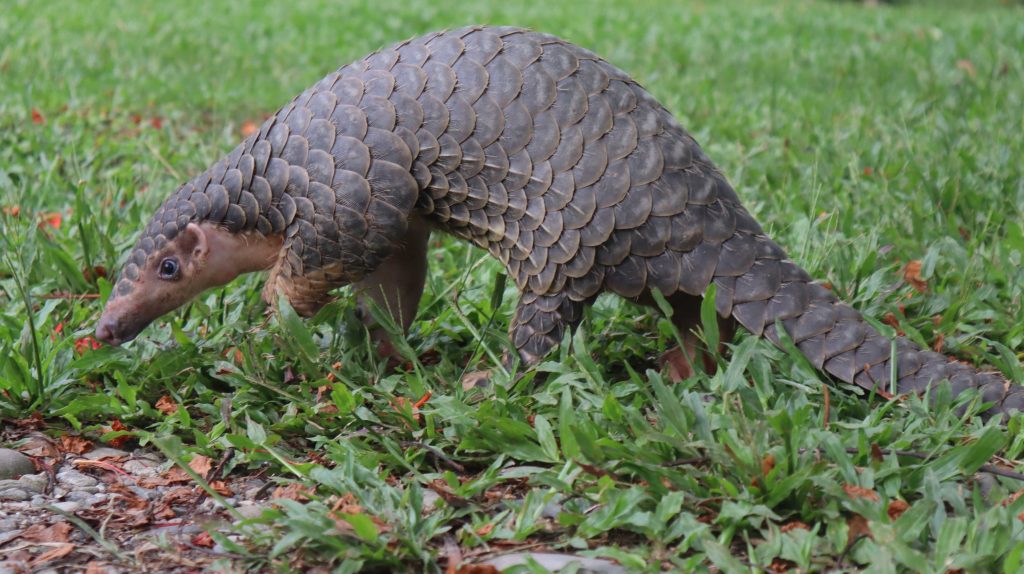
File photograph of a Chinese pangolin | Photograph © Dr. Panjit Basumatary/WTI
Meluri lies close to the Indo-Myanmar border, a route often associated with illegal trade of wildlife. WTI, through its Countering Pangolin Trafficking Project, supported by the Pangolin Crisis Fund and The Serenity Trust, aims to reach out to the communities across these bordering regions to ensure that the illegal trade is tackled. In the past three years of the project, the team has already had the support of more than 500 villages of Tangkhul Naga and Sangtam Naga communities.
Pangolins are the world’s only scaly mammals and are among the most heavily trafficked wildlife species globally due to illegal hunting and trade. Both the Indian Pangolin (Manis crassicaudata) and the Chinese Pangolin (Manis pentadactyla) are strictly protected under Schedule I of the Wild Life (Protection) Act, 1972. Hunting, trapping, or trading the species is a cognizable and non-bailable offence carrying stringent legal penalties. Alongside awareness, the WTI team has also been working with enforcement agencies, including forest department, customs and border security in identifying wildlife products and ensure stricter check on cross-border trade.