
Predator-proof house cluster in Katerniaghat, Uttar Pradesh: A step towards human-big cat coexistence
Katarniaghat, 22nd January 2026: In a significant step towards enhancing human safety and promoting coexistence with wildlife, a predator-proof house cluster has been established in Lohra village of Nishangada Range, Katerniaghat Wildlife Sanctuary, located in Bahraich District, Uttar Pradesh. This pilot initiative has been implemented to safeguard local communities, particularly children, residing in house clusters near forest edges from accidental attacks by big cats, such as leopards and tigers.
Led by the Wildlife Trust of India (WTI), the initiative is implemented in partnership with the local community, the Uttar Pradesh Forest Department, and local governance bodies, such as the Block Office and Gram Sabha, with support from the North of England Zoological Society (Chester Zoo), United Kingdom, as part of WTI’s long-term human–big cat coexistence project in Uttar Pradesh’s Terai landscape.
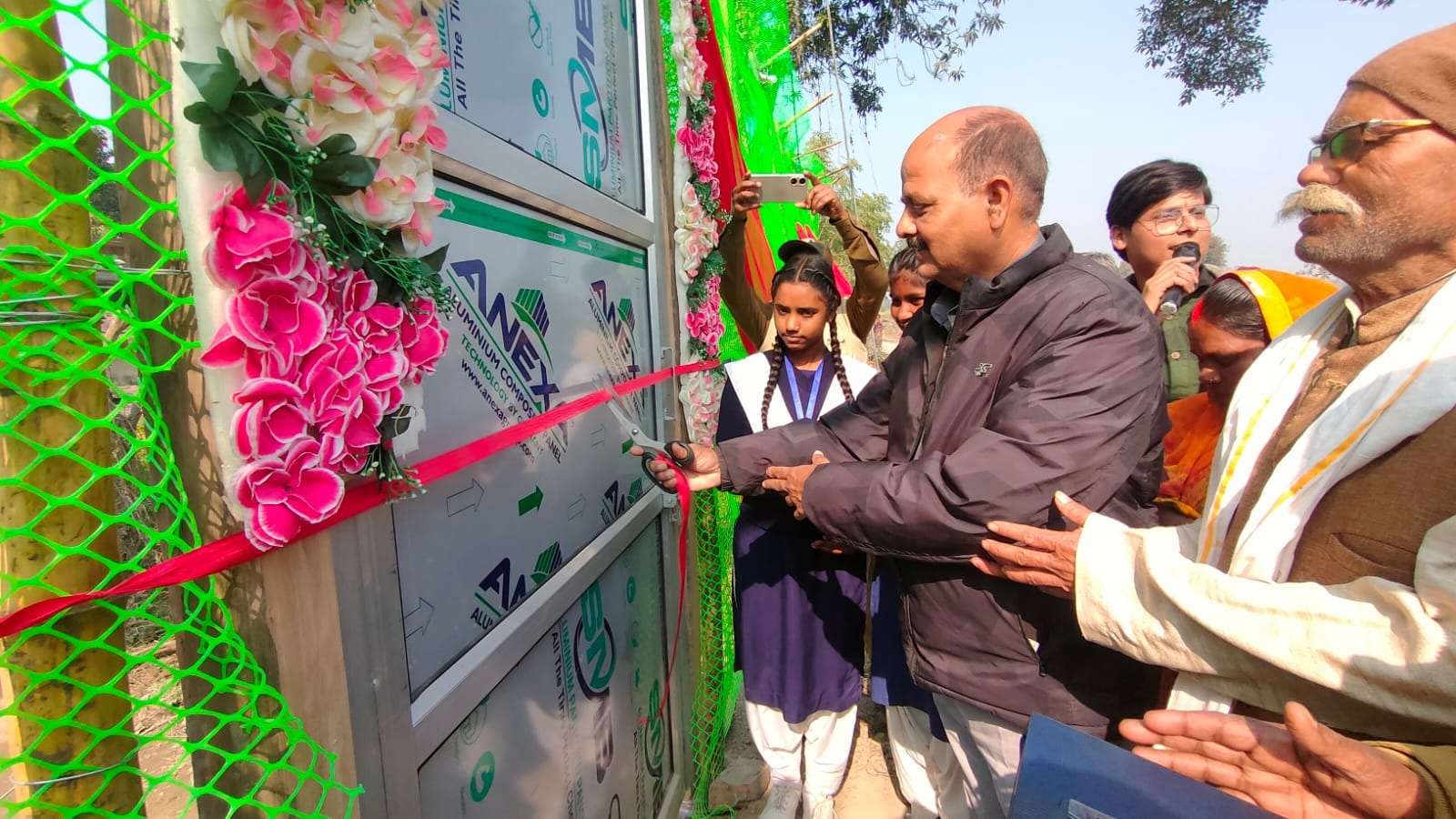
Inauguration of the predator-proof house cluster in Katarniaghat | Photo (c) Team WTI
Katerniaghat Wildlife Sanctuary and its adjoining agricultural landscapes support a sizeable leopard population at relatively high densities. The sanctuary’s fringe areas are dotted with small house clusters that often lack compound walls and adequate lighting, offering limited safety to people, especially children and livestock, from large carnivores. Additionally, many residents sleep outdoors at night as a regular practice, increasing their vulnerability to attacks by big cats.
Children are more vulnerable to such incidents due to their small size and are easy prey for leopards. Long-term data analysis indicates that, on average, 7-8 children suffer injuries or fatalities annually in the Katerniaghat landscape due to accidental attacks by big cats, many of which occur within house cluster premises. The actual figure may be higher as some incidents could go unreported.
Dr. Abhishek Ghoshal, Manager & Head of WTI’s Conflict Mitigation Division, said that to address this serious challenge, they piloted predator-proofing of a vulnerable house cluster as a potential model of human–big cat conflict mitigation and coexistence. The primary objective is to protect people, especially children, residing in these vulnerable house clusters along the forest edge from accidental attacks by big cats. This initiative was made possible through the active involvement and commitment of resident families, local community institutions, and local administration, including the Block Office and the Uttar Pradesh Forest Department.

The PPH cluster had 15ft bamboo walls, auto-closing gates, and motion sensor lights to protect villagers from leopard and tiger attacks | Photo (c) Team WTI
Materials such as bamboo poles and PVC chain-mesh that are easily available in local markets have been used to construct the predator-proofing structure. The structure stands12-15 feet high and is equipped with metal auto-closure doors for people’s movement, motion-sensing lights as a deterrent for big cats connected to a solar-powered inverter, a central hooter alarm in case of emergency and information pamphlets on safe practices.
Dr. H. Rajamohan, Field Director, Dudhwa Tiger Reserve, stated that human injuries and deaths due to leopard attacks are deeply unfortunate and lead to a conflict situation. Predator-proofing vulnerable house clusters in Katerniaghat is a simple yet powerful intervention. He described predator-proofing vulnerable house clusters in Katerniaghat as a straightforward yet highly effective intervention, adding that the initiative is expected to reduce human casualties, improve community tolerance towards big cats, and support their long-term conservation in the Katerniaghat region.
Dr. Samir Kumar Sinha, Chief Ecologist, WTI, said that this initiative follows a community-based participatory approach. The team first conducted a detailed microanalysis based on long-term data, developed a solution and consulted with key stakeholders to ensure local perspectives are incorporated and a sense of ownership is fostered towards the initiative.
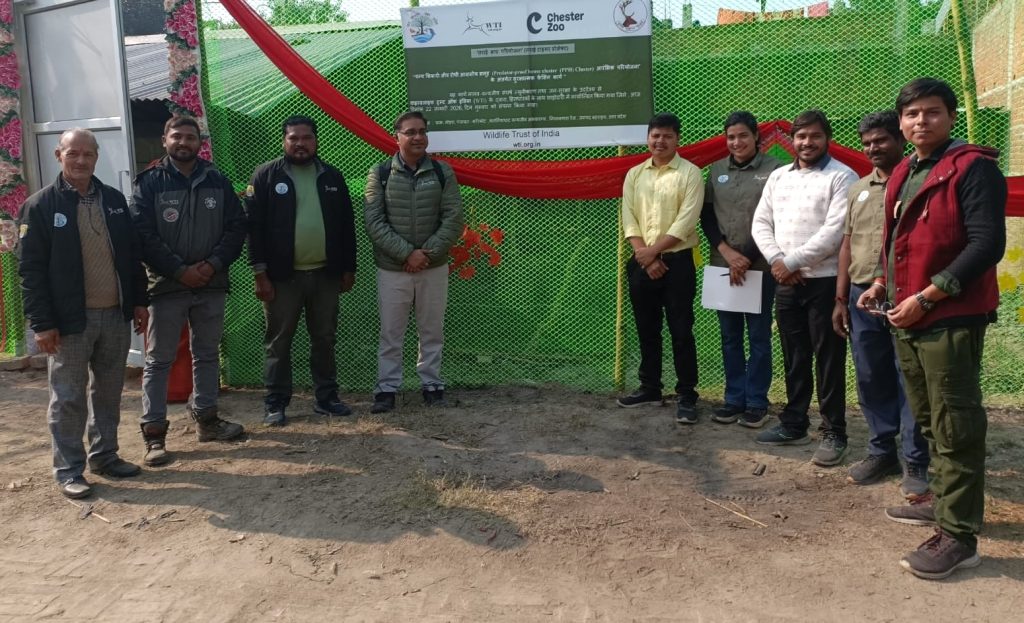
The Terai Tiger Project team | Photo (c) Team WTI
The team from WTI included Ms. Jyoti Antil, Mr. Archit Mishra, Mr. Santram Chauhan, Primary Response Team (PRT) Coordinator Mr. Sanjay Singh, and members Mr. Ramkishor, Mr. Lal Bahadur, Mr. Santosh Kumar, Mr. Omprakash Rajbhar, Mr. Omprakash Chauhan, Mr. Usman Ali and Mr. Abhimanyu Parjapati.