Project Info



Project Description
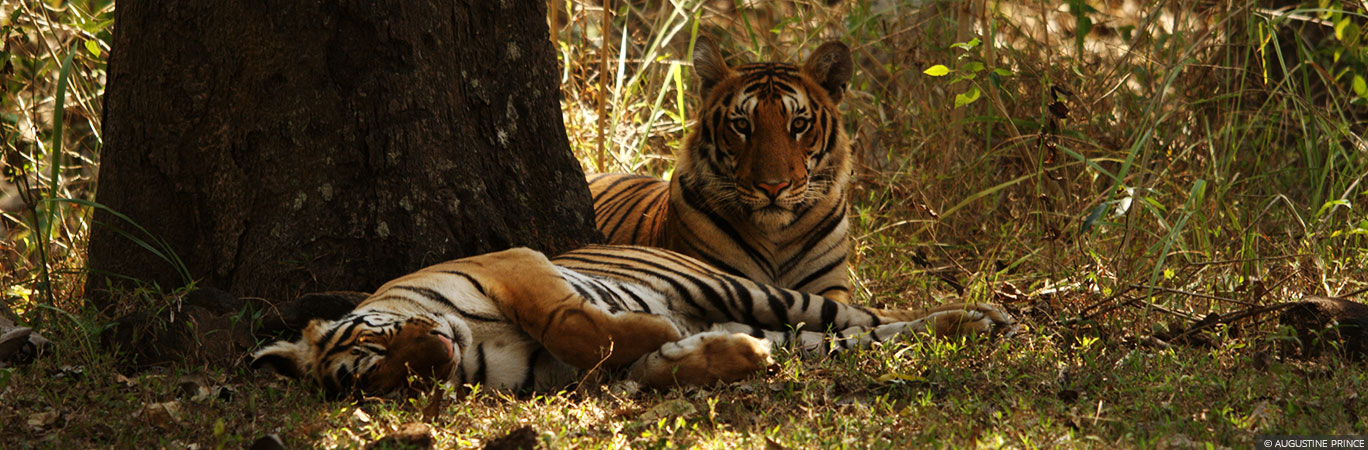
The Pilibhit-Dudhwa-Katerniaghat landscape in the Indian Terai is a globally important stronghold for tigers and leopards. The landscape is a mosaic of forests and grasslands interspersed with agriculture, high human density, and strong dependence on natural resources, leading to frequent overlap between people and wildlife. Human–big cat conflict is particularly pressing, with frequent attacks on livestock and humans, including children, resulting in injuries and occasional deaths. This often leads to public agitation, retaliatory killings of big cats and removal of individuals involved in conflict situations.
The Wildlife Trust of India (WTI), in collaboration with Chester Zoo, has been implementing a conflict mitigation project through a participatory and inclusive approach. The vision is ‘Human-big cat conflict-led persecution as a major driver of population decline of big cats in the region is eradicated’. The objectives include (i) Effectiveness of in-situ response mechanisms significantly enhanced; (ii) Strengthen social capacity towards big cats and avoid/manage negative interactions; (iii) Effectively reduce attacks by big cats on humans (especially children); and (iv) Strengthen human-wildlife interaction management policies and communications at the landscape/ District level. During this phase, the aim is to institutionalise the project’s approach within local community institutions and relevant government schemes. The project has been recognised by the International Union for Conservation of Nature (IUCN) as a global case study for human-big cat conflict mitigation and coexistence.
From Reactive to Proactive
In its early phase, the project primarily relied on capturing conflict animals as a reactive measure. However, by 2014, it became evident that capturing big cats was neither a sustainable nor an effective long-term solution. The project strategy was thus overhauled, shifting towards proactive conflict mitigation.
The core aim of the project is to reduce the negative impacts of human-big cat conflicts in the Dudhwa-Pilibhit-Katerniaghat landscape. This is done through a combination of biological, veterinary, and sociological interventions. One of the key goals is to minimise the need to capture tigers and leopards during conflict situations by building a faster, more efficient response system and strengthening the capacity of the forest department’s frontline staff.
A major focus of the project is on empowering local communities, especially the youth, to take an active role in conflict mitigation. To build local ownership, a network of Primary Response Teams (PRTs) has been established. These are voluntary groups made up of trained community members who assist during conflict situations. Their responsibilities include crowd management, awareness building, data collection, and monitoring the movement of conflict-prone animals.
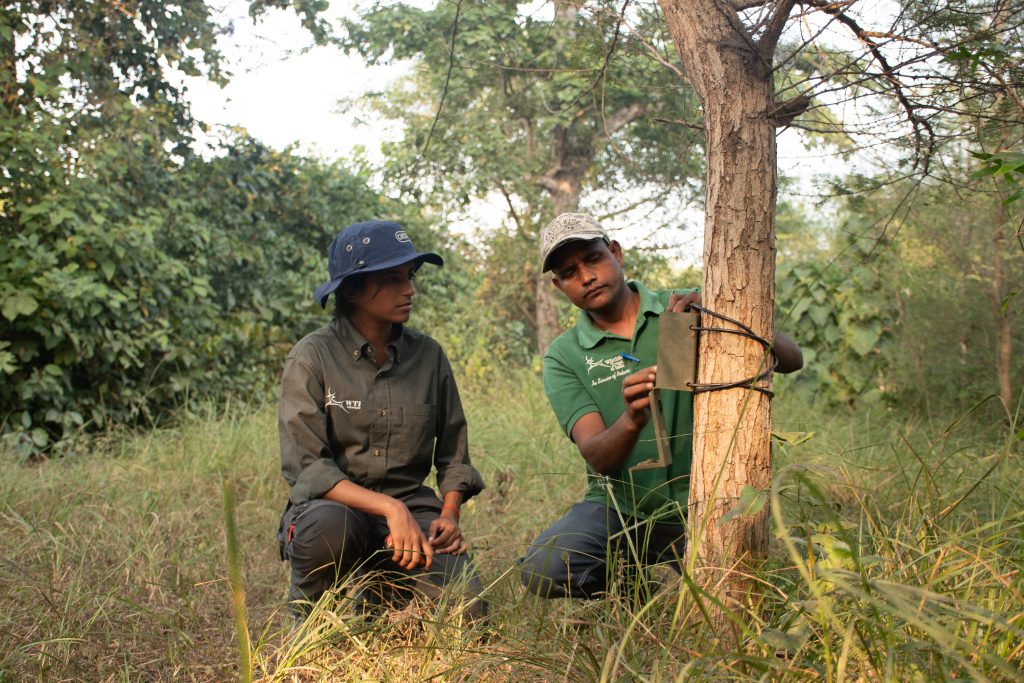
WTI RRT setting up camera traps in the field | Photo © Madhumay Mallik/WTI
The RRTs also engage with families affected by conflict, holding consultations to provide support and develop practical solutions. They play a key role in sensitising local communities on safety practices to follow during human-wildlife encounters.
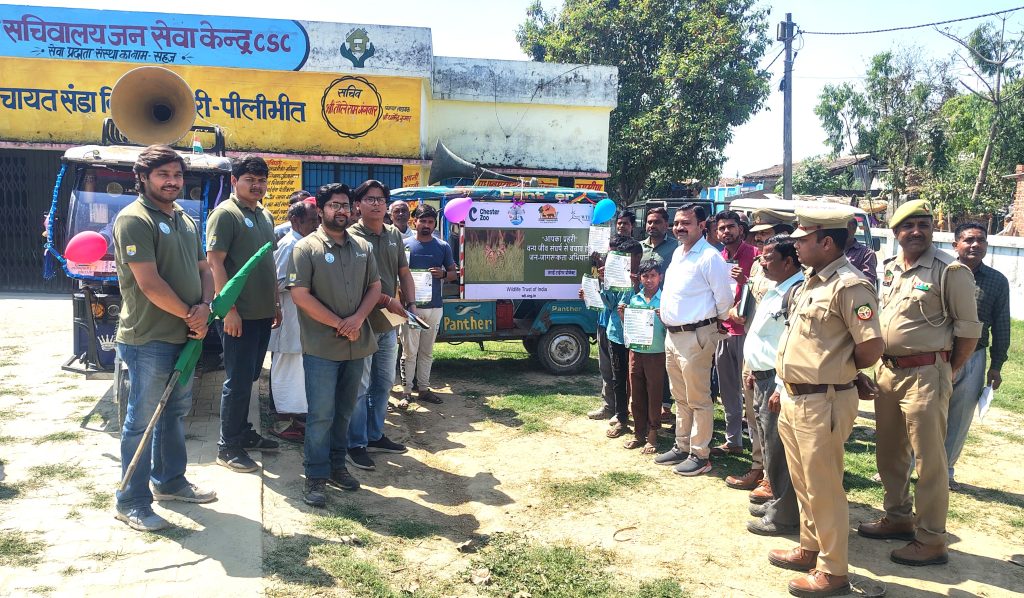
Public alert system sensitises local people on safe practices to avoid accidental attacks by big cats, and proactively assists people (including children) back to safety if found at vulnerable locations at vulnerable times | Photo © TeamWTI
To reduce dependency on forest resources, particularly firewood, the project promotes the use of Improved Cook Stoves (ICS). These stoves, made from locally available materials, have been shown to cut firewood consumption by up to 40%. This not only helps conserve forests but also improves indoor air quality, benefiting the health of users, primarily women.

ANIDERS devices have been strategically installed in sets of five at Mandaria and Dhankuni | Photo © Team WTI
The project has also introduced Animal Intrusion Detection and Repellent Systems (ANIDERs), technological solutions designed to detect and deter wild animals from entering human-dominated areas. These systems help prevent crop damage, protect property, and improve public safety, offering an additional layer of conflict prevention.
In a significant step towards enhancing human safety and promoting coexistence with wildlife, a predator-proof house (PPH) cluster has been established in Lohra village of Nishangada Range, Katerniaghat Wildlife Sanctuary, located in Bahraich District, Uttar Pradesh. This pilot initiative has been implemented to safeguard local communities, particularly children, residing in house clusters near forest edges from accidental attacks by big cats, such as leopards and tigers.
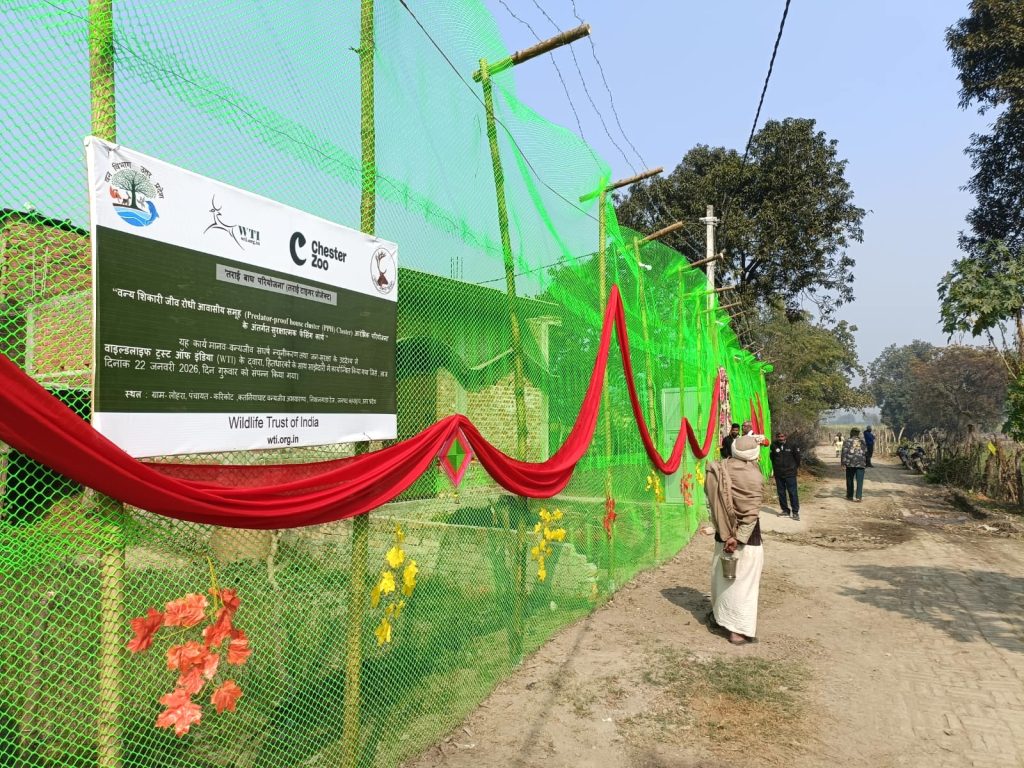
The PPH consists of a 12-15 ft high fence made using PVC net-mesh and bamboo poles, metal auto-closing doors, motion-sensing solar-powered lights along the perimeter, a central hooter alarm connected to all the houses inside the enclosure, and an emergency hydraulic exit | Photo © Team WTI
This long-term, community-driven initiative is a testament to how coexistence with big cats is possible when conservation efforts are proactive, inclusive, and rooted in local realities. By bringing together forest officials, scientists, local communities, and technology, the Terai Tiger Project is paving the way for safer shared spaces for both humans and wildlife.
PARTNERS: Uttar Pradesh Forest Department and Chester Zoo
PROJECT LEAD: Abhishek Ghoshal