WTI highlights conservation efforts at ‘3rd National Conference on Lesser-Known Species in MP’
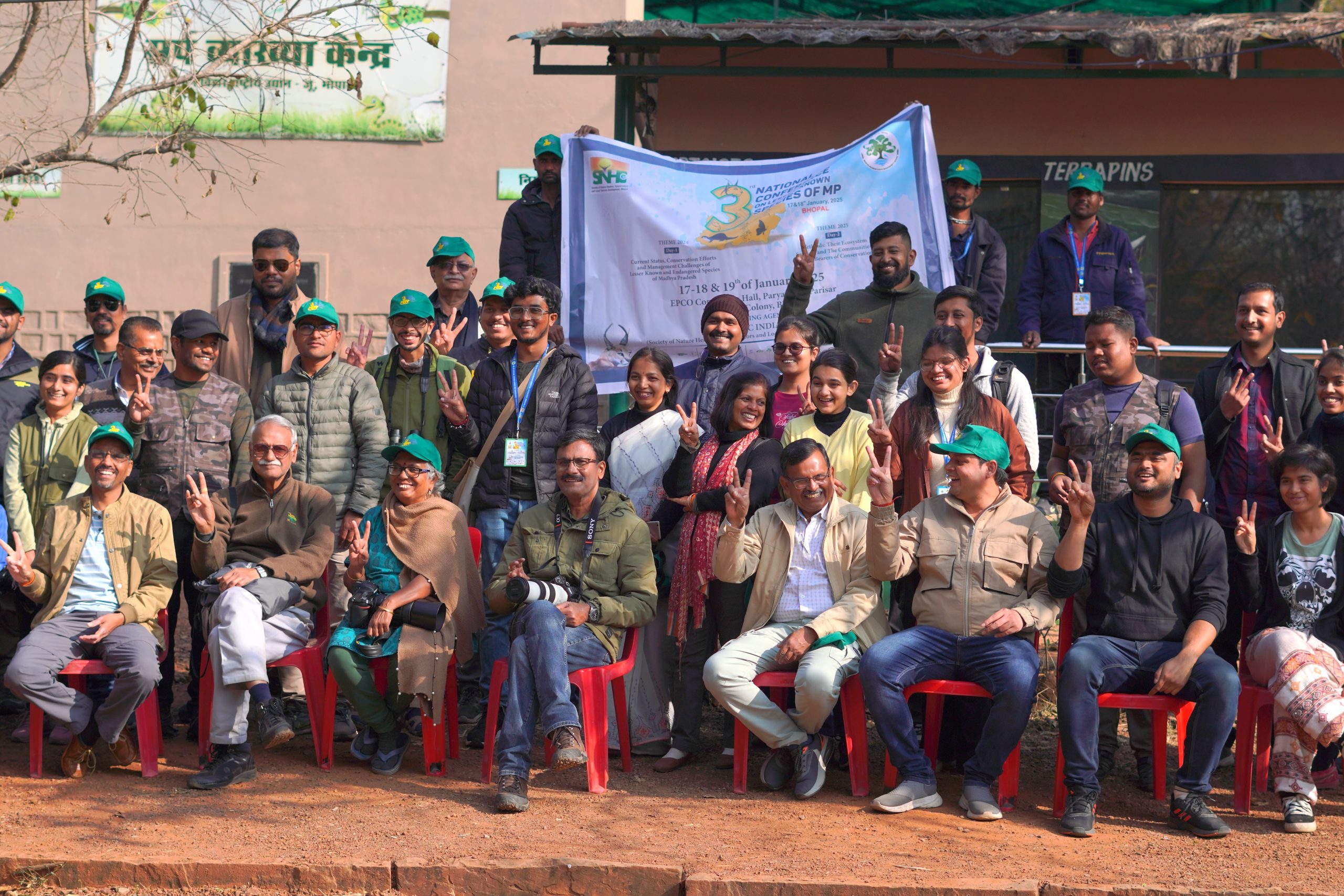
Bhopal,19th January 2025: The Society of Nature Healers, Conservators, and Local Tourism Development (SNHC India), in collaboration with the Madhya Pradesh State Biodiversity Board, hosted the 3rd National Conference on “Lesser-Known Species of Madhya Pradesh” from January 17–19, 2025. This initiative focused on addressing the pressing conservation needs of lesser-known species—those characterised by limited research, restricted distribution, rapid population declines, or data deficiencies.
The first day of the conference was focused on the current status, conservation efforts, and management challenges of lesser-known and endangered species of Madhya Pradesh. The second day emphasised wetlands, their ecosystem services and the role of communities.
The conference aimed to bridge critical knowledge gaps and promote conservation action for lesser-known species. With a strong emphasis on research utilisation and community involvement, the event sought to review existing data on lesser-known species; provide a platform for national experts to discuss conservation challenges; propose actionable conservation plans and management strategies; highlight Madhya Pradesh’s unique faunal diversity in the national context and encourage further research and field studies.
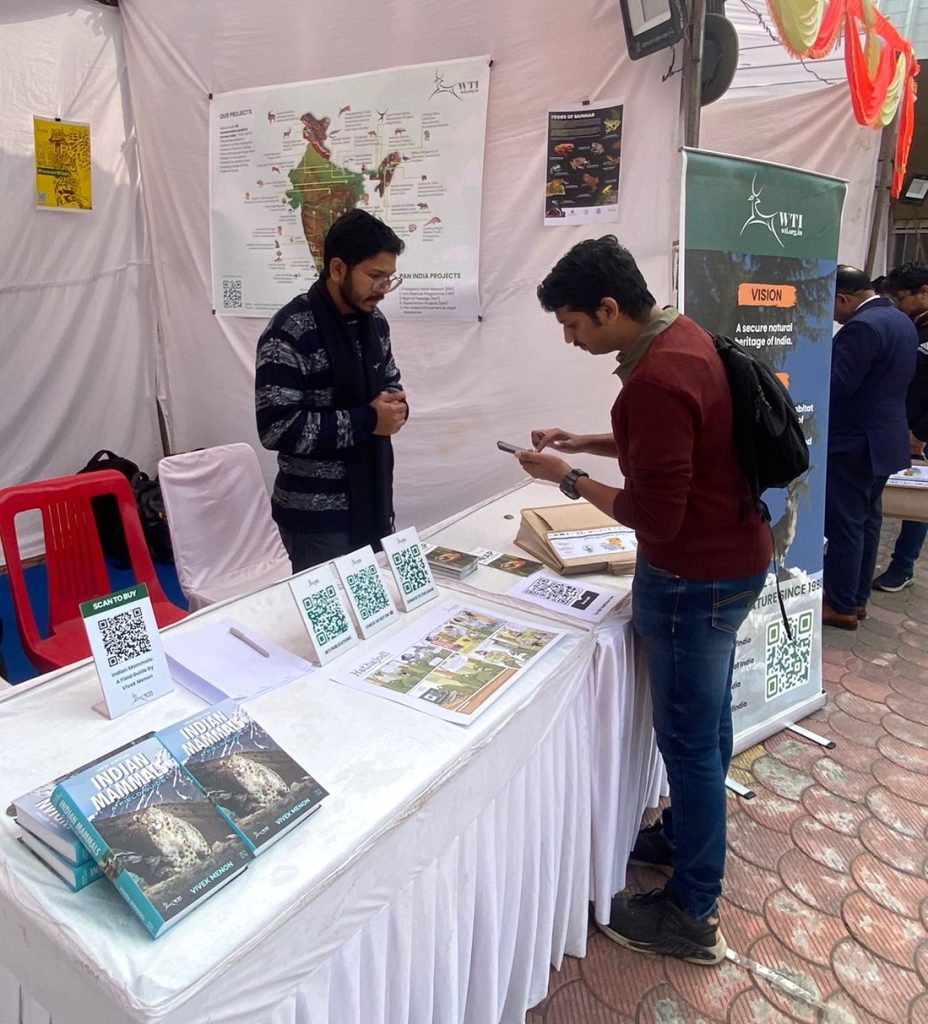
WTI’s stall highlighted our various projects across India | Photo by Adil Arif/WTI
The Wildlife Trust of India (WTI) played a pivotal role as an organising partner and set up an educational stall showcasing our conservation projects across India, with an emphasis on Rapid Action Projects (RAPs). These are short-term interventions designed to address urgent conservation challenges. Unlike depth projects, which focus on specific species or landscapes, RAPs are versatile and can target any threatened species or habitat. This flexibility is particularly advantageous for lesser-known species, where even small-scale interventions can effectively mitigate threats. Given that few organisations have dedicated projects for such areas of conservation, RAPs play a crucial role in their protection. By sharing these initiatives, WTI provided actionable insights for grassroots conservation efforts and inspired participants to take on similar projects.
A highlight of the conference was a session on community engagement in wetland conservation, led by Dr. Samir Kumar Sinha, Joint Director and Chief Ecologist, WTI, and chaired by Mr. Praveen Chandra Dubey, IFS (Retd), Former PCCF, Madhya Pradesh. Dr. Sinha highlighted WTI’s Sarus Crane Conservation Project, a community-led initiative that’s been active since 2013, spanning 10 districts in eastern Uttar Pradesh.
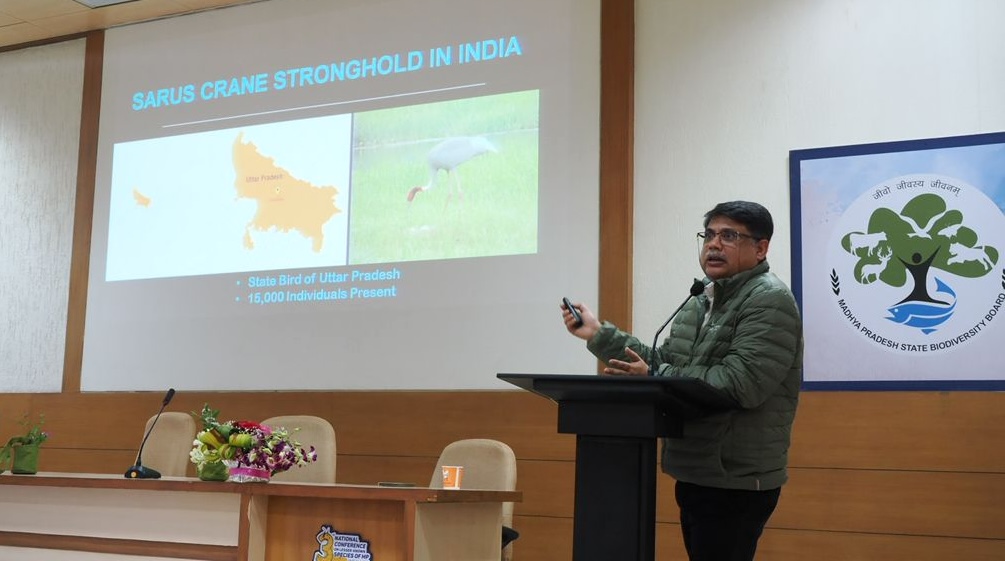
Dr. Samir Kumar Sinha from WTI talked about our Sarus Crane Conservation Project in Eastern UP | Photo by Adil Arif/WTI
The conference emphasised the need for detailed research on data-deficient species and highlighted the importance of involving communities as custodians of conservation. A series of discussions were held during the conference, all of which aimed to develop effective conservation strategies based on current research; identify gaps and initiate new studies on under-researched species; and foster collaboration among researchers, NGOs, and government agencies for on-ground implementation.