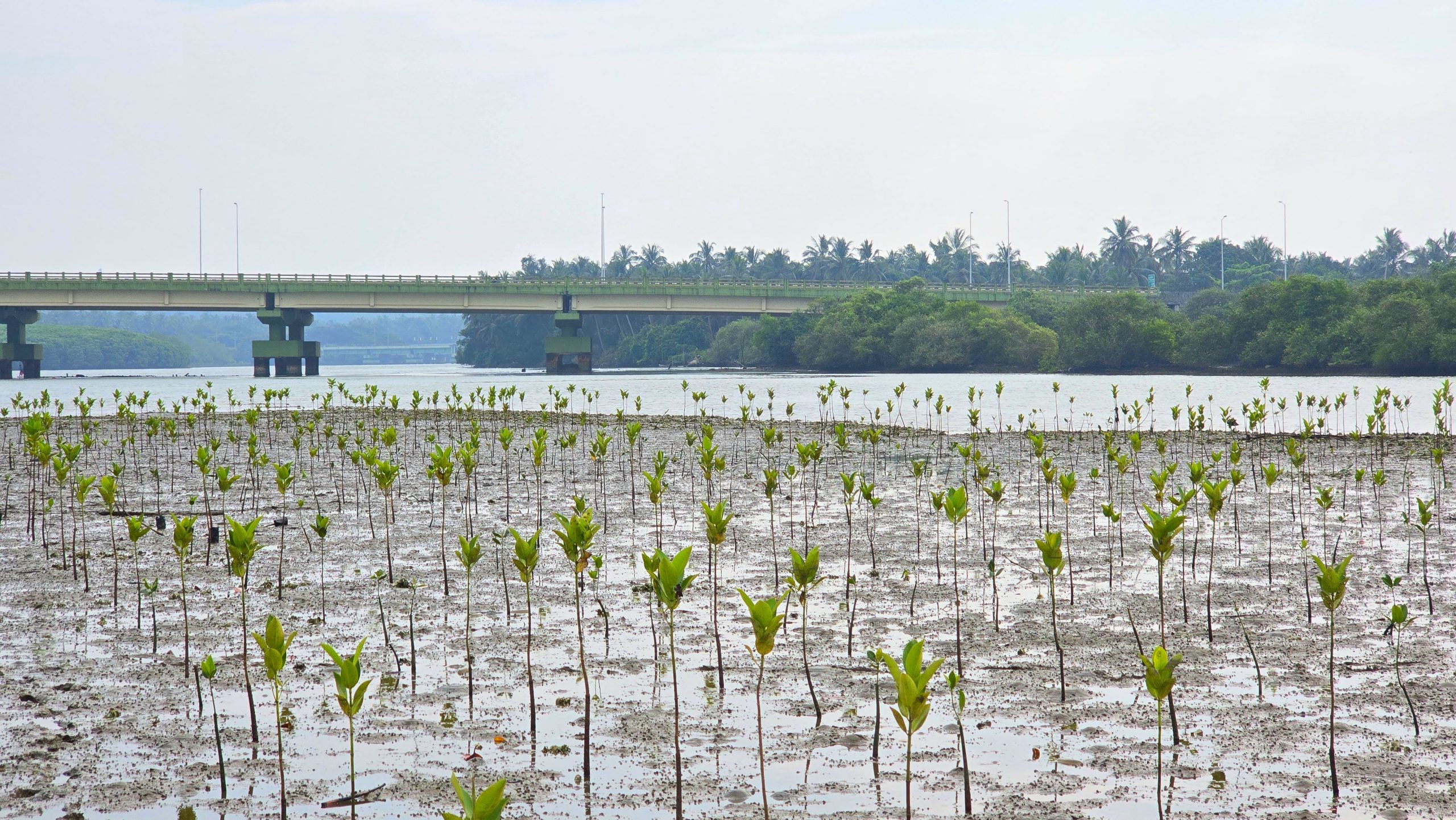
Are invasive plants a real threat to mangroves in Kerala?
Kerala’s Malabar coast – a stretch of 590 km along the Arabian Sea, begins at Mangalore in the north and extends down to Kanyakumari in the south. The North Malabar coast, encompassing the districts of Kasargod, Kannur, Kozhikode and Malappuram, is both an ecologically and economically significant region. It hosts diverse wetlands, estuarine plains and approximately 70% of Kerala’s mangrove ecosystem. However, apart from anthropogenic threats, the mangroves in Kerala have been facing rising challenges in the form of invasive plants, consequently threatening the wildlife diversity and livelihood along the landscape. This includes the mangroves of Kannur, which alone account for nearly 83% (7.5 sq km of the total 9 sq km) of Kerala’s mangrove belt.
A coastline under threat
Mangrove wetlands serve as habitat for a diverse range of aquatic and terrestrial species. They shield the shoreline from sediment erosion, thereby protecting the land from high tides and flooding. Furthermore, coastal communities depend on these estuarine ecosystems for their livelihoods, engaging primarily in fishing, shrimp farming, mussel farming and traditional agricultural practices such as Kaipad cultivation.
The entire mangrove ecosystem in Kerala, however, faces ongoing threats from industrial waste, unsustainable shrimp farming, roadway construction, expanding urban development and uncontrolled tourism, all of which disrupt the ecosystem as a whole. In addition to anthropogenic pressures, mangrove species (including Bruguiera, Avicennia, Rhizophora and Excoecaria) located in both the landward and fringing zones along the northern coast, are now threatened by invasive plant species.
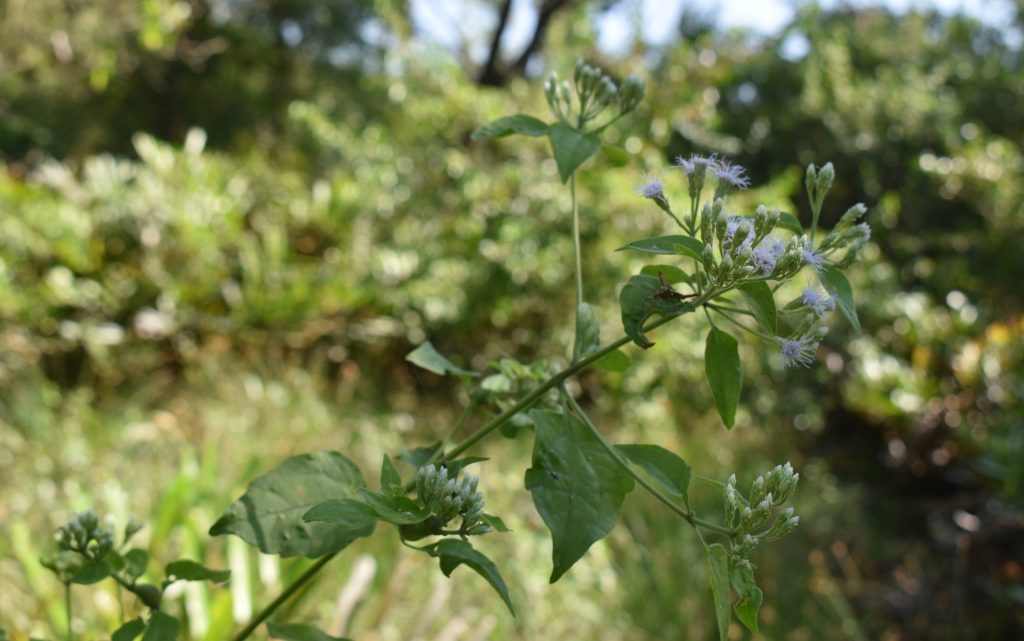
Jack in the bush (Chromolaena odorata) in mangrove habitat along the north Malabar coast | Photograph © Vimal Lakshmanan NV / WTI
Diversity and propagation of invasive plant species in Mangrove habitat
The major invasive species seen in the mangrove ecosystem of Northern Kerala include Acacia mangium, Chromolaena odorata, Gliricidia sepium, Mikania micrantha, Mimosa pudica, Pennisetum polystachion and Sphagneticola trilobata. These species are native to America except for Acacia mangium, which is native to the Australian continent. In Kerala, these species have been introduced as ornamental, forage, restoration and timber plants.
Invasive species such as these have the peculiar advantage of multiple seed dispersal or propagation methods. Their adaptability enables them to survive and multiply in varied climatic or geographical conditions. The seeds of species like Mikania micrantha, Pennisetum polystachion and Chromolaenaodorata are carried by the wind, allowing wide dispersal and increasing their area of settlement. Their seeds also get attached to the bodies of animals and are carried further. Acacia mangium, on the other hand, disperses its seeds by bursting the seed pods, after which they are further carried by the wind. Sphagneticola trilobata, on the other hand, relies on vegetative propagation, wherein new saplings grow from root and stem cuttings, thus overpowering endemic species.
Tidal inundations also play an important role in transporting the seeds or stem cuttings of these invasive plants, especially in the case of Epipremnum aureum, which has buoyant seeds, specially adapted for this propagation. The tides deposit the seeds near new mangrove areas, crippling the local balance.
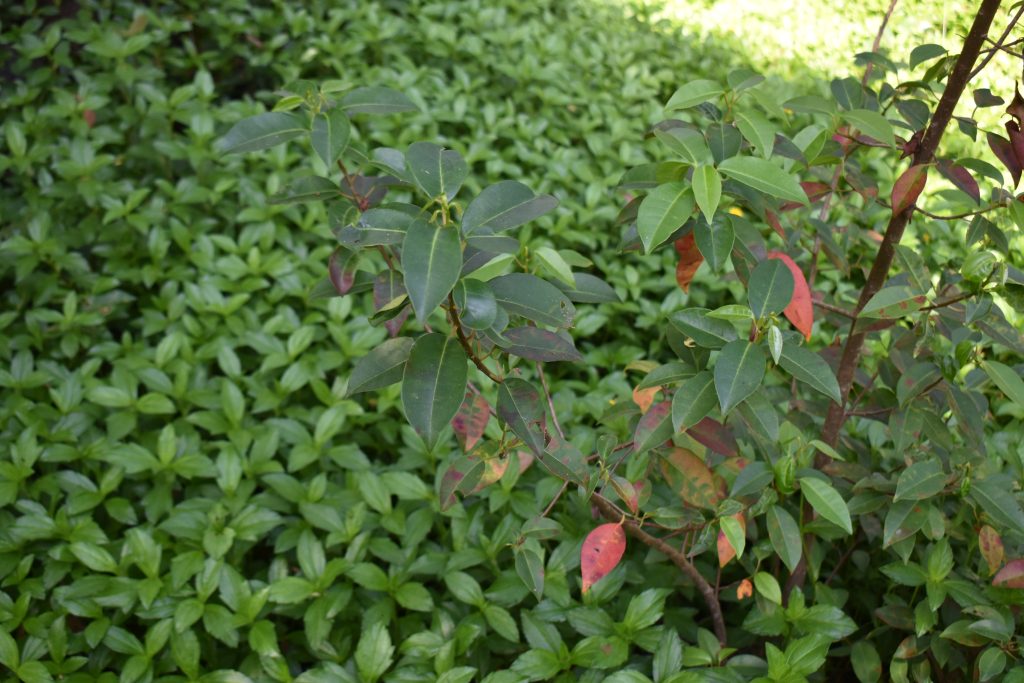
The invasive creeping-oxeye (Sphagneticola trilobata) in the mangroves of Kannur | Photograph © Vimal Lakshmanan NV / WTI
The threat of invasive plant species to mangrove habitats
The rapid and uncontrolled growth of invasive plants makes it harder for mangroves to compete for nutrients, sunlight and space. Species like Mikania micrantha spread over the mangrove canopy, especially on Rhizophora mucronata, strangling the plants and blocking sunlight from reaching the forest floor. The same is true for Acacia mangium, which dominates the supply of nutrients and water. Moreover, the dead leaves of this tree cover the forest floor, hindering the natural regeneration of mangroves and other native plant species. Further, the allopathic potential of these plants, i.e., the biochemicals produced, prevents the natural growth of endemic saplings and affects their seed production capacity. Chromolaena odorata and Pennisetum polystachion, which grow along inland areas, also pose a threat by forming impenetrable thickets that outgrow the mangroves. Invasive species such as these also change soil properties by altering its salinity and other mineral composition.
Plants like Sphagneticola trilobata, further alter the structure of natural habitats, affecting several avian species dependent on these wetland trees. This species in particular covers the canopy and branches of endemic plants, making it harder for birds to build nests. The invasive creeper also affects the crab population by making it extremely difficult for them to make burrows on the forest floor.
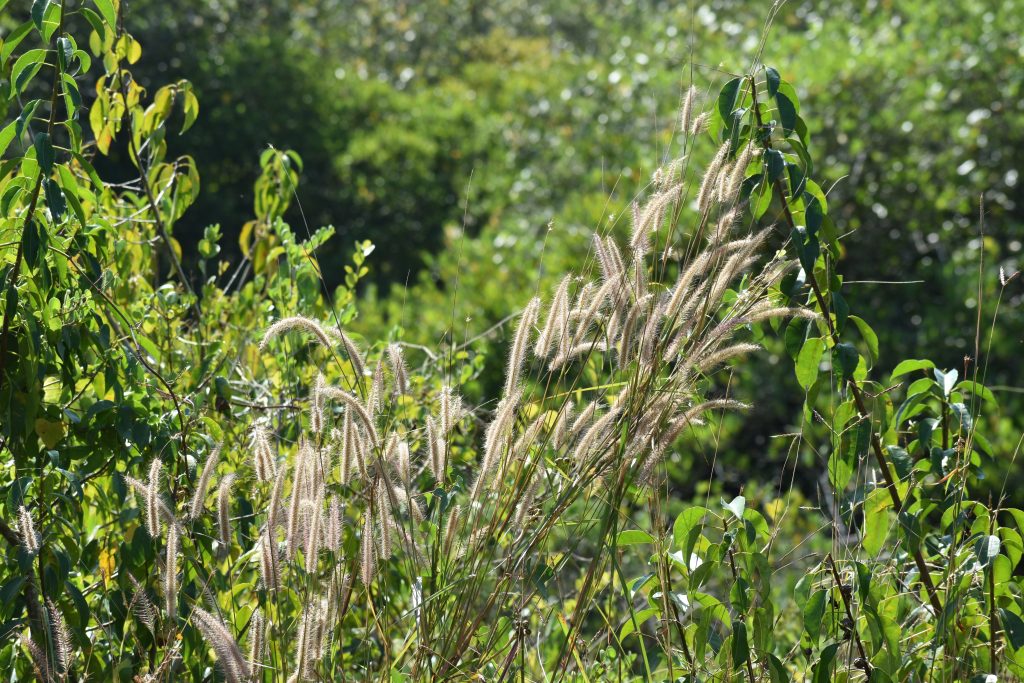
Invasive mission grass (Pennisetum polystachion) growing amongst mangrove plants | Photograph © Vimal Lakshmanan NV / WTI
Managing invasive species in the mangrove ecosystem
Invasive species, when left uncontrolled, can disrupt entire ecosystems. It is crucial to avoid planting non-native plants to prevent them from becoming invasive. For instance, Sphagneticola trilobata and Chromolaena odorata were introduced as ornamental plants in India; however, unchecked planting, along with a lack of proper supervision, led to their spread and eventual domination of ecosystems. Other non-native species, such as Acacia mangium, Mikania micrantha and Pennisetum polystachion, should be carefully managed by planting within the designated area and prohibiting planting in eco-sensitive zones. It is also necessary that nurseries and plantations are strategically managed along with proper weed control measures to prevent the spread of invasive plants that threaten native species.
Mangrove conservation led by the Wildlife Trust of India
As part of an ongoing invasive species management effort under the Kannur Kandal Project, Wildlife Trust of India (WTI) is undertaking the manual removal of invasive plants from the secured mangrove areas. This approach ensures minimal disturbance to the sensitive ecosystem while effectively eliminating species that compete with native mangroves for space, nutrients, and sunlight.
The Kannur Kandal Project team regularly conducts awareness sessions involving schools, colleges, staff of Kerala Forest Department, Kudumbasree members, MGNREGA members and various other domain experts. The Mangrove Interpretation Centre, under the project, receives a footfall of over 9000 individuals every year, and aims to further promote awareness about the need for conservation. Overall, we hope that a collaborative effort will help prevent further damage and restore an ecosystem that sustains both life and livelihoods along Kerala’s Malabar coast.
Story by Anand Ramesh and Dr. Sanal C Viswanath, Kannur Kandal Recovery Project, Wildlife Trust of India