Living with Leopards: Predator-Proof Housing in a Sugarcane-Dominated Human Settlement in Katerniaghat
Lohra Gram, like many surrounding settlements, is dominated by sugarcane cultivation, interspersed with turmeric and paddy fields. Amidst the tall crops, wildlife such as leopards have also found refuge. Their presence in such close proximity has significantly increased the likelihood of sudden encounters with humans, particularly during dusk and early evening hours.
Situated barely 500 metres from the Nishangadha Forest Range, Lohra Gram has long remained vulnerable to such negative human–leopard interactions. In September 2024, a nine-year-old girl, Shreya (name changed), was severely injured on her neck and back by a leopard. The animal likely mistook her for prey as she bent down to collect water from a hand pump near the boundary of her home at dusk. Although she survived, the incident left her with a lasting psychological impact.
More than a year later, Shreya still feels hesitant about stepping outside in the evenings. But things are beginning to change. One of the housing clusters in the Nishangadha Range of Katerniaghat was recently made predator-proof in January 2026 under the Wildlife Trust of India’s (WTI) Terai Tiger Project. The intervention was designed to address frequent human–leopard interactions in forest-fringe villages located close to the core area of Katerniaghat Wildlife Sanctuary. With protective fencing now in place, her family has noticed a gradual return to normalcy. Today, Shreya has regained the confidence to join her sisters once again to play in the aangan (courtyard). The fenced cluster, which includes six houses and around 30 residents, including 15 children, now offers a renewed sense of safety to families like hers.
Predator-proof housing – A safety net
Predator-proof housing (PPH) gains further significance when viewed against the recent history of human–leopard conflict in the area. In the two years preceding implementation, a total of 12 leopard-related incidents involving humans, livestock, and pet dogs were reported, six of which occurred within the Lohra cluster itself. During the two-month implementation phase of the predator-proof housing, four additional leopard-related incidents were recorded. Two of these incidents occurred outside the proposed PPH cluster site, while in the remaining two cases, leopards approached pet dogs within the fenced area while the construction of the protective fence was still ongoing, underscoring the urgency and relevance.
The Wildlife Trust of India’s Rapid Response Team (RRT) and Primary Response Teams (PRT) reported the highest number of leopard-related incidents – 92 cases (35%), from Nishangadha Range within Katerniaghat Wildlife Sanctuary over the past two years.
Monitoring for leopard movement and presence
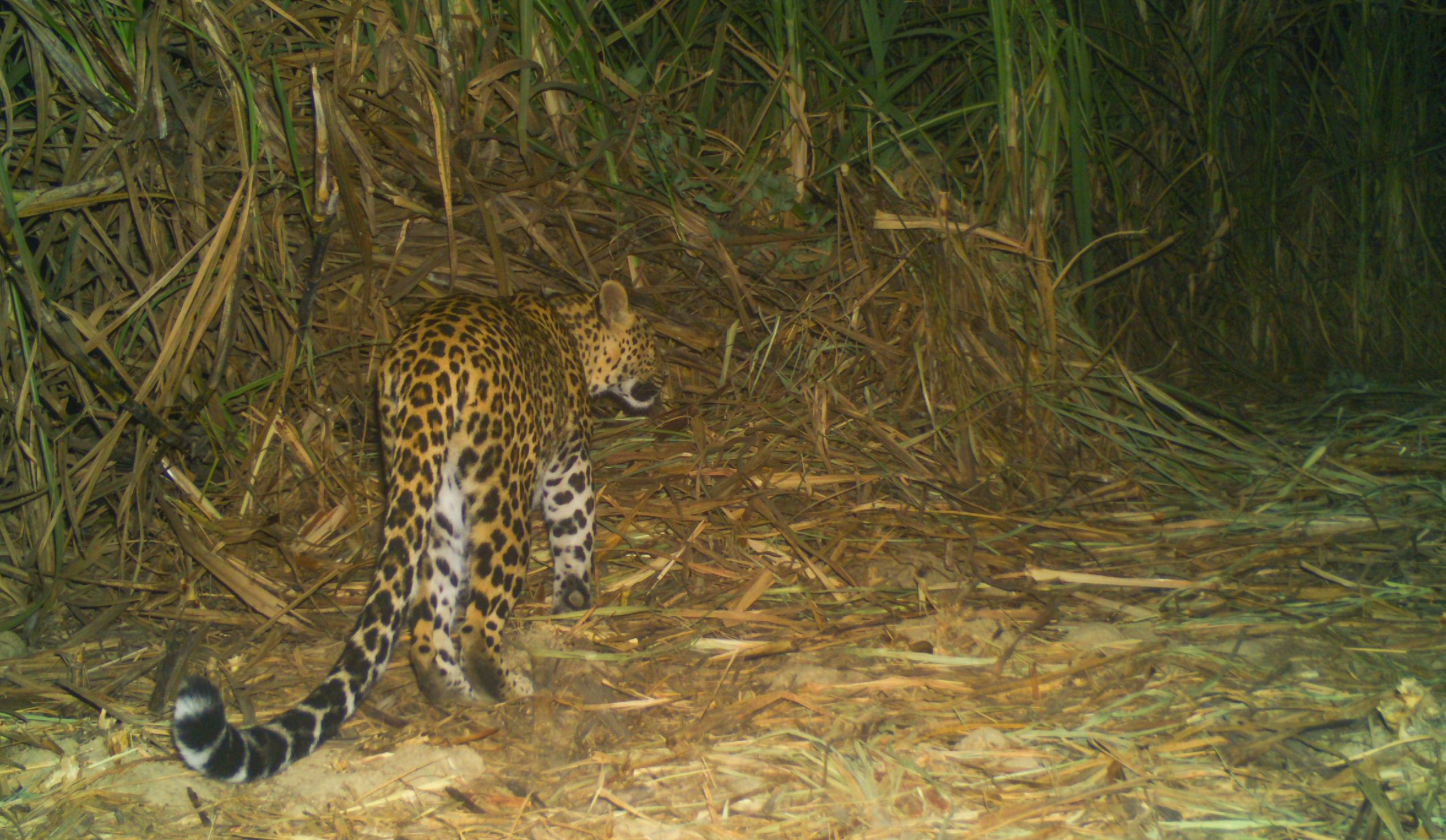
Post-implementation monitoring of the predator-proof fencing is being carried out by WTI’s field team through camera trapping, sign surveys and feedback from beneficiaries and members of the local community. Camera trap data have substantiated the continued presence of leopards near the cluster while highlighting behavioural responses to the intervention. At the primary camera trap station near the site where Shreya was injured, leopard movement was recorded nine times over a period of two months, including a paired movement of a female followed by a male on 2nd April 2026. Across four additional camera trap locations, leopard presence was recorded eight times on different days, indicating consistent use of the landscape. However, during these movements, individuals were also observed to be maintaining a distance from the predator-proof housing cluster. Further, automatic sensor-based lights installed at the site appeared to function effectively as deterrents or startle mechanisms, as no leopards were recorded approaching the cluster.
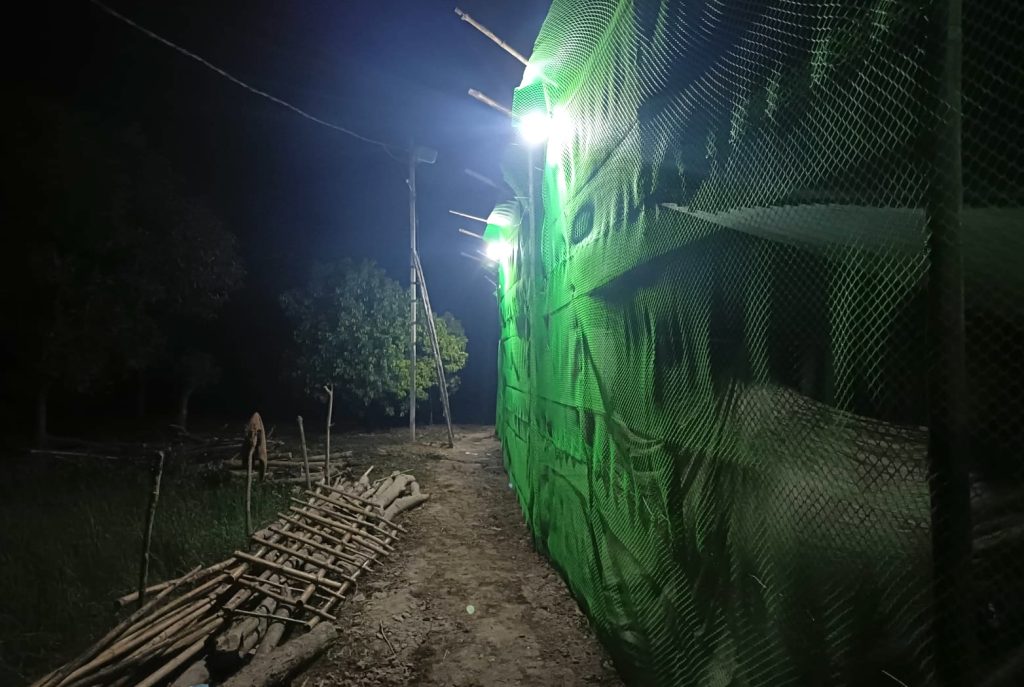
Predator-proof housing with motion-sensor-enabled lighting in Lohra Village, Katerniaghat | Photograph © WTI
Adapting precautionary measures
While the PPH intervention has shown positive results, the response from the community has been equally encouraging. The fenced housing cluster is now being viewed as a practical and reliable solution. Villagers from other forest-edge settlements have begun reaching out to learn how they can adopt similar measures in their own areas.
At a broader landscape scale, the relevance of this intervention becomes even more apparent. Across the seven ranges of Katerniaghat, there are an estimated 500 such housing clusters, of which approximately 90 have reported frequent human–leopard conflict incidents. In this context, the present model demonstrates strong potential as a scalable solution for reducing conflict in similar high-risk clusters.
Beyond physical safety, the intervention is also bringing about a subtle but important change. It is helping people feel more secure, encouraging a sense of shared responsibility, and gradually reducing fear. Most importantly, it demonstrates that coexistence is possible—where communities and wildlife can continue to share space with the right measures in place.
Story by Jyoti Antil, Field Biologist, Terai Tiger Project, Wildlife Trust of India.