Elephant calf rescued from muddy trench, admitted to CWRC
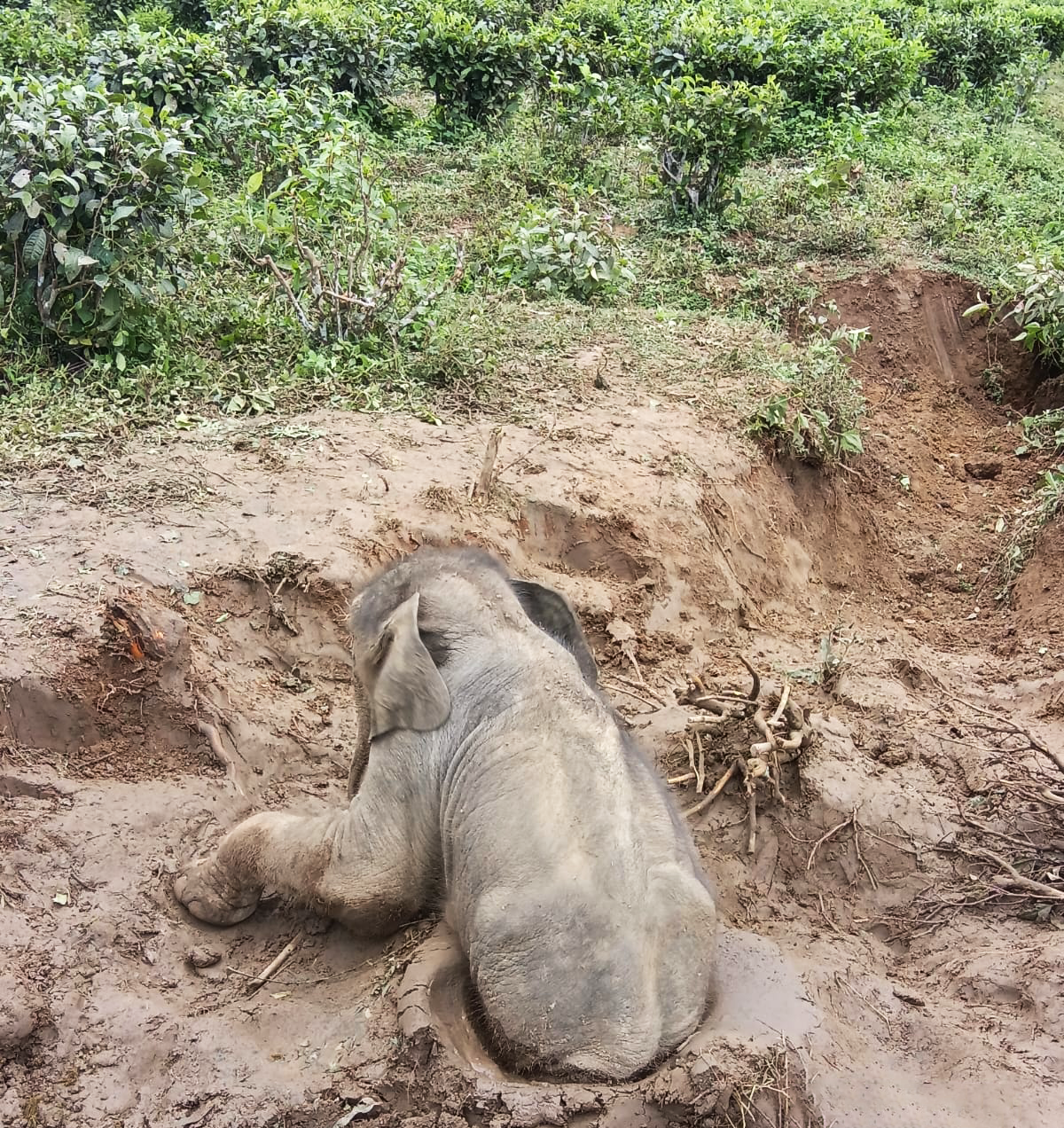
Jakhalabandha, Assam, 0th September 2026: An elephant calf, estimated to be 4-6 weeks old, was found trapped in a muddy trench at Seconee Tea Estate near Kaziranga, Assam, on September 9. The herd had reportedly attempted to help the calf, but their efforts were unsuccessful.
The tea garden workers heard the distressed cries of the calf stuck int he trench.
The distressed calf remained trapped until local tea garden workers and villagers discovered it and immediately alerted the authorities of Kaziranga National Park. A team from the Centre for Wildlife Rehabilitation and Conservation (CWRC), led by Dr. Bhaskar Choudhury, CWRC Centre Manager and lead veterinarian at WTI, also arrived at the site to assist with the rescue operation.
The calf was carefully lifted out of the trench and taken to the nearest beat office for urgent veterinary care. Dehydrated and suffering from severe muscular exhaustion, it was given fluids and immediate medical attention.
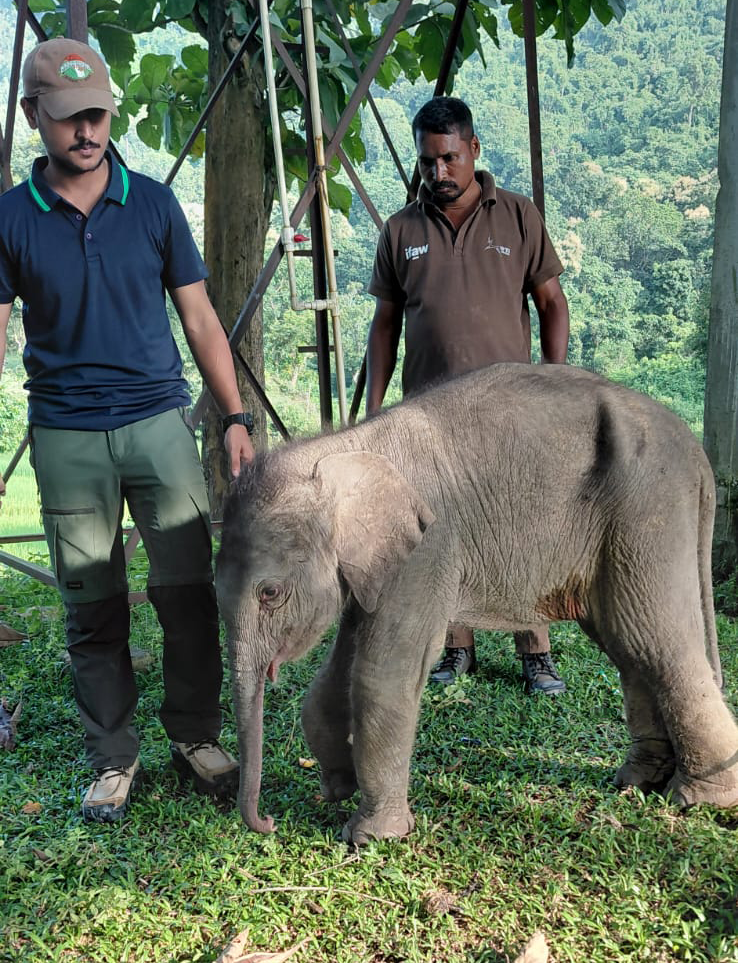
The calf was placed under the care of the CWRC team
As elephant calves are highly dependent on their mothers and herds for survival, the team continued to hope that the calf could be reunited with its wild family. The calf was monitored through the day, and attempts were made to facilitate a safe reunion with the herd in the evening. Unfortunately, despite several attempts, the herd did not accept the calf. With the possibility of a safe reunion no longer viable, the decision was made to admit the young elephant to CWRC for rehabilitation, joining ten other elephants currently under specialised care.
Dr. Bhaskar Choudhury, CWRC Centre Manager and the lead veterinarian, WTI, said, “This calf’s journey from isolation and distress to safety and care reflects the dedication of local communities, forest officials, and wildlife experts working together. While we always prioritise reunion with the wild herd, rehabilitation offers this calf a second chance at life.”
The rescue once again highlights the crucial role played by communities living alongside wildlife. The quick response of tea garden workers and villagers helped ensure that the vulnerable calf received timely assistance and medical care.
For now, the young elephant’s journey continues at CWRC, where experts will focus on its recovery, growth and rehabilitation while providing the specialised care it needs to survive and thrive.