ANIDERS: A technological intervention to promote coexistence in Indian Sundarban
Over the last two and half to three decades, technological interventions have become quite popular among conservation practitioners. Tracking animal movements, and remote photography act as useful tools to understand habitats and consequently strategize conservation interventions. As a field biologist, working in the Sundarbans landscape, technology could be the next step in resolving or minimizing the existing ground level problems and finding out more about animal, especially of keystone species like the Bengal tiger.
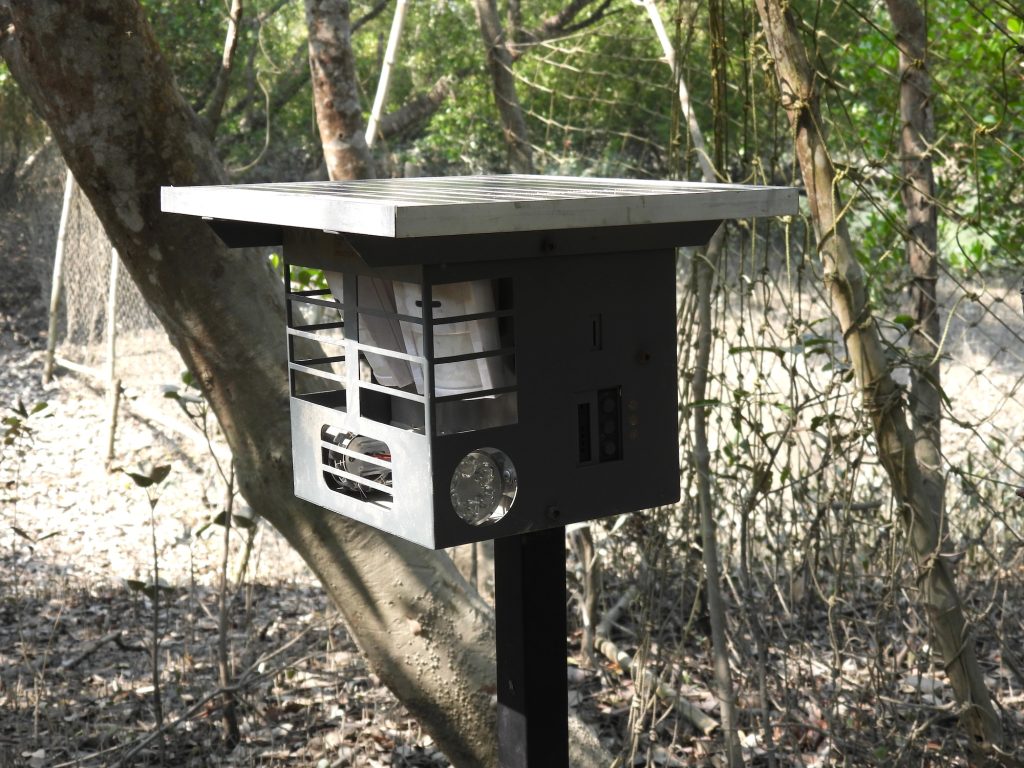
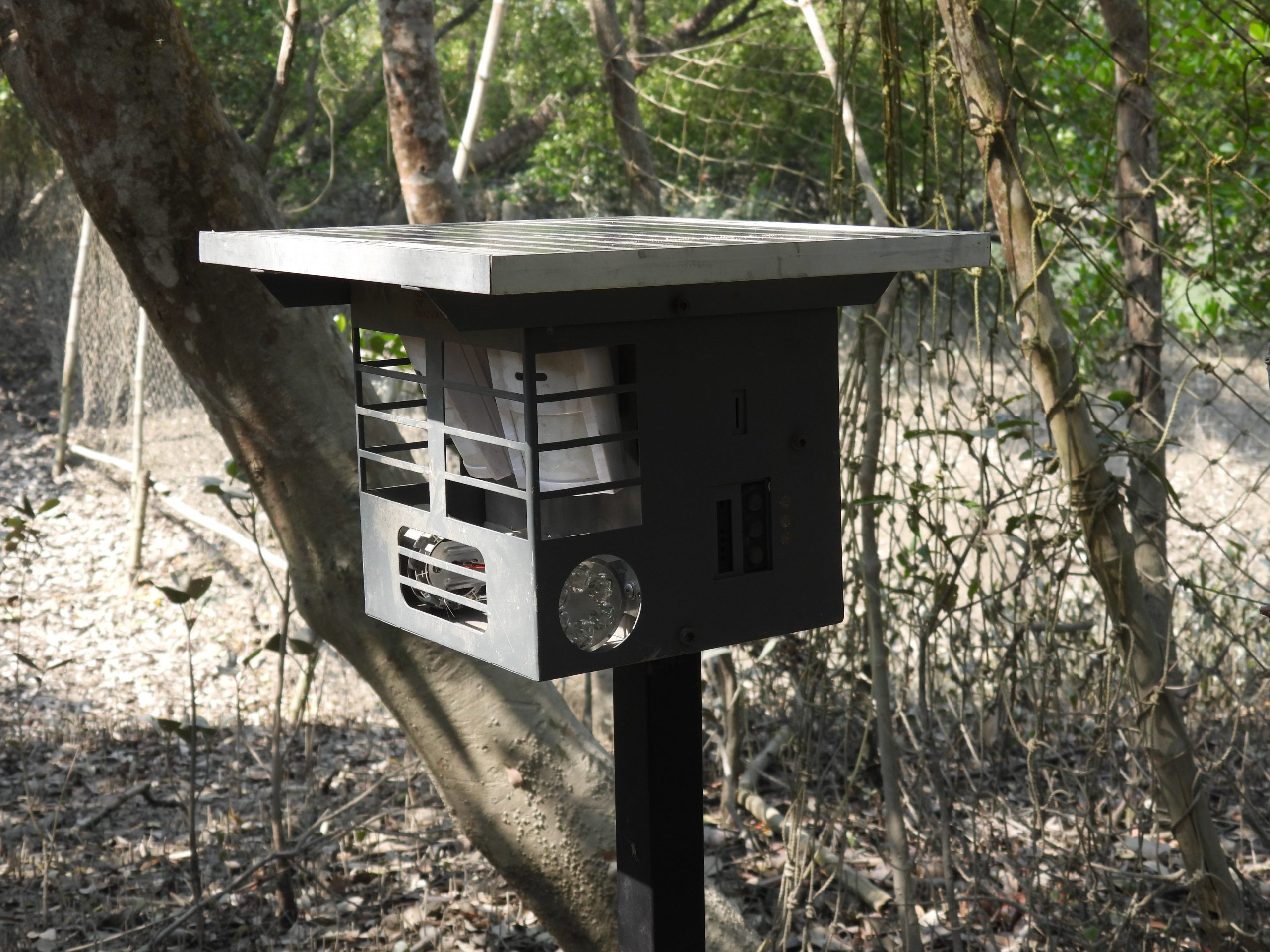
The ANIDERS device is capable of detecting animal movement through a motion based sensor.
ANIDERS in Sundarbans
The Animal Intrusion Detection and Repellent System (ANIDERS) is one of such interventions that has become popular recently. It is a sensor based technology that helps deter wild animals crossing over to human dominated areas, including farmlands, aquaculture ponds etc. In the past, a number of tradational approaches have been used to keep birds and animals away from croplands. ANIDERS, however, works on very simple working principle, assisted by components like motion sensor, solar powered backup as source of energy, light and sound as deterrent, advanced camera models, and a GSM sim-based port to generate alerts on user devices. Further, AI supported programming helps identify the specific animal to trigger the deterrents.

ANIDERS devices being unloaded onto the creeks of Sundarbans | Photograph by Prosenjit Sheel/WTI
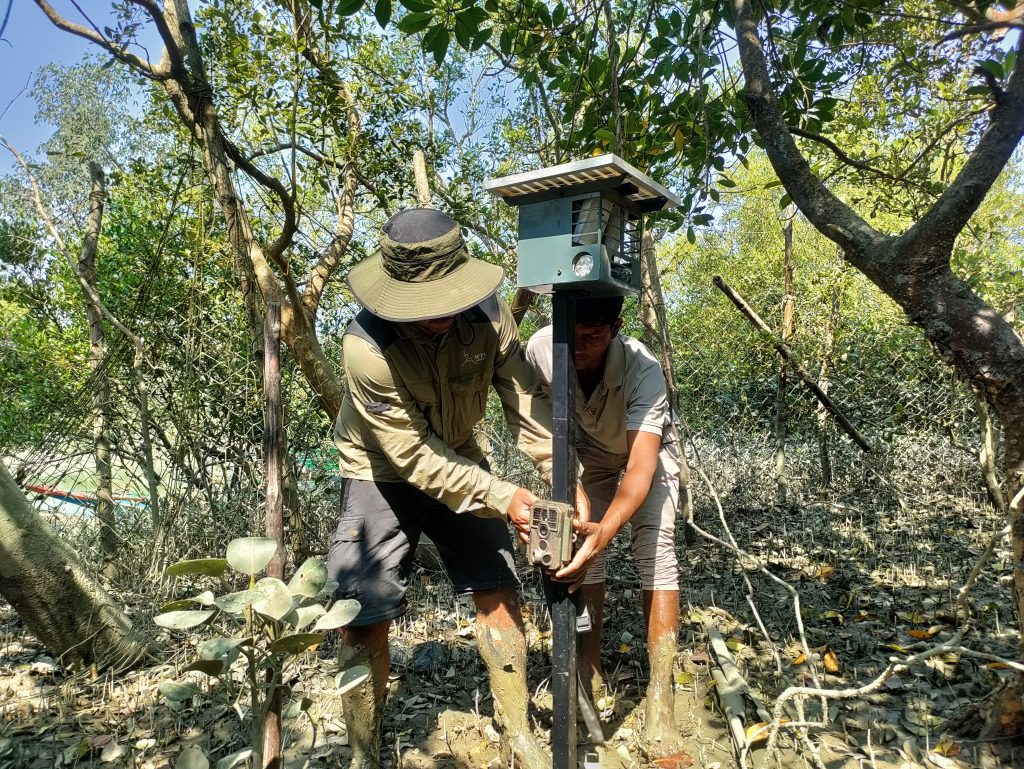
Installation of the ANIDERS devices requires strategic planning in a landscape that is continuously defined and changed by ocean tides | Photograph by Prosenjit Sheel/WTI
In 2026, Wildlife Trust of India (WTI) in collaboration with 24 Parganas (South) Forest Division of West Bengal introduced ANIDERS to reduce the tiger ingression in forest fringe villages of Kultali Block of the Sundarbans as an experimental intervention. The site selection for its installation was governed by the landscape that is inundated under water due to tidal influences twice in a day. It is crucial that the sensor and deterrent components of the device do not go under water during the high tide.
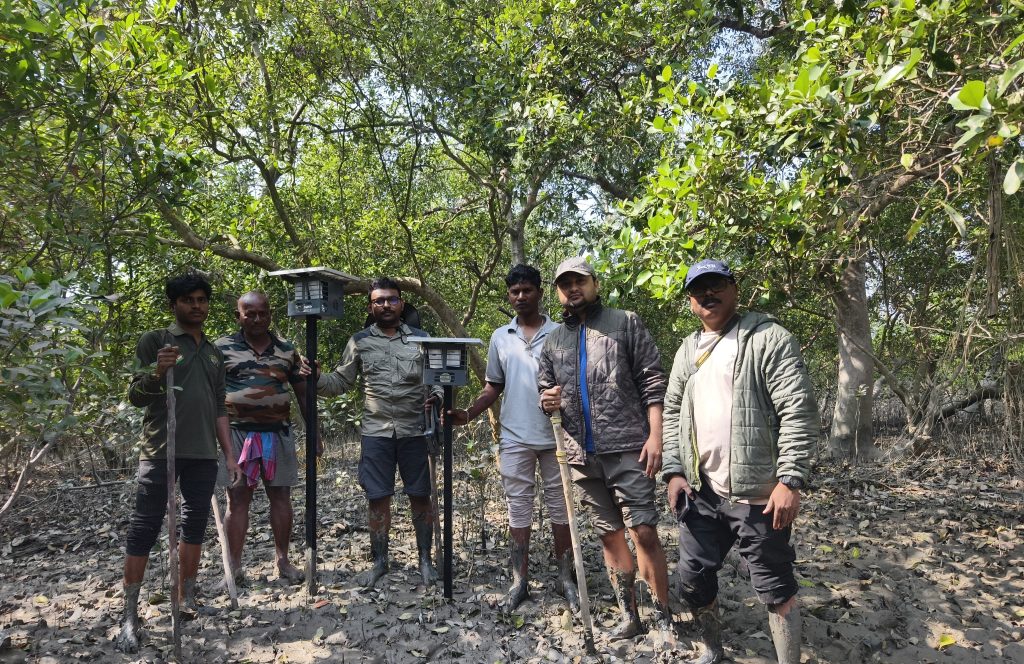
The WTI and Forest Deaprtment team who have intalled and have been monitoring the ANIDERS device | Photo by West Bengal Forest Department
The limitation of ANIDERS
ANIDERS sensors can detect animals or objects within a limited zone in a 180° wide angle. Consequently, it can’t trigger indication of presence beyond the radius. Further, water salinity in the Sundarbans river and creeks make the devices vulnerable to metal rusting and requires regular maintenance. However, it does provide an extra level of preparedness and hopefully will contribute to the decrease in negative and fatal interactions between humans and tigers, thus promoting coexistence.
Samrat Paul is an field Officer with WTI’s Sundarbans Tiger Project.