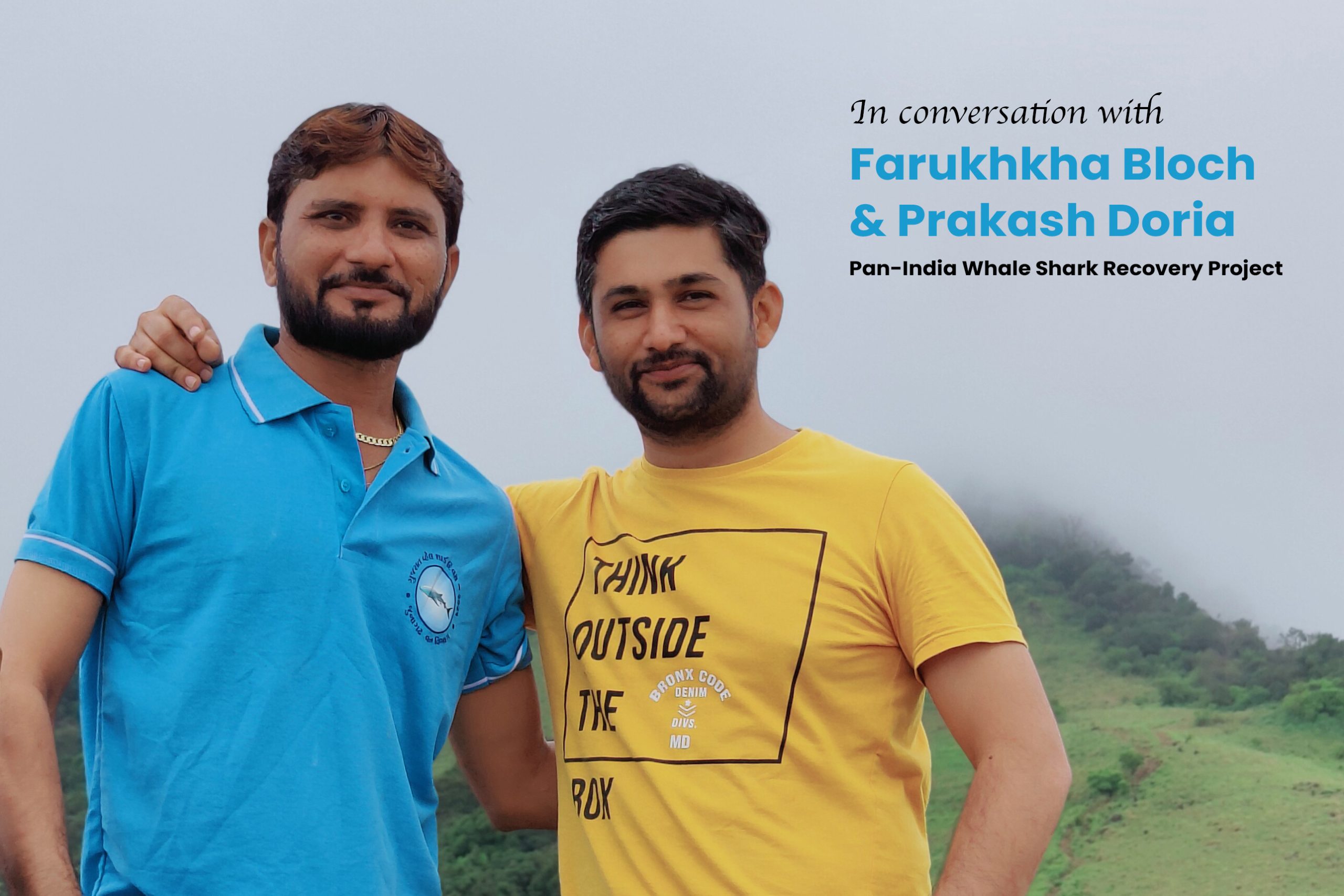
Protecting Whale Sharks: A Conversation with Farukhkha Bloch & Prakash Doriya
Initial days of the Whale Shark Recovery Project in Gujarat
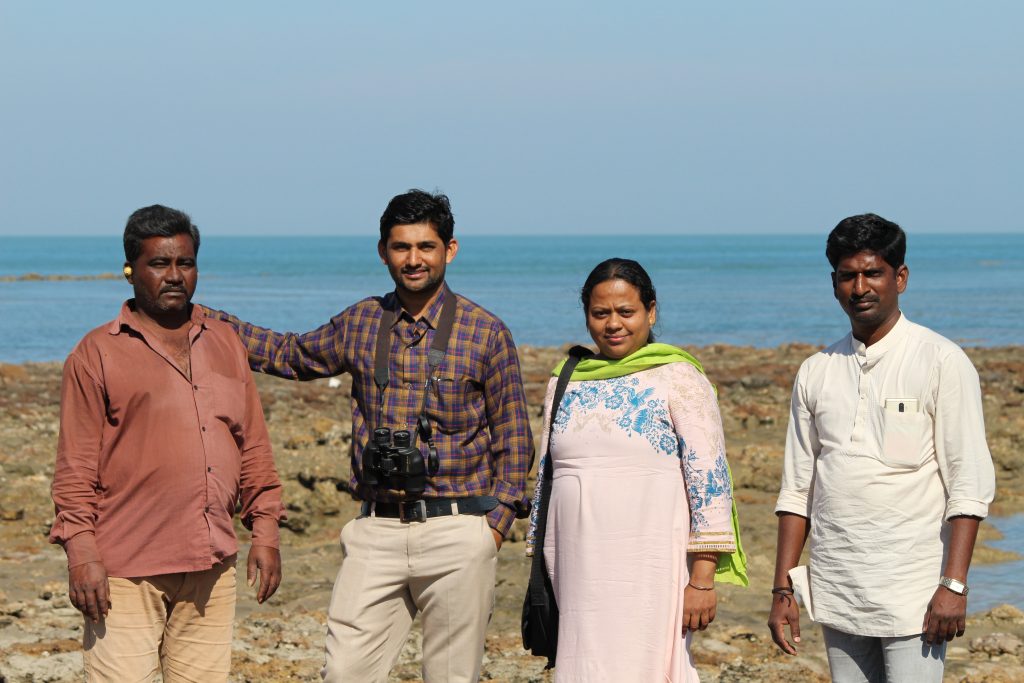
L to R: Mandalbhai Devsibhai Chauhan (Reef fisher from Poshitra fishing village, Dwarka), Farukhkha Bloch (sociologist), Dr. Indu Kumari (Head of communities) and BM Praveen Kumar (WTI biologist)
Where It All Started
Stepping into wildlife conservation was not the conventional next step for a sociology post-graduate. Reflecting on how he entered the field, he says “Those who study sociology largely prefer to go into corporates – labour laws and labour welfare divisions. But I was very committed to work in the community development field.” Soon after his graduation, he got an opportunity with WTI to work with the coastal fishing community within the same locality that he grew up in. One of the panellists at his interview for this role raised the question of this change in focus towards animals, considering his academic background in humanities. His response,
“Although I am not making a direct intervention towards the welfare of human beings; indirectly I am. I believe that the survival of whale sharks ensures that the ocean and environment are safe, which translates to communities living peacefully and prosperously.”
The Fisherman Way
A typical work day for Farukhkha varies considerably, depending on the season and project requirements. Working with an on-field team of three in Gujarat, two in Goa, two in Kerala and a team at the WTI headquarters in Noida, Farukhkha looks after all field operations of the project across all its locations. Much of the project’s success depends on building trust and maintaining relationships with fishing communities. When he started out, his initial interventions was to build a rapport with the local fishers, who were the primary stakeholders and children, who would form the next generation of the fisher community.
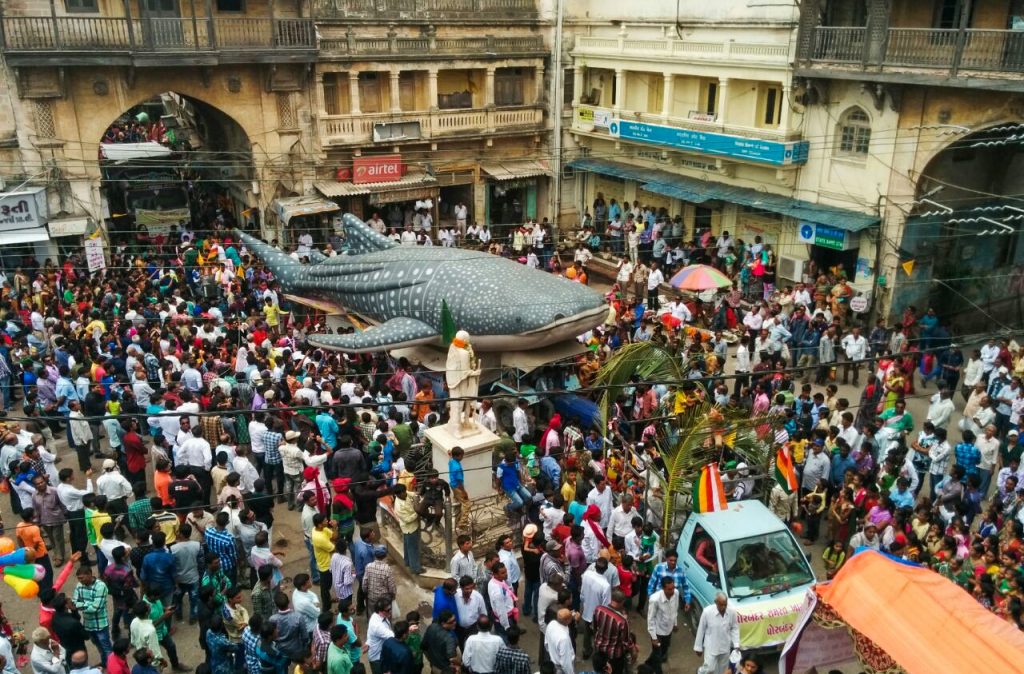
Save the Whale Shark Campaign in Gujarat | Photo by WTI
Fishers were previously involved in the hunting of the species because of commercial gains in the range of 1.5-3 lakhs for every whale shark they landed. Convincing them to give this up was a challenging task. Although laws against hunting existing, enforcement of those laws and monitoring the fishing activities across the vast coasts of India was not easy. WTI, and Farukhkha’s team came in with a different approach. Appealing to the beliefs held by the Hindu majority fishing community in Gujarat, spiritual leader Morari Bapu was approached to become an ambassador of the project. He promptly agreed and after discussions with the team, preached the likeness of whale sharks coming home to Gujarat’s shore as a daughter to give birth, just like it is with the community there. Based on his stories, street plays were also conducted and word spread across communities. “Due to caste based internal dynamics within the fishing population, once the dominant castes like – Kharwa’s and Koli’s – who also hold a major control over the fishing operations – were convinced, it was easier for the marginal fishing communities to agree too.”
Awareness programs followed and activities catered to the communities interests. Elocution and quiz competitions, sand art modelling of life sized whale sharks, rangoli colouring etc. brought everyone together, across age groups. “We have programs designed to target active fishers, coastal children – in school and those who have dropped out – because it is quite common for children of fishers to leave school early to join the family occupation.” These interactions also provided the opportunity to understand the realities faced by coastal communities whose livelihoods depend on the sea. “I used my initial years in the field building a close relation with the fishers, I would go in the morning, sit with them and talk to them about their personal issues, cook with them at night in the boat, play videos of different marine life on my laptop for them. So I had built that close rapport with them”, he adds.
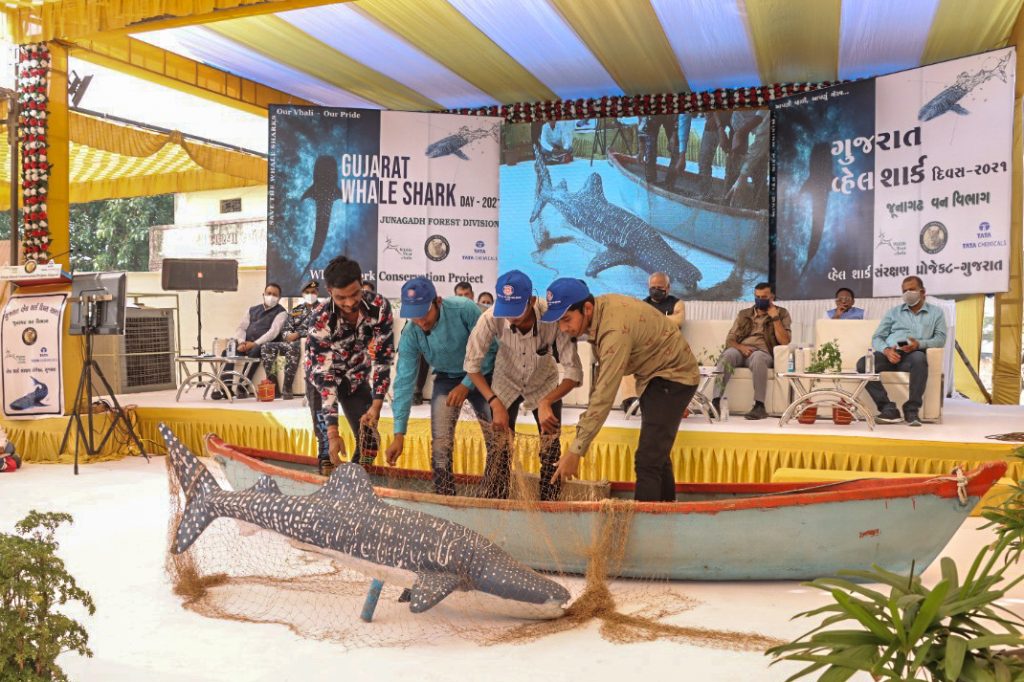
Gujarat Whale Shark Day celebrations | Photogrpah by Farukhkha Bloch/WTI
Besides community outreach, Farukhkha’s work also requires coordination with the various other agencies including the forest department, marine land department, fisheries department, coast guard, the port authorities, marine research institutes and academics of this field. “We bind all these associated stakeholders into a single purpose of whale shark conservation. My role is to keep everyone on the same platform throughout this journey.”
The Highs and Lows
On-field conservation also often comes with unexpected challenges. Farukhkha recalls a particularly difficult year, when an absence of a biologist meant that he had to step into a technical role, making use of his experience of working with previous biologists to fill the gap. This was also the year that Wildlife Trust of India pioneered satellite tagging of whale sharks.
“Right from the procurement of tags from the U.S, the documentation for their import, to the deployment and monitoring of the satellite transmissions of the whale shark – I was handling this entire process in the absence of the field biologist.” Although challenging, he saw it as an opportunity to build his field experience within that subject domain.
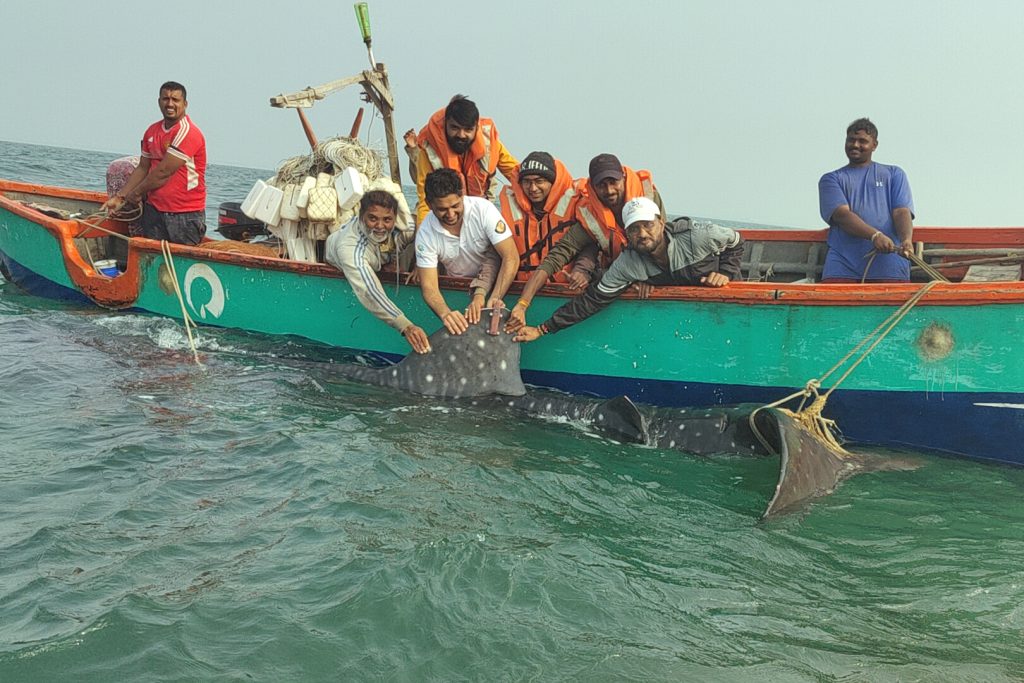
11th whale shark tagging along Indian waters offshore Veraval, Gujarat | Photo by Mohit Bambhaniya
When asked about the motivations that drive him to continue on this path, Farukhkha says “it is a distinct work which others do not get the opportunity to do. My batchmates from the same background today may be earning more than I do, but the sense of pride I get from my work is more than any monetary gain. The organisation has always put trust in their employees and given me the freedom to carry out my work how I want to. This is why I have given all my prime years to this project and continue to do so.”
During his tenure, Farukhkha also stumbled into whale shark pups. “A fisher from a tiny fishing village – Mahendra Kanji Talwaria – I still remember his name, called me with evidence of whale shark pups. This was probably the happiest moment in my career.” This incident became the evidence for the narrative that Morari Bapu had built for the whale shark and further convinced the fishermen of the importance to conserve it. Following this, proper mechanisms for whale shark pup reporting and handling were put in place along with non-monetary reward systems for the fishers. Since then, 22 whale shark pup sightings have been documented by fishermen.
Standing by Farukhkha, at all times, was also Mr. Prakash Doria, a local fisherman, who joined WTI to further the efforts and be among the several spokesperson for the community.
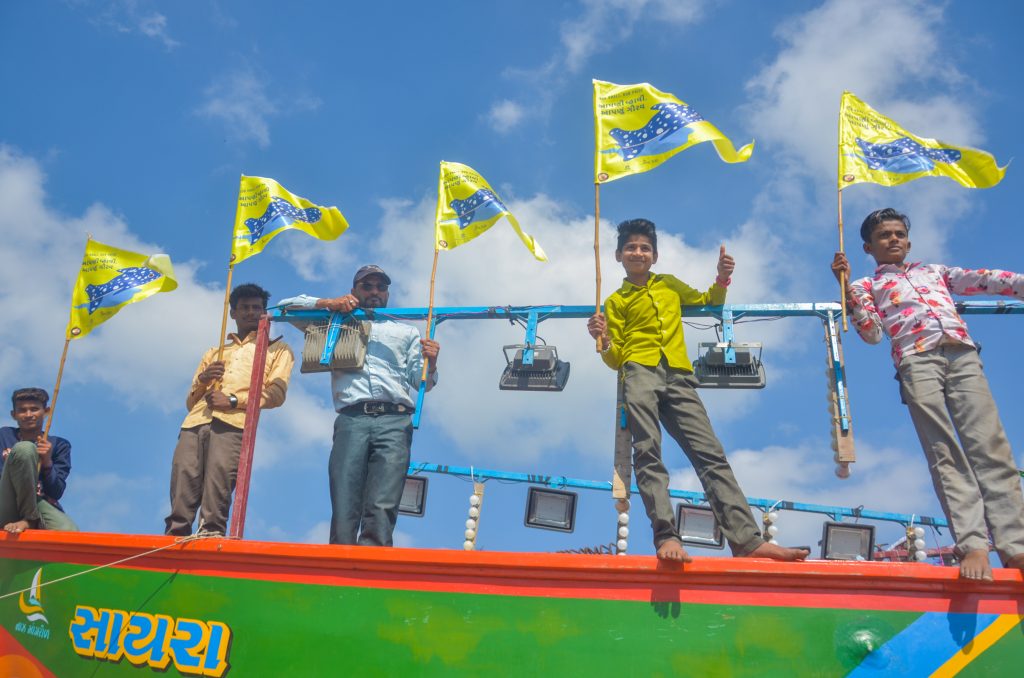
Mr. Prakash Doriya with local kids during a campaign event | Photograph by Madhumay Mallik/WTI
The Making of a Conservation Hero
Mr. Prakash Doria has worked alongside Farukhkha as a field assistant for nearly 15 years now. Being from the local community, he offered additional insights into the realities of working along Gujarat’s coastline. Since joning the project, a typical day for him includes talking to the fishermen in the morning, asking them about possible whale shark sightings and monitoring them over video call. He also holds discussions with the fishing communities to inform them of the significance of the whale shark. Prakash used to be a fisherman himself. His father owned nine trawlers and he used to sail into the sea regularly. But eventually, when his duties got divided with his brother, he joined CMFRI as an offshore daily wager. Since then, he has come a long way and when he talks to his community members today, he feels a sense of pride as an officer doing good work.
He recalls a particularly harrowing experience from 2012. During the September monsoons, Prakash and his team were at sea for a rescue. The sea was choppy and violent, and the small rescue boat they were on, drifted heavily due to the strong current, dragged in the opposite direction of the shore. They had to ride against the current and it took them more than 12 hours.
“Baarish mai samundar violent hojata hai. Hume sachme laga tha hum doob jaenge.”- Prakash had throught they they were sure to drown that day. “But despite the challenges, the effort was worth it, because the whale shark is like a daughter, and therefore must be protected”, he exclaimed.
All for One and One for All
Being a member of the community, Prakash notes the change in attitude of fishermen towards wildlife and conservation. “Fishermen who had previously been involved in hunting the species, have now become the greatest advocates for them. The community has been uplifted with pride.” Both Farukhkha and Prakash believe that community engagement remains at the heart of the project’s success. While Farukhkha emphasized the importance of building long-term relationships with fishers, Prakash highlighted how these relationships are strengthened through recognition and trust-building efforts.
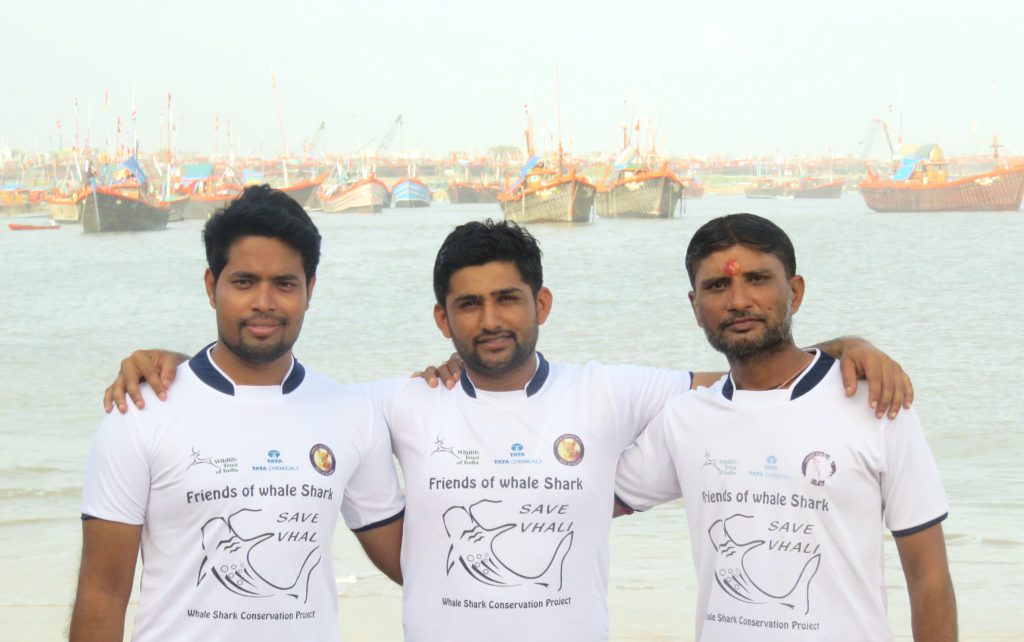
L to R: Charan Kumar Paidi (project biologist), Farukhkha Bloch (sociologist) and Prakash Doriya (field assistant)
“Conservation achievements are possible because of the willingness of the fishing community, not just the work of an organisation or corporate. One of the fishermen who had rescued the most whale sharks in the region was received an award from their Lft. General of the Andamans and Nicobar Islands as a recognition.”
Prakash notices the enthusiasm with which children and the youth engage with their events and their willingness for the cause. They regularly invite them to explore field operations to understand how different and interesting on ground conservation can be.
Driven by the success in Gujarat, the project has since expanded to the coastline of Kerala, Lakshadweep Islands and Goa. WTI’s team aims to bring in more coastal states in the near future under the banner of the project. But, as conservation efforts continue, people like Farukhkha and Prakash will continue playing an important role in connecting scientific objectives to conservation goals.
Story by Pallavi Ghosh, Intern, Wildlife Trust of India.