Celebrating Tuesdays of a Van Rakshak
A forest guard I know has a way of walking that his wife often used to tease him about. Heel down first, then the outer edge of the foot, weight coming forward slowly, like he is stepping onto a floor he doesn’t fully trust. She giggles while helping me with another serving of the moringa flower sabji that I have become quite fond of. Twenty-two years on forest duty does that to a person, I guess. You stop walking to get somewhere and start walking to hear things instead.
It was well past midnight when he heard the twig snap. Not loud, just a sound that had become increasingly common along a stretch of buffer zone he had walked so many times he could probably do it half asleep. He had been on this patrol since before his knees started giving him trouble, and by now his torch beam and instincts worked together almost withoutthought. The animal, at least, wants to be left alone as much as he did, so they are rarely what worries him on most nights. It was the other kind of footstep that keeps him alert, the human kind. A snare hidden at ankle height or a man who doesn’t want to be found isn’t going to just turn back the moment a torchlight finds him. Over the years, more than a few of the guards he had patrolled alongside had come away from nights like that with scars, or at the very least, a story.
That particular night, though, the torchlight caught leaves first, then eyes. Low to the ground, close enough, and completely still.
There wasn’t time to be afraid. That always came later, lying awake in bed, replaying every second. In the moment, there was only the training: don’t run, keep the beam off its face, hold your ground, bring the radio up. His voice came out steadier than his heartbeat had any right to be as he gave his position, reported what he had seen, and waited until the undergrowth fell quiet in a different way, the way that means whatever was in there has moved on. Then he finished his patrol as though nothing had happened. In this line of work, that is usually what a good night looks like.
Nobody photographs any of that. The tiger mid-leap gets the magazine cover. The man who who walks lonely trails through the night so that the tiger gets to see another season rarely even gets a caption, and he probably wouldn’t ask for one anyway.
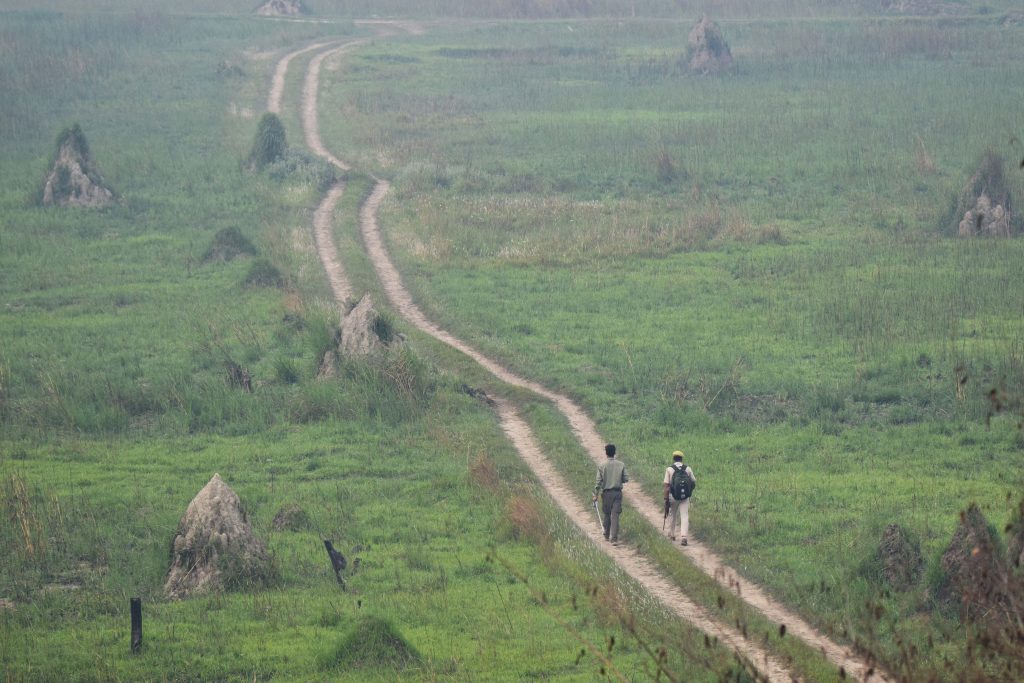
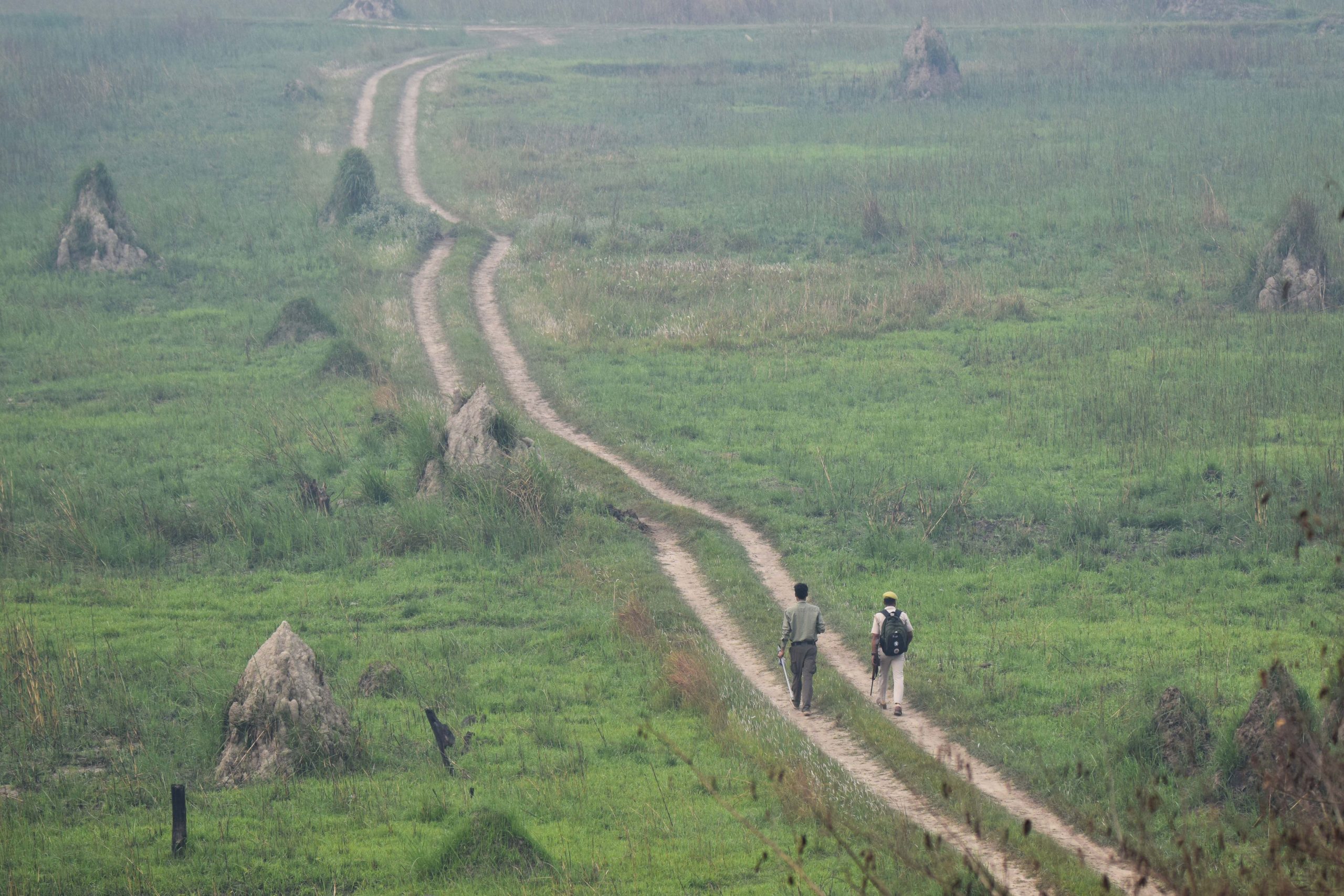
Forest guards patrolling in Dudhwa National Park | Photograph by Madhumay Mallik/WTI
There’s a word for what he is, and honestly, it’s a better one than “guard.” Around here we call them Van Rakshaks, forest protectors. It says outright what the job actually is instead of folding it into a uniform title. Every year, on the 31st of July, the world sets aside a day for people like him. World Ranger Day traces back to 1992, when the International Ranger Federation first came together, though the day itself wasn’t formally observed until 2007. Fifteen years between the idea and the recognition. Which, if you’ve spent any time around forest staff, sounds about right. Recognition tends to arrive last.
I have spent the better part of the last six years around people who do this work, and what stays with you isn’t really the danger. It’s how ordinary it all feels to them. Nobody sits around trading stories. A watcher at a waterhole in central India, a mahout walking his elephant along a fence line at dawn in Theppekadu, a range officer filling in a patrol log by lantern light because the generator is out again in Kargil. None of them thinks what they are doing is remarkable. To them, it isjust another Tuesday.
But the ground they are covering has expanded a lot faster than they have. In the early 1970s, India just had 5 national parks and 60 wildlife sanctuaries. Today that number stands at 106 parks and 573 sanctuaries.
These large numbers of Protected Areas require a large contingent of frontline staff to help safeguard them. However, as resources are spread thin and vary across states and Protected Areas, there is a need for supplementary aid for the Van Rakshaks.
There’s a kind of weight that builds up in a person who spends years living like this in service of nature. Anyone who’s spent time around forest staff has seen it: the psychological toll that settles behind their eyes.
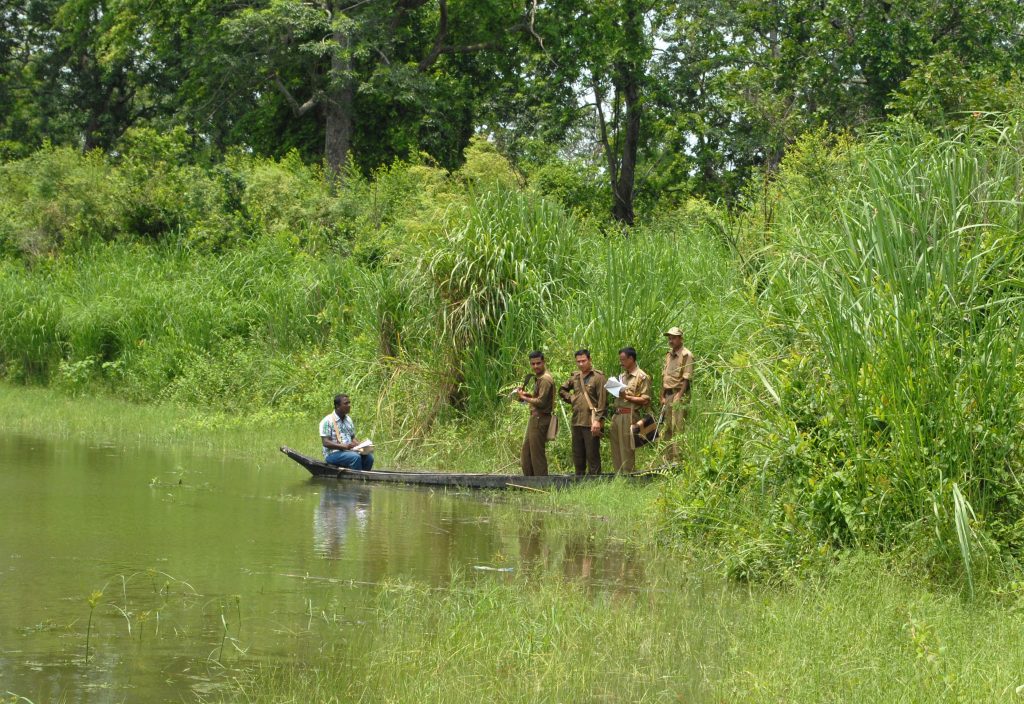
Forest guards patrolling on boat in Kaziranga National Park, Assam | Photograph: Subhamoy Bhattacharjee/WTI
What does it take to keep showing up, year after year, for work like that? And what do we owe someone who does?
India accounts for nearly 31% of ranger deaths worldwide. For many families, the loss of a ranger also means the loss only their primary source of income, leaving them with very little to fall back on. It was this gap that the Wildlife Trust of India(WTI) set out to address in 2000, through the Van Rakshak Project, with support from IFAW. The thinking behind it was fairly simple: you cannot ask someone to risk their life protecting forests and wildlife, then leave them with minimal options when they or their family need help most.
Two and a half decades down the line, the Forest Departments now support the families of frontline staff. Other non-government organisations have also stepped in, offering wider supplementary support to frontline staff. Wildlife Trust of India’s Van Rakshak Project is one such initiative.
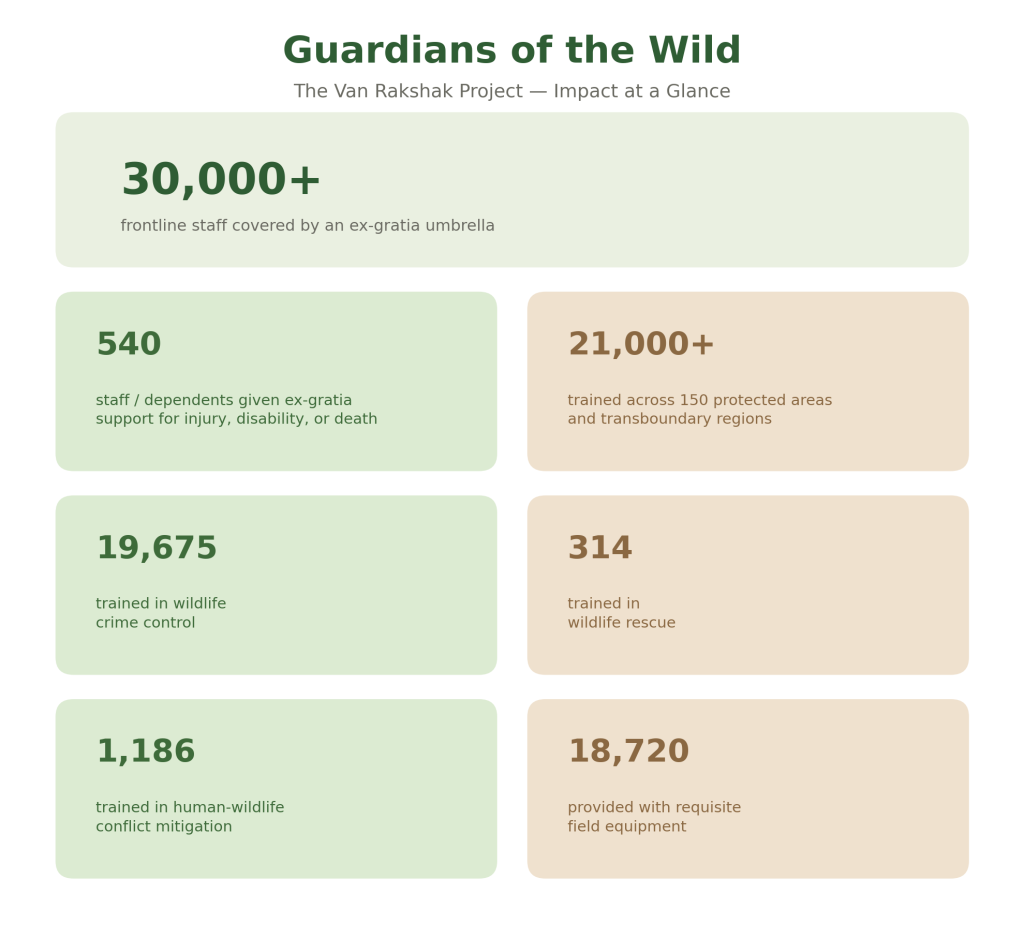
Twenty-six years since its inception, the Van Rakshak Project has grown into one of the largest initiatives of its kind run by any non-government body in the country, with short but structured training programmes designed around what frontline staff in a particular landscape say they actually need: wildlife law, court procedures, patrol craft, forensics and other practical skills.
This is followed up in the long run by our in-house specialised trainers, who maintain communication with the staff. Sometimes the need is as simple as basic field equipment, but more often it’s about providing a supplementary ex-gratia support system that has, over the years, reached thousands of frontline personnel and their families.
Most of that doesn’t show up in a single night’s work. The forest guard I know went home the next morning the way he goes home most mornings, tired, unthanked, and fairly sure something in that forest had survived the night because he had been out there. Multiply him by every ranger on every continent, through countless ordinary nights each year, and itbecomes easier to understand why this day exists at all.
So this 31st, it might be worth sparing a thought for whoever is out there tonight, walking that same careful way. It doesn’t take much to learn their story, or to pass it on. Supporting the work that keeps them trained, equipped and cared for takes even less than most of us imagine, yet it can mean everything to the people it reaches. Perhaps the more important question is this: what would change if we measured a forest’s health not just by its canopy, but also by the wellbeing of the people who protect it? Maybe the question worth carrying beyond today isn’t whether we notice them once a year, but whether we would notice their absence if they weren’t there at all.
Story by Habeeba Fathima, Wildlife Trust of India.