Building Skills for Elephant Care: Mahout and Ghasi Training at Manas National Park
Basbari, Manas National Park, 24–30 September 2026: Wildlife Trust of India (WTI), in collaboration with the Manas Tiger Reserve Authority, organised a comprehensive seven-day training programme for mahouts and ghasis working in Manas Tiger Reserve from 24 to 30 September 2026 at Basbari Range, Manas National Park.
The training brought together 27 participants from all three ranges of Manas National Park, with sessions combining classroom learning, practical demonstrations and hands-on exercises covering the many aspects of captive elephant management.
The programme was inaugurated by Dr Sonali Ghosh, IFS, Council Head, Forest and Environment, Bodoland Territorial Council and Field Director, Manas Tiger Reserve. She highlighted the importance of a skilled and motivated workforce for elephant management and reiterated the need for a dedicated mahout school in Assam, along with regular refresher training for mahouts and ghasis.
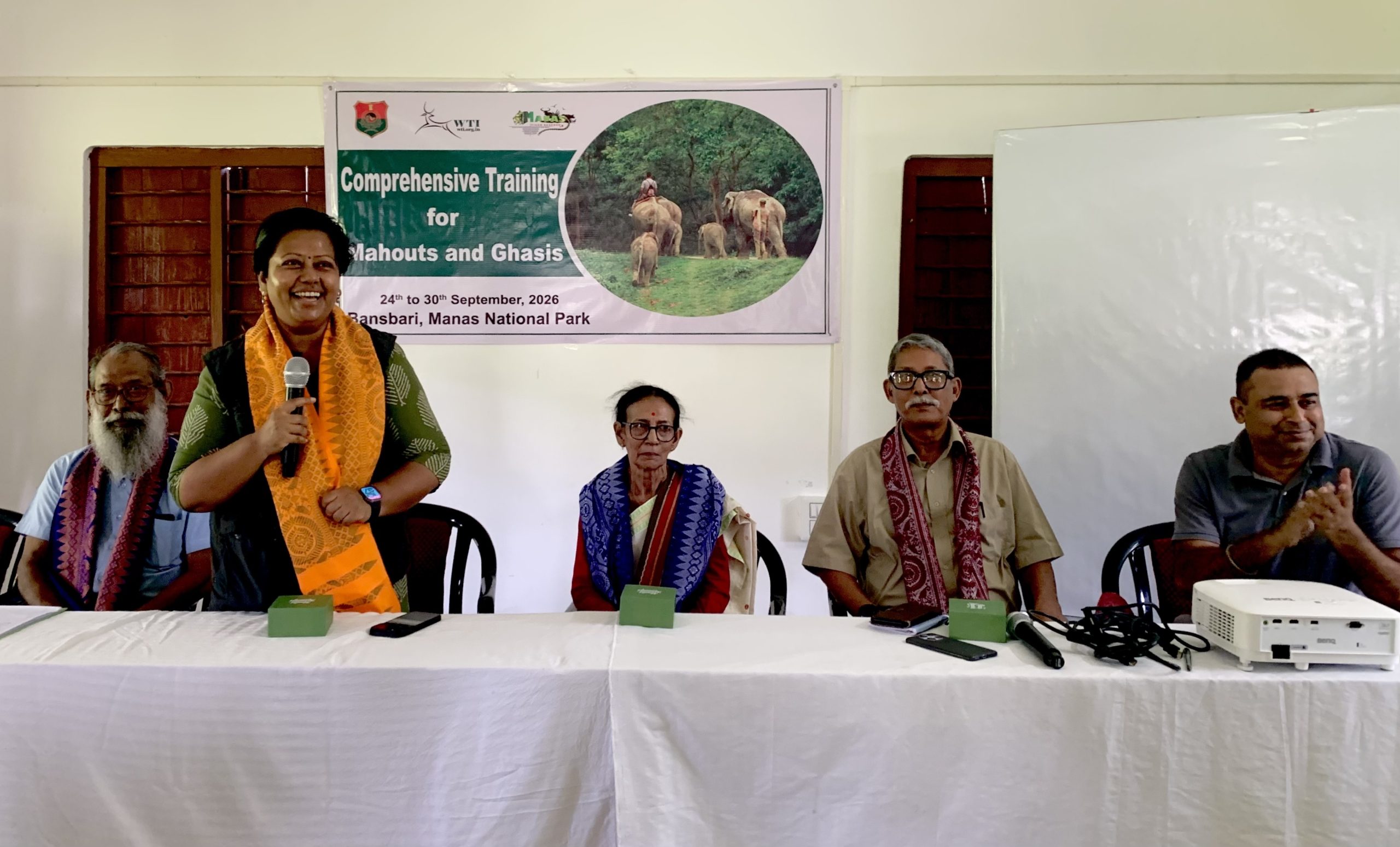
(L-R): Mr Bhupen Talukdar, Dr Sonali Ghosh, IFS, APCCF-cum-CHD, Padmashri Parbati Barua, Dr Prabhat Basumatary, and Dr Bhaskar Choudhury, WTI | Photo © Team WTI
The training began with an assessment of participants’ existing knowledge, which highlighted the need for greater understanding of basic elephant biology, anatomy and management. These fundamentals formed the foundation for the sessions that followed, covering elephant evolution, anatomy, dentition and physiology, including respiration and heart rate.
Participants also learnt about pilkhana management, including the selection, design and safety requirements of elephant stables. A practical exercise saw participants evaluate the Manas Pilkhana and identify its strengths and areas for improvement. The training then moved to hands-on learning, with participants practising effective elephant bathing techniques with elephants of different ages and sexes.
The programme also covered reproductive health and management, including musth, pregnancy detection and pre- and post-natal care. Participants discussed appropriate workloads, working hours, the impact of terrain and seasons, and the importance of properly fitted gear and equipment. Sessions on ropes and other tools included practical demonstrations and exercises, while food and feeding sessions focused on appropriate nutrition and captive feeding practices.
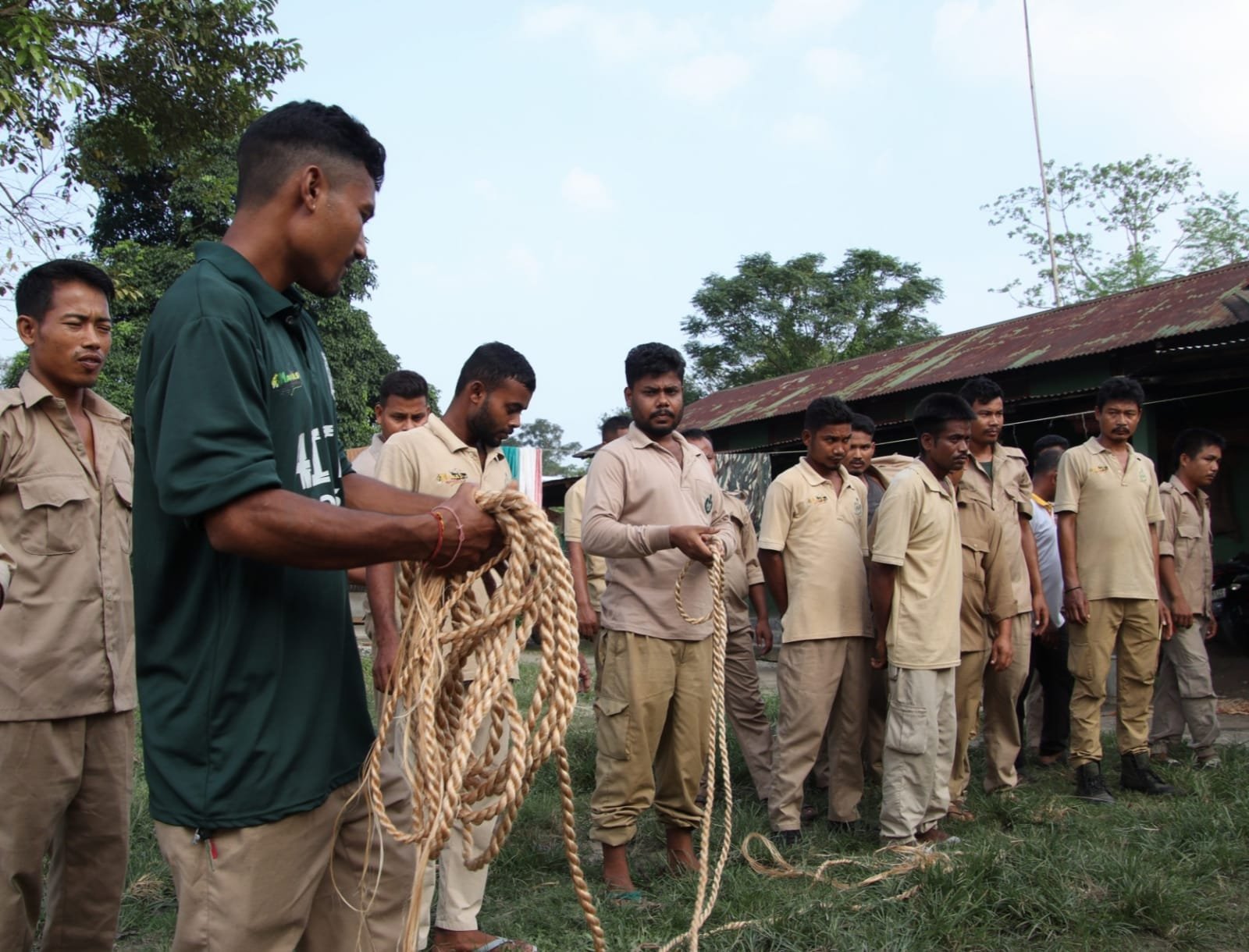
Day 5 focused on identifying different types of gear, learning their maintenance, and preparing various harnessing gear | Photo © Team WTI
A dedicated session on elephant health covered common and emerging diseases, their symptoms and the importance of early detection. As mahouts and ghasis are among the first to notice changes in an elephant’s health, emphasis was placed on recognising early warning signs and providing appropriate care. Participants also learnt about traditional medicines used in elephant management and the role of feeding in monitoring health and strengthening the mahout-elephant bond.
The final day focused on safety during field operations involving wild elephants and other dangerous animals, with emphasis on developing SOPs that prioritise both human safety and animal welfare.
The training concluded with a valedictory session attended by Mr James Basumatary, Executive Member, Bodoland Territorial Council; Mr Brahma, Secretary, Forest and Environment; and Dr Sonali Ghosh, IFS, among others.
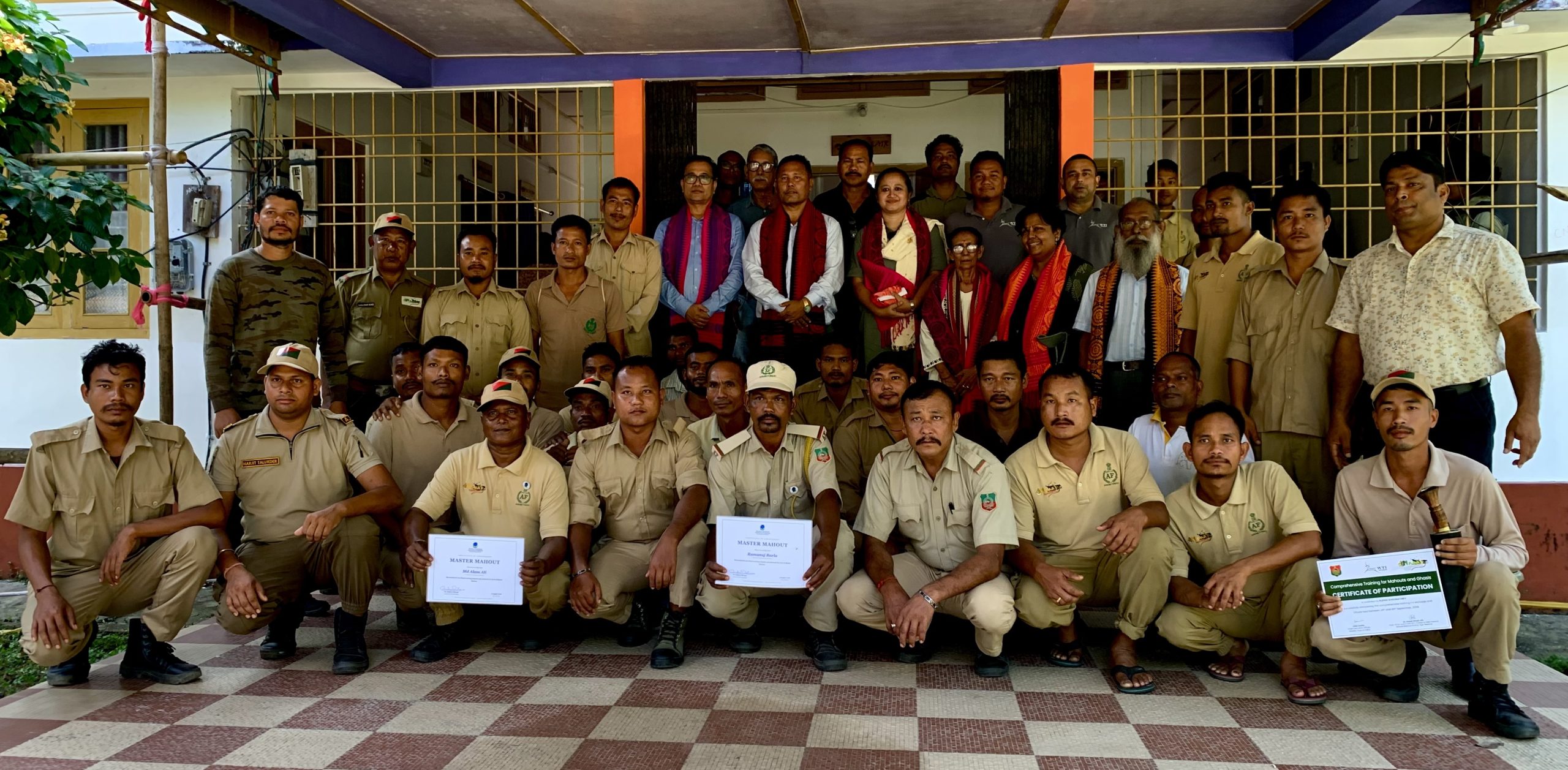
A highlight of the closing ceremony was the recognition of Shri Ramanuj Barla and Shri Md. Alam Ali, as ‘Master Mahouts’ after completing specialised training in animal cognition and positive reinforcement techniques for training captive-born elephant calves through the Human Elephant Learning Programs, Advancing Elephant Welfare (H-ELP Foundation), Australia.
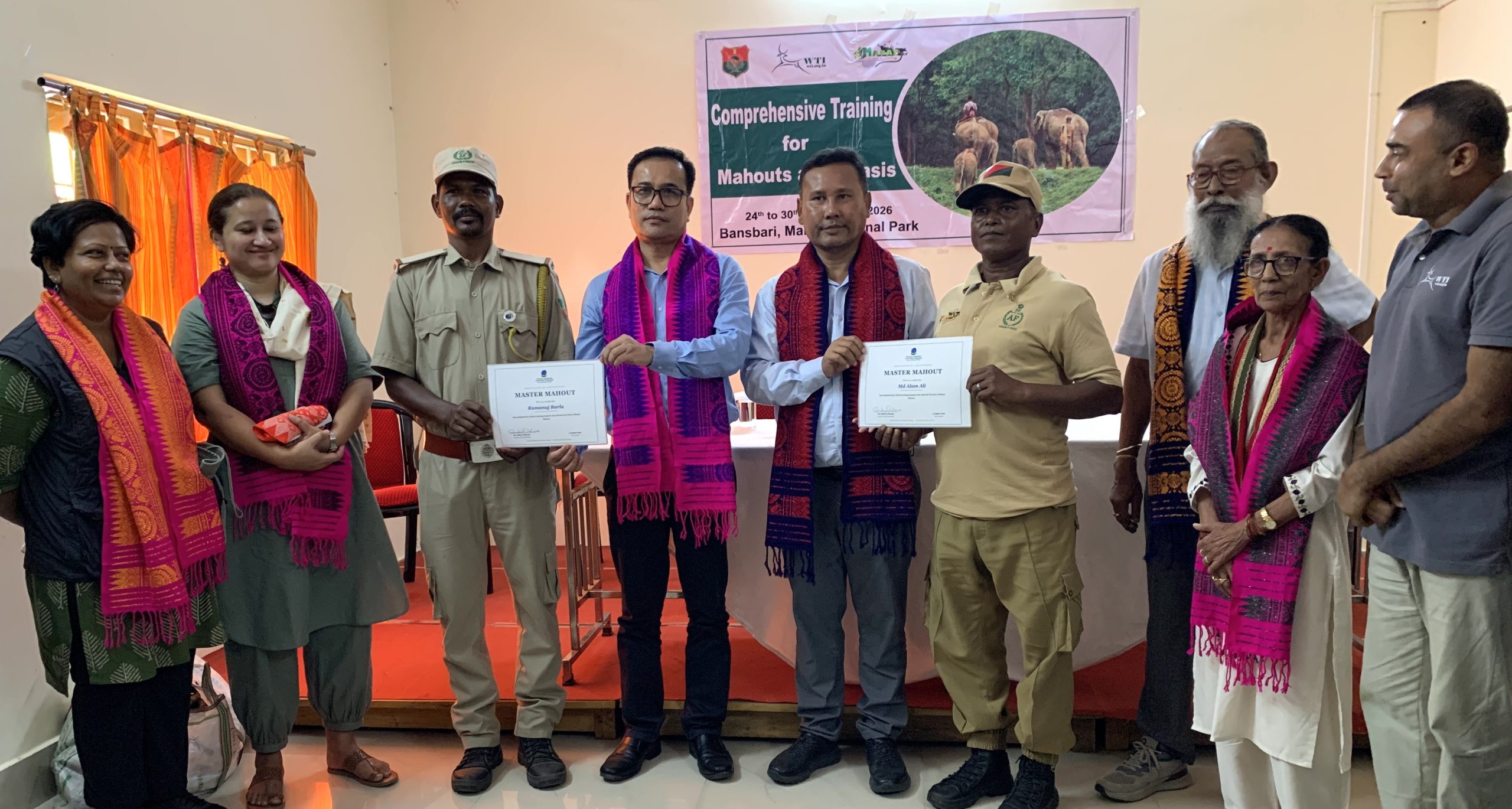
Shri Ramanuj Barla and Shri Md. Alam completing specialised training to become Master Mahouts | Photo © Team WTI
As Master Mahouts, they are now qualified to train mahouts internationally. They will also travel to the Chiang Mai Elephant Conservation Centre, Thailand, from 29 October to 2 November 2026 for further specialised training.
Their achievement highlights the valuable role of frontline elephant handlers and the importance of combining traditional knowledge and practical experience with science-based approaches to elephant care and welfare.