Building Conservation Through Communities: In Conversation with Dindi Padi
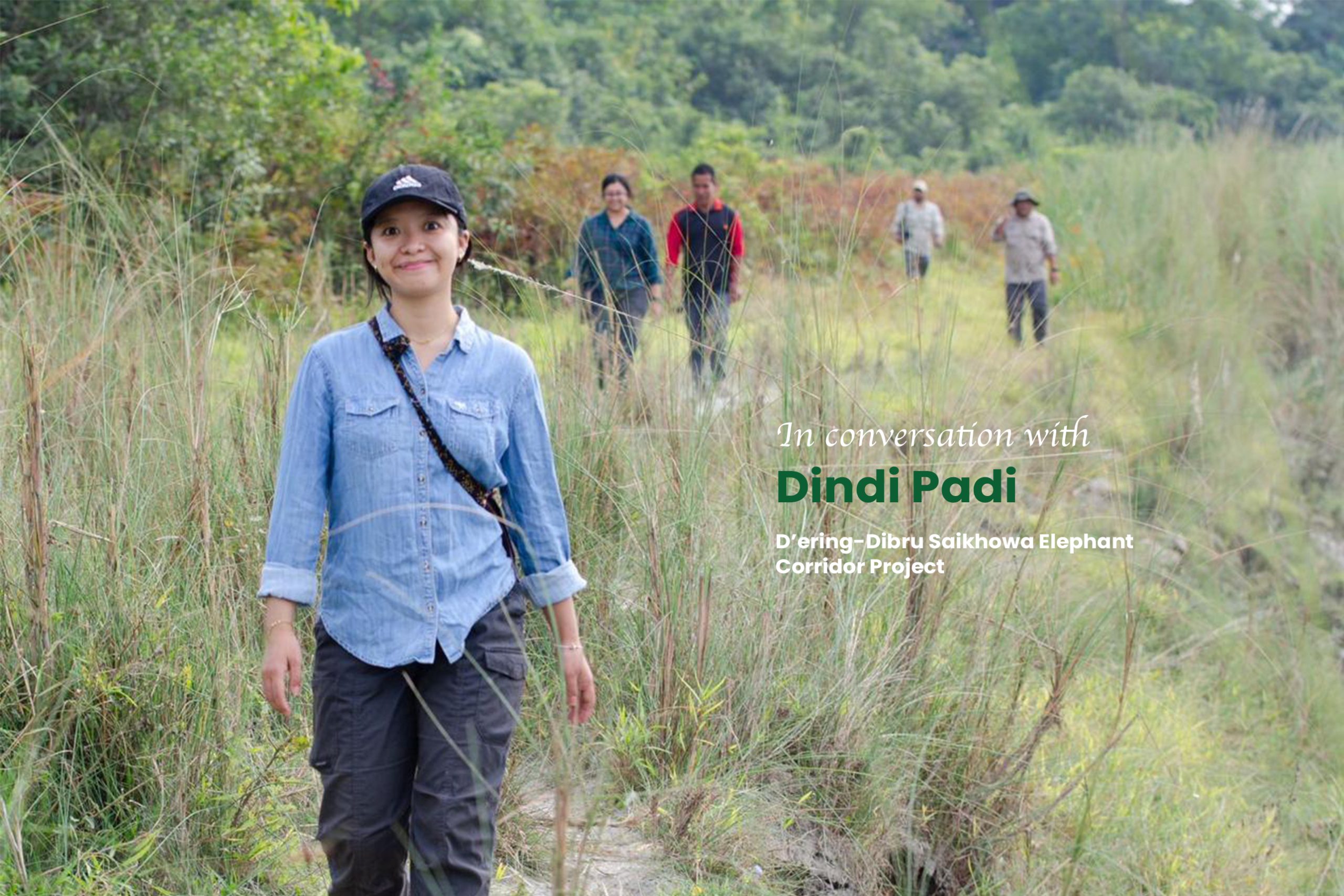
The work of a wildlife conservationist is often imagined as a life spent roughing it in the forests, spending months outdoors in wildlife surveys and regular encounters with wild animals. While this is true, a major part of the conservation work also happens through conversations, community partnerships and understanding the complex relationship between people and nature. For Dindi Padi, a sociologist with the Wildlife Trust of India, these community interactions are the heart of all conservation action.
Based in Arunachal Pradesh, she works with the team of the D’Ering-Dibru Saikhowa Elephant Corridor Securement Project. A community-based initiative, the project aims to secure the critical wildlife corridor between D’Ering Memorial Wildlife Sanctuary in Arunachal Pradesh and the Dibru-Saikhowa National Park in Assam. Her role focuses on engaging communities, facilitating dialogue among various stakeholders and ensuring that conservation remains a collaborative effort between people and wildlife.
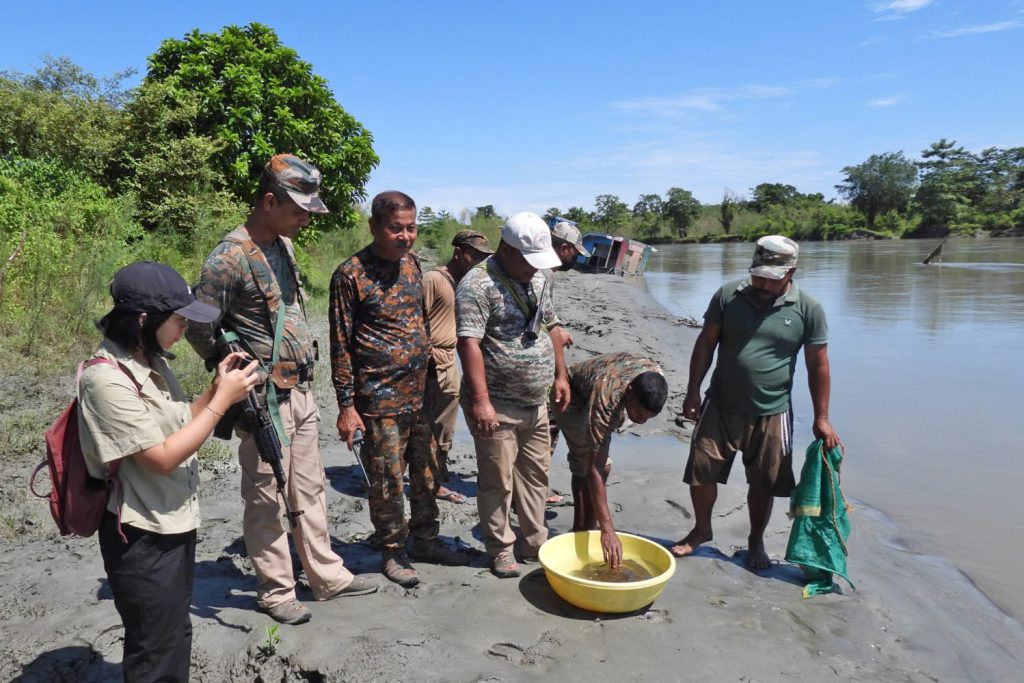
Forest Department staff releasing a soft-shell turtle back into the Siang River Basin | Photograph by Deepankar Barman/WTI
New Beginnings
Unlike most conservation professionals, Dindi did not initially envision herself working in the field of wildlife conservation. Trained in social science, her path into this sector emerged only after joining Wildlife Trust of India, and since then, it has been more than four years now. The values which shape her work today were, however, ingrained much before. Hailing from the Apatani tribe of Ziro in Arunachal Pradesh, she was raised in a culture where stewardship of nature was woven into everyday life.
“Being a member of a tribal community, nature and cultural preservation were practised inherently, through every little action of stewardship towards Mother Nature,” she reflects.
The opportunity to work in her home state and contribute to the welfare of both the local wildlife and communities drew her into this field. What continues to intrigue her is seeing how people, communities and institutions come together to create positive change.
“Working in the field of wildlife conservation, especially with the community and other human agencies & stakeholders, keeps me hopeful about the impact we are creating for a better future for both social and ecological actors of the planet,” she says.
A Corridor for Coexistence
Working closely with the communities of Mer, Namsing and Paglam villages, Dindi’s project team aims to secure at least 500 hectares of the corridor through its notification as a Community Reserve under the Wildlife (Protection) Act,1972. As a sociologist, her work focuses on understanding local realities and ensuring that conservation initiatives are rooted in community participation.
“Conservation without people can be challenging, sometimes even more conflicting for both humans and animals,” she explains.
Dindi’s responsibilities range from facilitating dialogue between stakeholders and mobilising communities for conservation action to supporting community development initiatives that strengthen livelihoods and socio-cultural capital. While logistical challenges can be overcome, she believes that working with people remains both the most rewarding and most complex aspect of conservation.
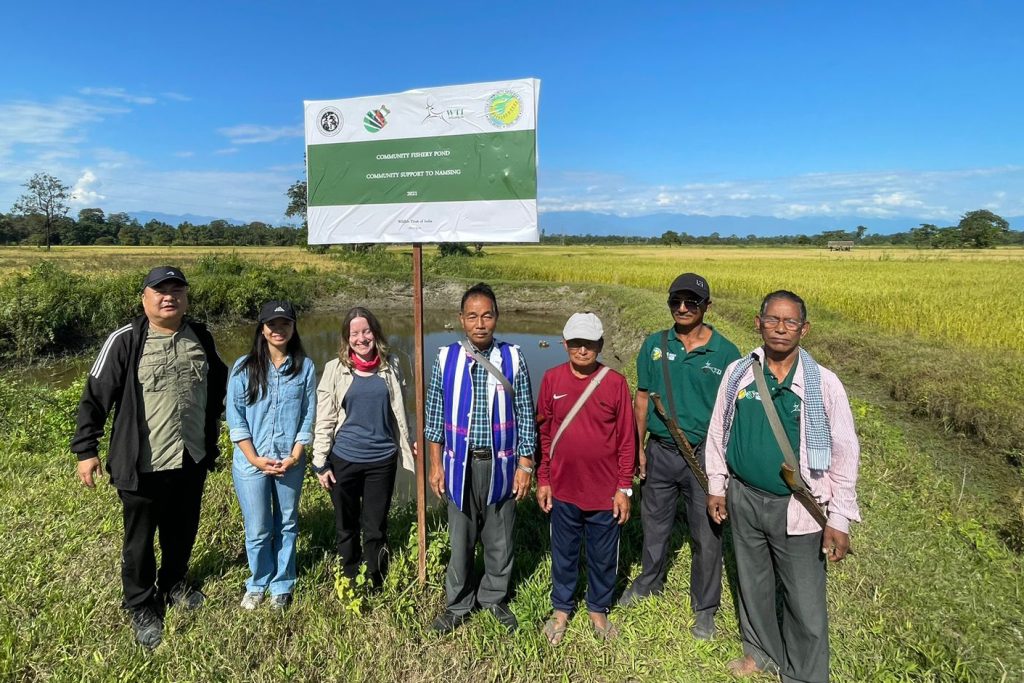
Dindi and the project team in front of a community pond supporting a fisheries initiative as an alternative livelihood | Photograph by WTI
“Humans are complex beings, so working with the community remains challenging regardless of how long you have spent your time with them. It is always a new layer of perspective and understanding with them.” Yet, it is precisely these interactions that make her work meaningful and interesting.
A Lesson in Patience
When asked what a typical workday looks like, Dindi laughs and candidly describes it as a lesson in patience. Reaching the field site often begins with a wait at the ferry crossing. While the river itself is about 200 metres wide, the journey can take far longer than expected.
“On a very rare lucky day, it usually takes me 10-15 minutes only to cross. But otherwise, I end up waiting for at least 2 hours at the dock for the ferry to be filled.”
Even days spent at her desk come with their own uncertainties. Working in a remote landscape vulnerable to seasonal flooding means that connectivity can never be taken for granted. “My day working from my desk ideally starts with a prayer, hoping I have a network connection and internet stability intact,” she jokes. Over time, these experiences have taught her to be more patient and resilient.
Fieldwork in the D’Ering-Dibru Saikhowa landscape is not without its challenges. Reaching villages often requires a ferry crossing followed by a journey along unpaved roads, a process made even more difficult during the monsoon season when rivers swell and flooding affects mobility and communication. For Dindi, some of the most demanding days are those spent navigating the landscape during heavy rains. “During monsoon, it becomes worse, and I dread going to the field,” she admits. Yet those same journeys often offer a unique perspective on the landscape she works to conserve.
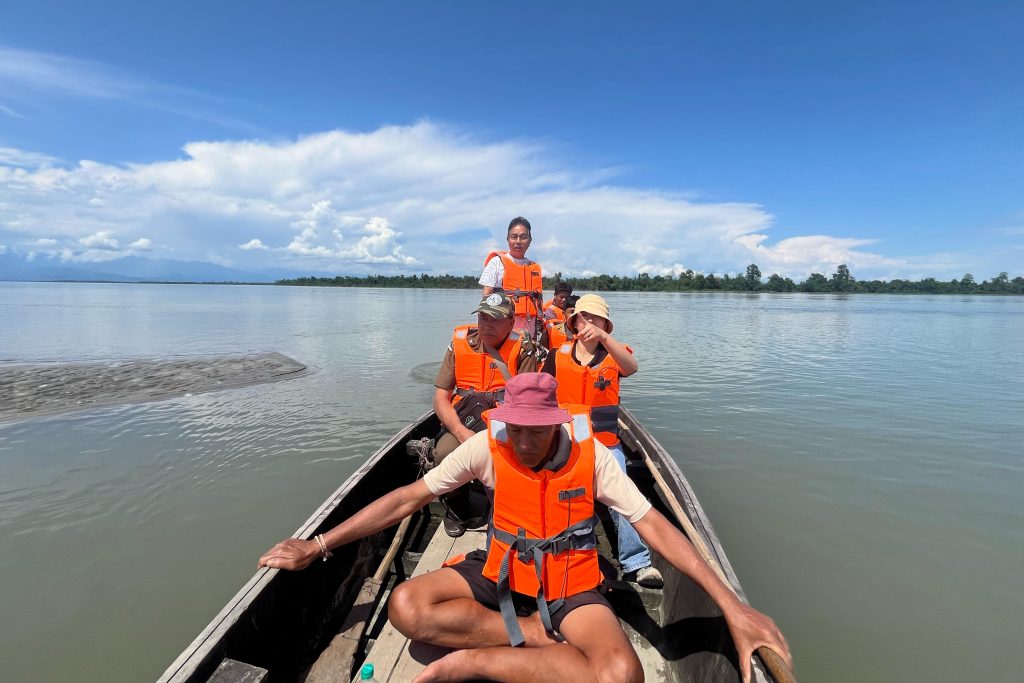
Team crossing the Siang River to reach the project villages | Photograph by WTI
Travelling across the river has also deepened her appreciation for the forces that shape both people and wildlife in the region. “When you are on the water, you are awestruck by the power of the river and start respecting land and life on land a little more,” she reflects. In this landscape, it is this river, the mighty Siang, that has shaped both the wilderness and the humans living alongside. The Siang changes course often, dictating the very nature of survival for both man and the wild.
Witnessing Change
Over the years, Dindi has witnessed firsthand how sustained conservation efforts can influence attitudes towards wildlife and conservation. She credits much of this change to WTI’s emphasis on partnership and participation.
“The local community has had a major influence in the conservation work, emphasising the role of partnership and community participation and making conservation an inclusive effort,” she explains.
One particularly meaningful memory stands out. “Witnessing the local community putting effort into establishing two nurseries with seed banks and saplings has been fulfilling,” she says. The saplings from the nursery are used to replenish the degrading habitat and also to act as shade trees for elephants when they are travelling through the corridor.
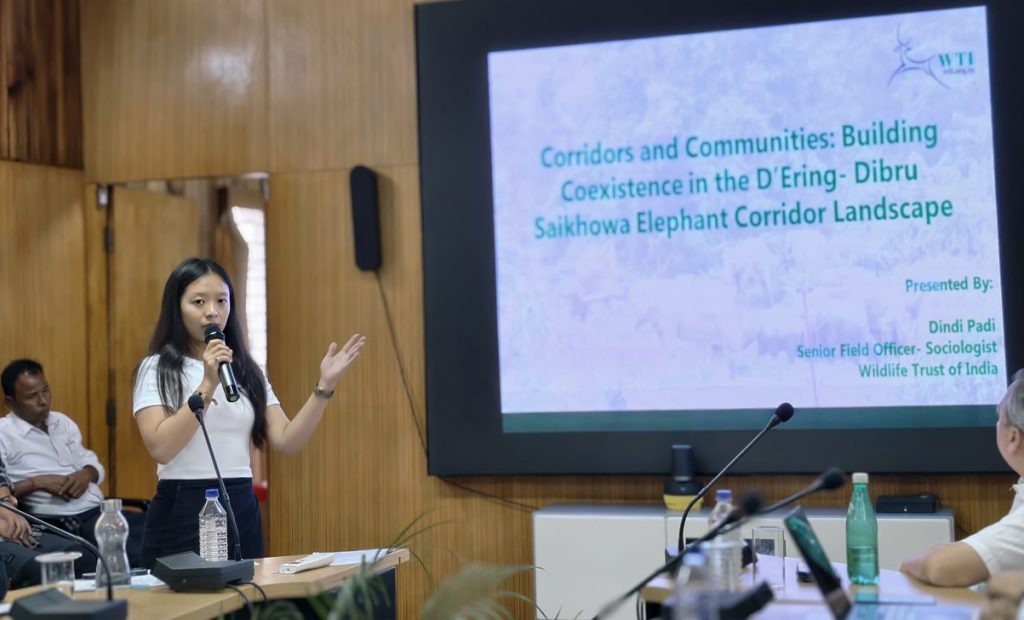
Dindi presenting on the role of community in the protection of the DDS wildlife corridor at the Annual Research Seminar organised by Dept. of Environment, Forest and Climate Change, Itanagar
Just Do It
For aspiring conservationists, Dindi’s advice is quite straightforward: just do it. Start where you are, and remain open to learning.
“Most conservation efforts take place beyond forests and species,” she says. “Stay curious, open-minded, respectful, and genuine with the effort and intentions, and it will open a path for you.”
Her journey through this field is a reminder that successful conservation is not just about protecting wildlife corridors and restoring habitats. It is also about understanding people, building trust and creating a shared vision for the future – one conversation at a time.
Story by Pallavi Ghosh, Intern, Wildlife Trust of India.