The Bear-ly Abominable Snowman
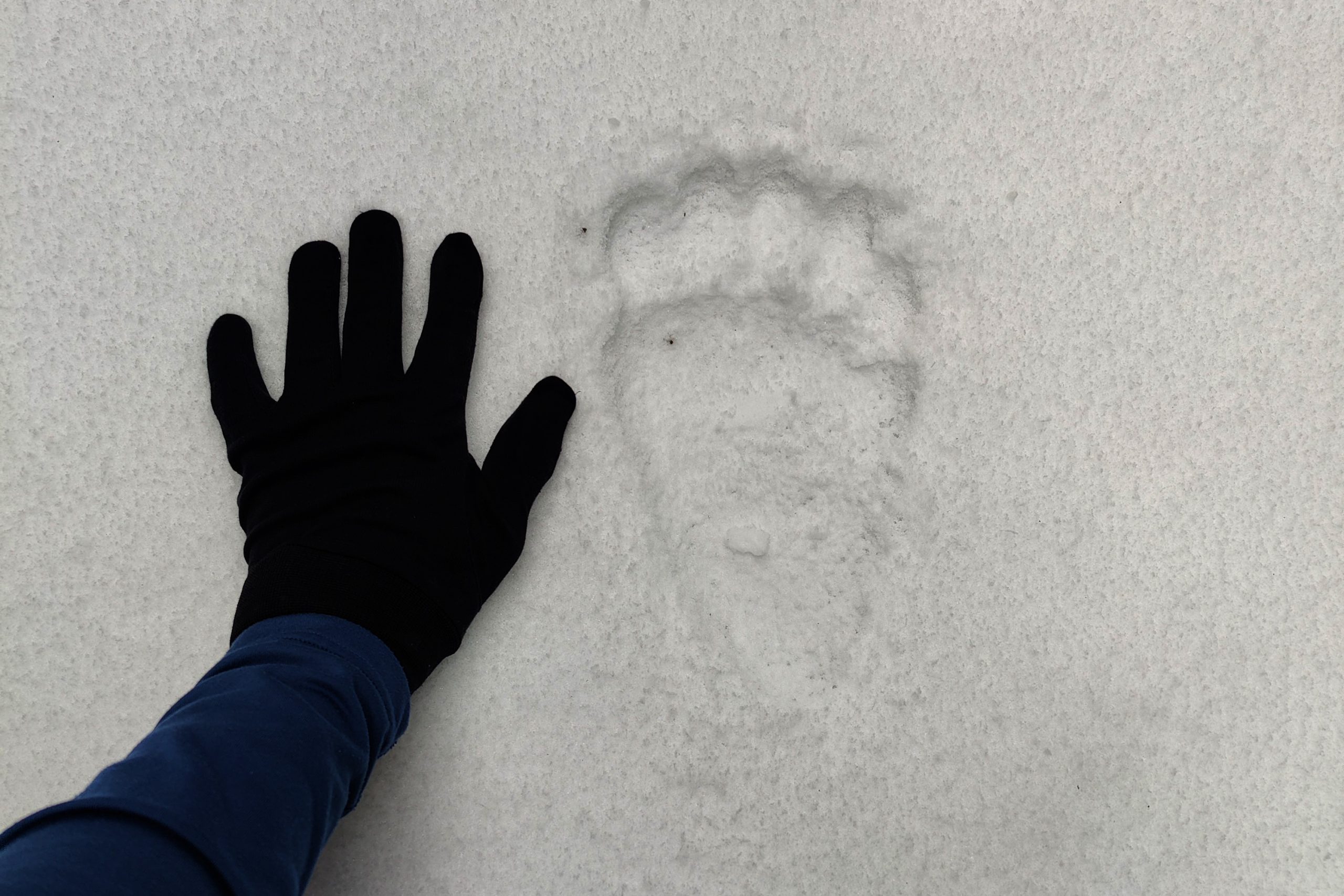
High above in the Himalayas, where the air thins and all you can hear is the wind, the snow has borne tracks of both brave men and magnificent creatures. One particular set of footprints has however triggered a thousand headlines, movies, several failed expeditions and shaped both faith and disbelief: the Abominable Snowman, aka the Yeti.
For most of the twentieth century, the Yeti existed in that strange grey space between legend and possibility. If you’re as fascinated by mythical creatures as I am, you’ve probably come across a few grainy photographs, read accounts of greats like Reinhold Messner and of expeditions launched in the hope of proving that something extraordinary existed. Anyone who’s been to the mighty Himalayas must agree that it is magical; but does it really have a magical snowman guarding it? To me, the idea around Abominable Snowman was never really about the monster itself; but always of curiosity and of adventure.
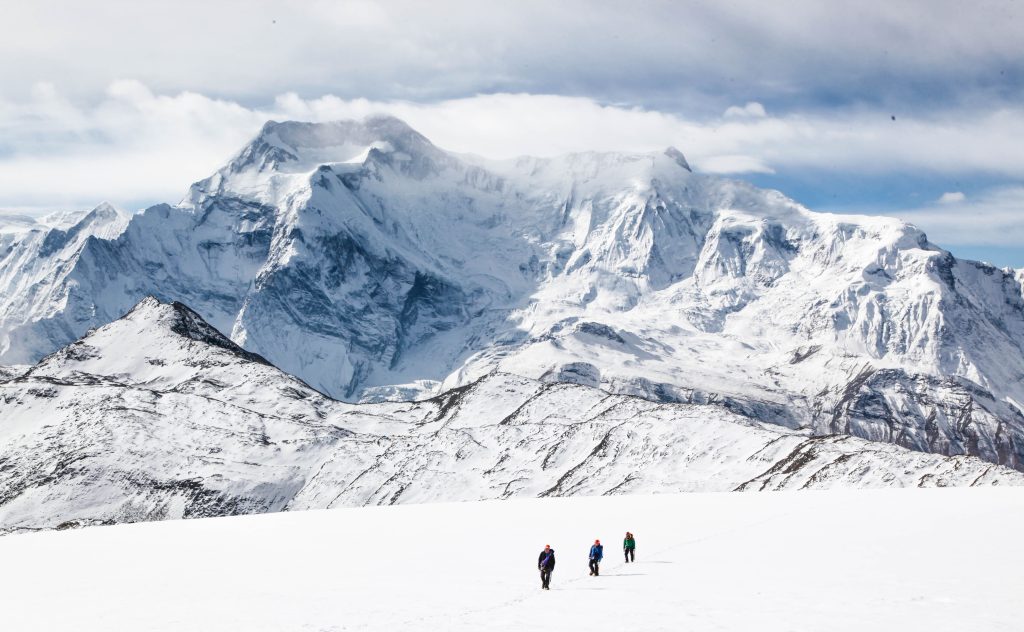
Trekking across the Himalayas | © Infinity Adventures/Pexels
As someone who now works in the field of wildlife conservation, I find it interesting how quickly we mistake the unfamiliar for the impossible.
Long before Western expeditions arrived with their cameras and theories, the people who belonged to these mountains already had names for the mystery. “Migoi,” the wild man. “Michê,” the man-bear. And “Dzu-teh”, the cattle bear. These were names earned because these animals were believed to occasionally raid livestock in high pastures. These names were documented behaviour and not folklore and definitely weren’t labels invented for visitors; they were everyday words for Himalayan communities describing something real.
It was the western explorers who folded all of this into a single, sensational idea: the Abominable Snowman, a towering, ape-like creature said to stalk the highest mountains on Earth.
The 1954 Daily Mail, the Abominable Snowman Expedition is one of the best-known chapters in this narrative. Team member Tom Stobart reported his own encounter during the expedition, an account later retold by journalist Ralph Izzard in his book ‘The Abominable Snowman’ based on the search.
Stobart wasn’t from the mountains, and he’d never properly seen the animal he was describing. His conclusion rested on ambiguous evidence, filtered through unfamiliarity and the hope that he’d found something extraordinary. However, the misidentification outlives the person who made it.
Even mountaineering royalty got pulled into the search with the possibility of being amongst the few who could get a chance to see the legend they created. Reinhold Messner, the first person to climb all 14 of the world’s mountains that exceed an elevation of 8,000 mts and the first solo ascent of Everest, without supplemental oxygen, spent years chasing his own Abominable Snowman encounters across the Himalayas. He eventually arrived at a far less mysterious conclusion: what people were seeing was almost certainly the Himalayan brown bear, an animal capable of moving on all fours and rearing up briefly on two legs, exactly the silhouette that turns a startled glimpse of an encounter into a legend.
For decades, the Abominable Snowman survived on ambiguity. Then, in 2017, that ambiguity ran out.
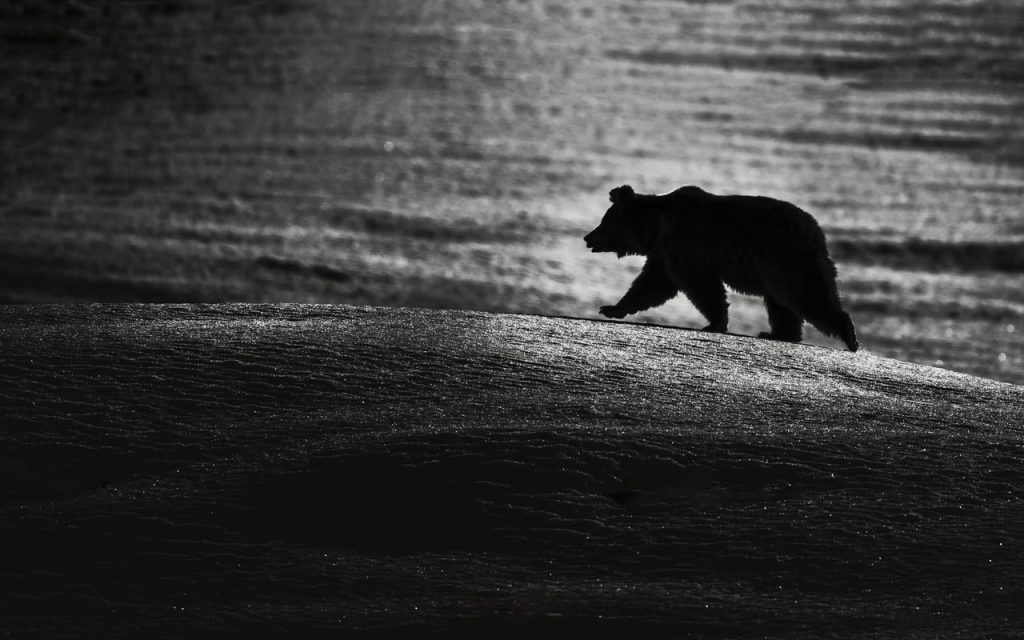
A Himalayan brown bear navigating the Himalayan snow | © Karamjeet Singh
A team led by geneticist Charlotte Lindqvist at the University at Buffalo conducted the most rigorous genetic analysis of collected Yeti material to date, sequencing mitochondrial DNA from nine samples of bone, tooth, skin, hair, and faeces held in museums and private collections across the Himalayas and Tibetan Plateau. The results were published in the Royal Society Proceedings B, offering the best evidence yet that the Abominable Snowman legend was rooted in Himalayan black and brown bears.
Of the nine samples, one particular sample of a tooth from a stuffed specimen turned out to belong to a domestic dog after all. Everything else traced back to Himalayan subspecies of brown bear and an Asian black bear. No hidden abominable primate at all. Just a very large, very real bear, doing what bears do at 4,000 meters.
As Lindqvist herself noted, the study didn’t just close a case; it opened one. Bears across this region are already vulnerable, with some populations critically endangered. And, somewhat ironically, the search for a mythical creature ended up giving scientists some of the first really solid genetic evidence. When researchers analysed the Himalayan brown bear’s mitochondrial DNA, they found these bears were the earliest-branching lineage among all living brown bears. Their data suggest that these bears split from other brown bear lineages around 650,000 years ago, during a period of intense glaciation. Over time, the rugged mountains of the Himalayas kept them isolated from neighbouring populations, including the Tibetan brown bear, which diverged much more recently.
Meeting the Animal Behind the Legend
So, why did this bear spend a century wearing a monster’s reputation?
Let’s start with the fact that it’s enormous. The largest mammal found in the Himalayan region. Its coat isn’t the deep brown people expect from a “brown” bear at all. It ranges from pale sandy gold to rusty red, a colouring scientist will call isabelline, and also the word behind the subspecies name, Ursus arctos isabellinus. A powerful hump rises over its shoulders, the result of a body built almost entirely for digging. Its heavy, non-retractable claws are perfectly suited to tearing through soil and rocky ground in search of roots, insects, and whatever else it can find. This is an animal shaped by a landscape that rarely makes survival easy.
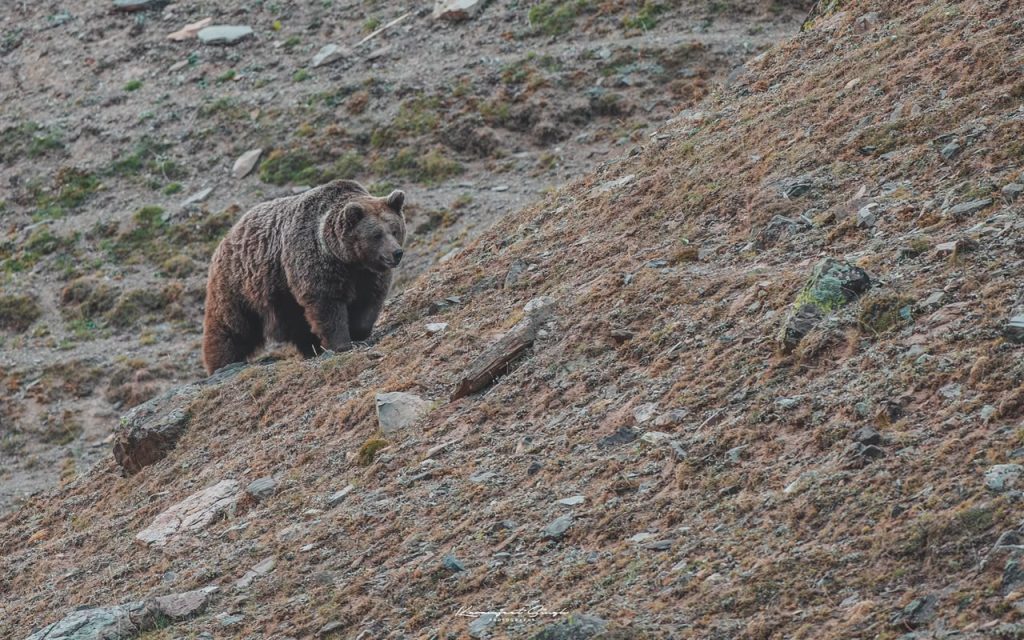
An adult Himalayan brown bear | © Karamjeet Singh
The Himalayan brown bear lives above the treeline, in open alpine meadows and valleys between 3,000 and 5,500 meters, scattered across the western and central Himalayas of Pakistan, India’s Ladakh and Himachal Pradesh, Nepal, Tibet, and Bhutan. It’s a true omnivore, making the most of whatever the landscape has to offer. It grazes on grasses and roots, digs for insects, eats berries when they’re available, and, when the land has little else to offer, it turns to livestock. This habit likely earned it the name ‘cattle bear’ among locals long before the Yeti myth ever travelled west. Come October and November, it disappears into a den for hibernation and doesn’t resurface until April or May, a seasonal vanishing act that probably didn’t hurt its reputation for mysterious disappearances either.
There’s a certain irony in how the Abominable Snowman story ends. I may not be half as cool as Tom Stobart, but I have to say I’ve been blessed with many sightings of the Himalayan Brown Bears or the Abominable Snowman, should I say? I have to say that the true animal is more remarkable than the myth it was mistaken for. This isn’t an imaginary creature dreamed up in the fog but a genuinely rare, endangered subspecies. As I write this today, these remarkable bears are being squeezed by habitat loss and human conflict at some of the harshest altitudes on Earth.
Conservation initiatives in India, Pakistan, Nepal and Bhutan have highlighted the importance of community participation in reducing human – bear conflict. Yet, translating this understanding into action requires interventions that respond to the realities of communities living alongside bears, where livestock losses, food availability and competing land use can turn the situation into conflict.
In India across parts of Drass and Lahaul, Wildlife Trust of India’s RAP support has enabled local conservation practitioners to tackle human – bear conflict by bringing communities together to address its underlying causes while safeguarding livelihoods and Himalayan brown bear populations.
I want to highlight two projects that particularly show how a small, quick aid can stop a few incidents of conflict from becoming a crisis. In Goshan, Drass, Muzammil Hussain addresses how bears had been raiding livestock, and losses were rising. Within three months, three bear-proof corrals were built for households that had been hit hardest. They have cement-plastered stone walls, doors with no outer handle, spiked vents, anti-dig foundations and reinforced roofs. This matters because livestock loss is what turns tolerance of bears into retaliation. Camera-trap data will be analysed to confirm how well the design works.
In Jasrath, Lahaul, where crop damage is still minor, Aditi Patel’s team is acting early with ANIDER deterrents, camera traps and CCTV, alongside vegetation surveys and bear scat collection to understand what draws bears to farms. Along with a children’s theatre event “Living with Bears”, the team shared its findings with the Lahaul Forest Division and is advocating for a group-fencing scheme that no Lahaul village has yet put into practice.
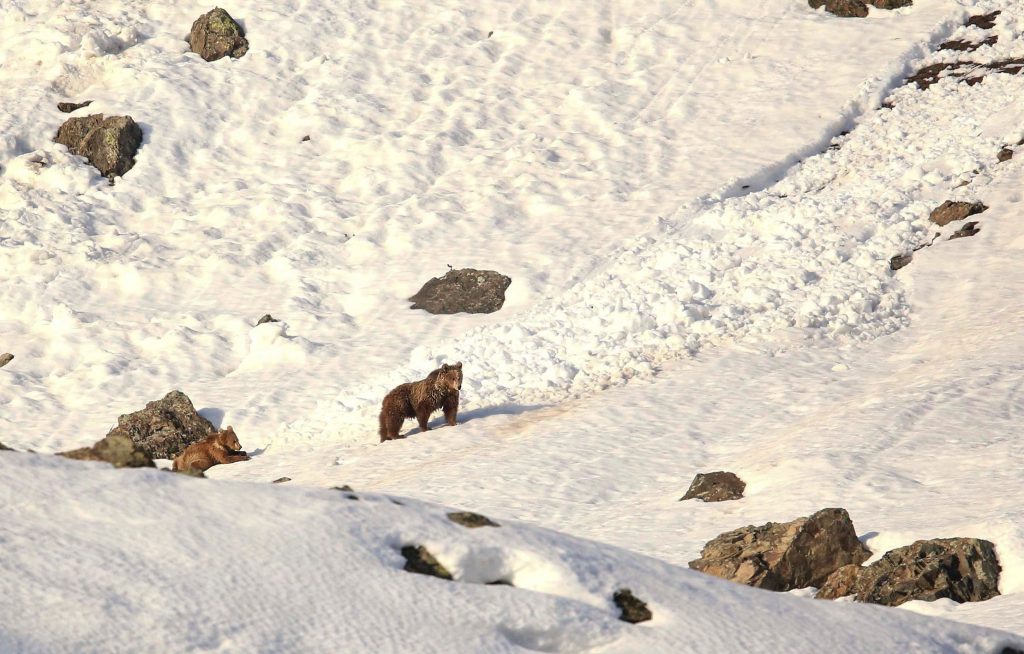
Himalayan brown bears photographed in Drass, Kashmir | © Surya Ramachandran
Today, protecting the Himalayan brown bear means looking beyond the legend and confronting the realities of sharing a landscape with a large carnivore. It means listening to the concerns of the people who live alongside these bears and co-creating practical solutions to prevent conflict before it escalates. In Drass and Lahaul, WTI’s Rapid Action Project partners demonstrate how timely, targeted support can help make this possible, protecting livestock and livelihoods while giving bears a better chance of survival.
For me, this brings the story full circle. I have always been fascinated by how quickly we mistake the unfamiliar for the impossible. Perhaps the most meaningful conservation stories are not about discovering something new, but about listening, understanding, and learning to live alongside what has been there all along.
The Abominable Snowman was never truly abominable. What began as a mystery of the mountains has led us to an animal far more remarkable than the legend itself: a bear whose ancient lineage has endured millennia of change, but whose future is increasingly threatened by habitat loss and human – wildlife conflict. Perhaps the real lesson of the Yeti is not that there was nothing extraordinary in these mountains, but that we were looking at the extraordinary all along, without quite understanding it.
Story by Habeeba Fathima, Wildlife Trust of India.