Lighting the way towards human-elephant co-existence in Poothadi Grama Panchayat, Wayanad
Wayanad is a mosaic of dense forest cover, lush coffee estates and vast agricultural fields. In this shared terrain, human settlements fringe forest boundaries, creating an environment where elephants move through backyards and plantations naturally. This overlap sets the premise for frequent, human-elephant interactions. As these gentle giants move along feeding grounds, they cross roads, paddy fields and village lanes, often under the cover of darkness. When unlit paths hide an elephant’s presence, a routine walk home can turn into a sudden, defensive encounter. Understanding communities, highlighting their challenges and identifying critical locations across this fragile, interwoven landscape becomes essential to protecting lives of both humans and elephants.
I Didn’t See That Coming
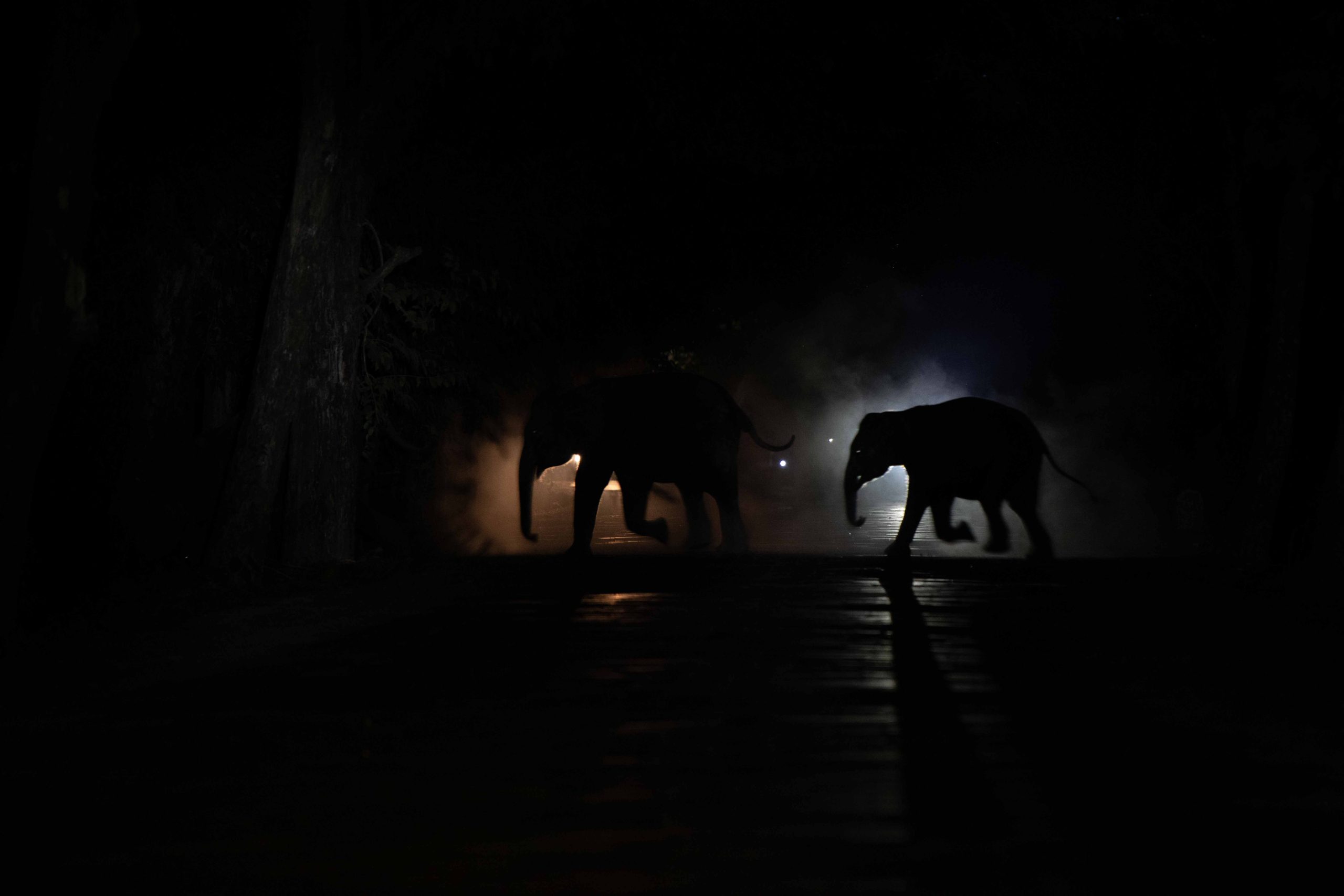
Speaking with the victims who had close encounters with wild elephants, I found a common thread. They said, in one way or another: “I didn’t see the elephant.” When undisturbed, elephants usually take the easiest and most familiar routes while moving between plantations, and these routes frequently pass through roads and other areas of human habitation. When people encounter elephants unexpectedly, particularly at night, the lack of visibility can turn an otherwise avoidable encounter into a dangerous situation.
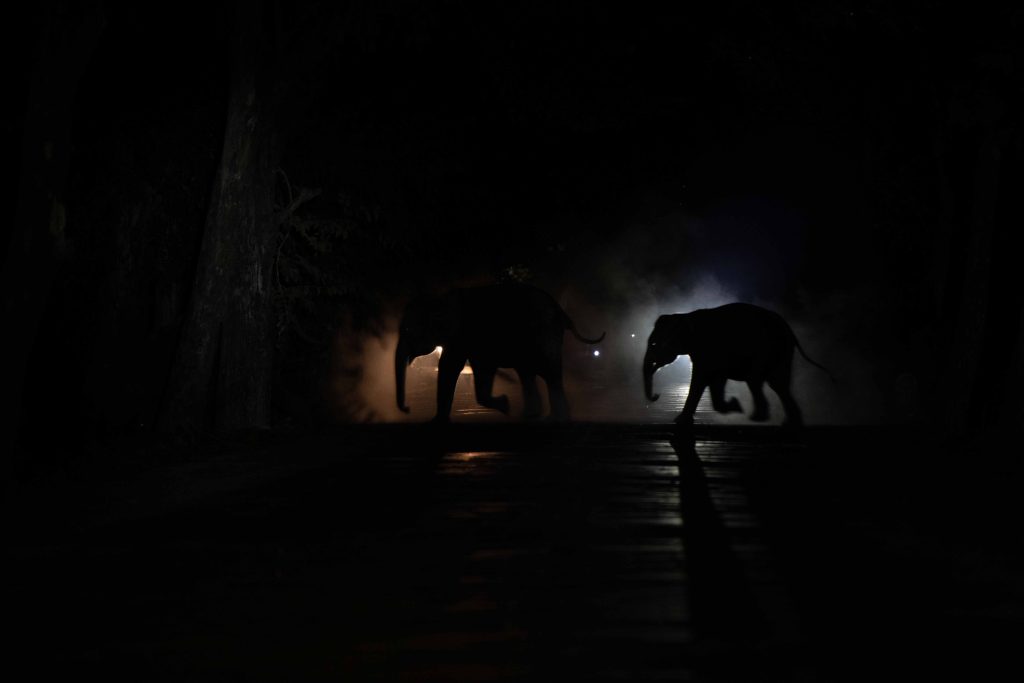
Representative photograph of an elephant crossing road at night | Photograph by Anujit Basu
28 January 2024 (10:00 PM): A 15-year-old boy was attacked by a tusker while returning home with his friends. They did not notice the elephant standing in a coffee plantation adjacent to the street, until they had come dangerously close. Panicked, the friends scattered in different directions. This boy however lost footing while trying to flee, startling the elephant, which then struck him with its trunk. Although people generally avoid going outside after dark, this was an unfortunate, accidental encounter. Without streetlights or torches, spotting the elephant in the dark was really hard.
24 May 2025 (11:00 PM): A 54-year-old man was attacked and injured by a lone tusker while returning home after collecting fodder for his cattle. It was raining heavily, and the road was pitch black with no streetlights. As he walked along his usual route, he suddenly found himself face-to-face with an elephant standing beneath a mango tree. Startled by his sudden presence at close range, the tusker turned and charged, knocking him to the ground.
14 November 2025 (1:30 AM): A 16-year-old boy was returning home after attending a wedding when he unknowingly came close to a tusker feeding in a paddy field. The boy did not see the elephant until he was already within close proximity. Startled by the sudden encounter, the elephant charged at him. The boy ran to escape, but fell while fleeing and sustained minor injuries.
We Don’t Step Out After Dark
The lack of visibility has created anticipatory fear among forest-fringe communities, where residents hesitate to venture outside after dark because of the possibility of encountering elephants. During emergencies, transporting a sick member at night forces residents to endure immense stress, driven by the constant fear of encountering an elephant in the dark. Although the three incidents occurred at different times and under different circumstances, they share a similarity: the people involved, did not see the elephants before coming dangerously close to them. Darkness, heavy rain, dense vegetation, and the absence of streetlights or torches significantly reduced visibility.
In each case, the elephant appears to have been startled by the unexpected presence of a human at close range. Sometimes, the danger begins not with a deliberate approach, but simply because neither the person nor the elephant noticing the other in time. It’s not the night that scares people; it’s what might be waiting in the darkness. Staying back home after the sun sets have become compulsory due to this perceived fear.
Lighting up the streets of Poothadi Grama Panchayat
Poothadi Grama Panchayat, located in the north-eastern part of Wayanad, consists of three administrative villages – Irulam, Nadavayal, and Poothadi. The area falls under the jurisdiction of Irulam Forest Station under Chedleth Range of the South Wayanad Forest Division. The area is an identified hotspot for Human-Elephant Negative Interactions based on ex-gratia data from 2017–2021, during which a total of 427 cases were reported. In addition, a high number of complaints were filed during an Adalath held to raise concerns regarding the issue in the area (an event organised by the Panchayat to record people’s challenges related to Human-Wildlife Negative Interactions).
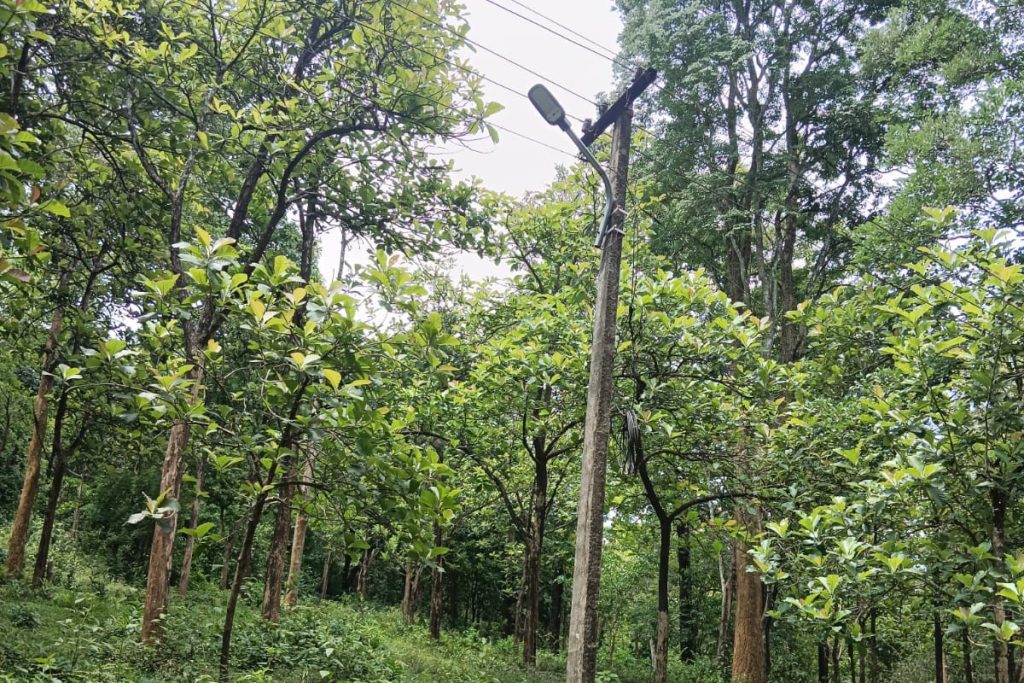
Solar street lights along the forest fringes of Poothadi Grama Panchayat, Wayanad
Considering the threat, our team with the Wayanad Conflict Mitigation had conducted two consultation meetings with Bharana Samithi and took the decision to provide streetlights to pilot the intervention in Poothadi Grama Panchayat. The distribution event was inaugurated by the President of Poothadi Grama Panchayat, and streetlights were handed over to the respective ward members by the Range Forest Officer, Chethalayam. The program saw active participation from all ward members, DRFOs, officials from the Forest Department and the Wildlife Trust of India (WTI) team.
In response to requests from Panchayat representatives, the Grama Panchayat and Forest Department officials, mutually identified locations where the streetlights were to be installed. Following a formal request for technical support from the Grama Panchayat, the WTI team conducted a field survey and joined Forest Department officials to map out specific conflict areas. Mariyanad and Chundkolli were identified as two high-risk hotspot wards, both having historically recorded casualties after dark due to unlit roads. Roads connecting to settlements adjacent to the forests were also considered to be intervened. Streetlights were fixed to the already present electric posts of Kerala State Electricity Board (KSEB), by the KSEB workers. The Panchayat will bear the electricity charges incurred through the operation of the lights and will also be responsible for their overall maintenance.
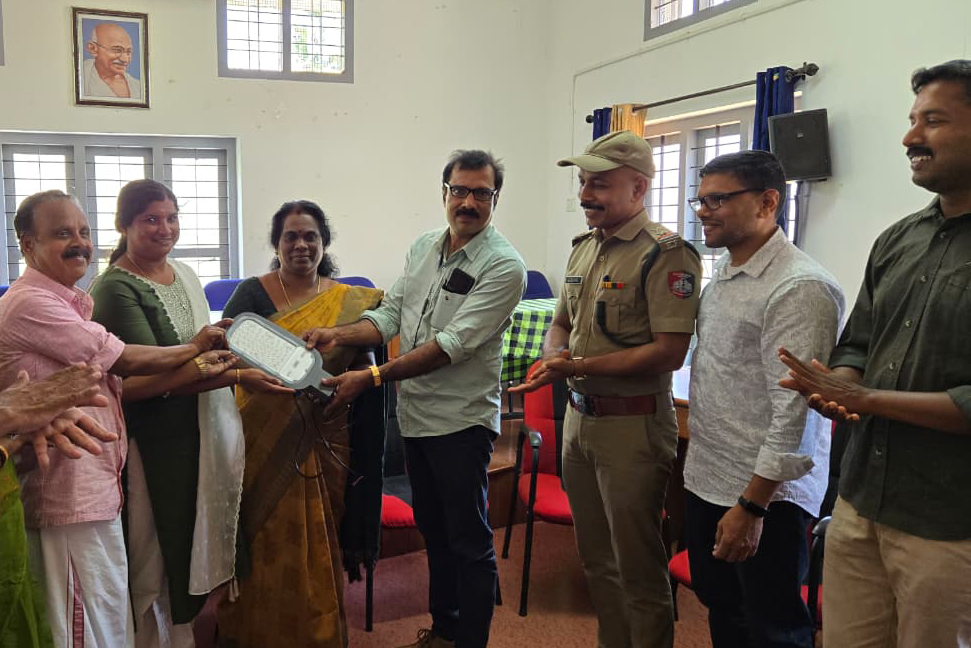
Solar light distribution in Poothadi Grama Panchayat
An illuminating Implementation
Today, all streetlights are fully functional. After the Installation, no reports of close encounters with the elephants in the area have been recorded. A total of fifteen Electric street lights (50w LEDs) have been installed as a preventive measure to reduce close encounters between people and elephants that could lead to negative interactions.
It was more than just streetlights driving away the dark, it is light driving away fear within the community. Over time and collectively, these interventions can significantly reduce the negative impacts of human-elephant interactions across the landscape. By preventing human casualties and easing fear, this intervention fosters a positive attitude towards elephants, benefiting both elephants and the local community. It has brought back a sense of safety, eased night-time anxiety, and created a bright path toward coexistence.
Story and photographs by Sujnan MK, Biologist, Wayanad Conflict Mitigation Project, Wildlife Trust of India.