From Commitments to Change: How North Bengal’s Tea Estates are Making Space for Elephants
In North Bengal, an elephant corridor does not always look like a prime forest.
These spaces can be a part of a tea garden, worker settlements, a highway or railway tracks. For elephants, these spaces are part of the larger landscape connecting forest patches across the Terai and Duars, used by them for generations. Forest patches, tea gardens, roads, railways, canals and settlements, all exist within the same elephant-use landscape—and what happens in one part of it can influence what happens elsewhere.
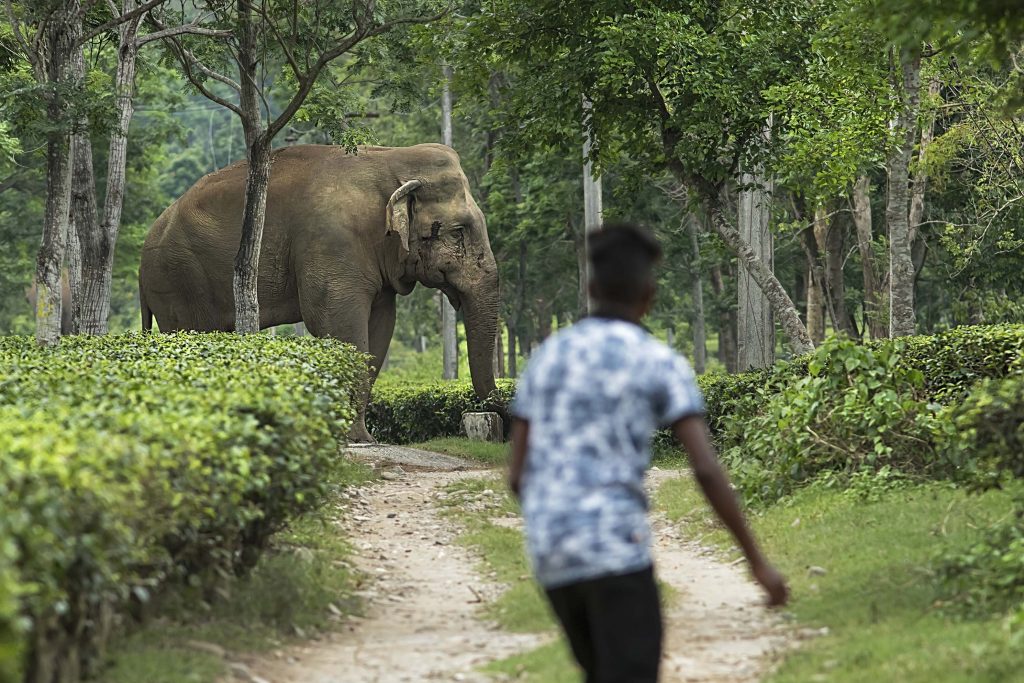
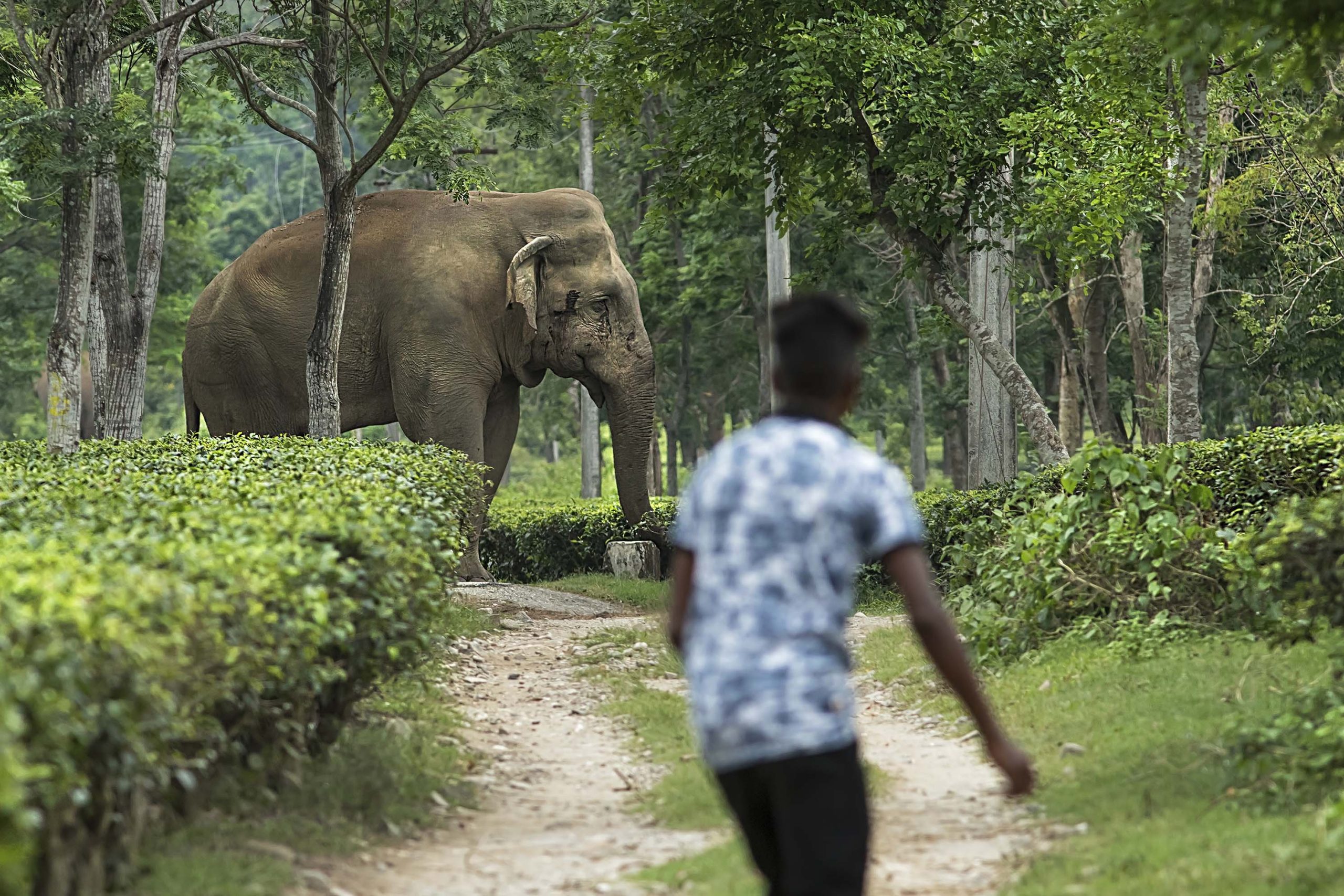
Confrontation between humans and elephants in Marapur Tea Estate, North Bengal | Photograph by Avijan Saha
In 2019, under Wildlife Trust of India’s (WTI) Right of Passage: Elephant Corridors Project, we began to look closely at what was going on in the tea estates within the corridors – and what could possibly be done to keep these routes open and safe, in collaboration with SPOAR, our long-term conservation partner as a ‘Green Corridor Champion’.
What followed was not a single intervention, but a long-term journey of understanding the landscape, engaging with the local communities, monitoring elephant movement and working together towards ensuring co-existence.
And in 2026, the landscape is finally showing the signs of change.
It started with a conversation
The first step was to understand the problem on the ground.
A year-long field survey undertaken by SPOAR and WTI in 2019 across eight identified elephant corridors of North Bengal documented how tea estates were being used by elephants. The survey highlighted barriers and practices that potentially impeded their movement. Among the most serious concerns was the extensive use of razor-wire fencing and trenches. In some locations, barriers placed across elephant movement routes might have been redirecting herds towards labour lines and human settlements—turning a measure intended to keep people safe into a potential source of risk.
The findings were brought forth to the people who could make a difference.
In August 2019, on World Elephant Day, almost 50 representatives from tea estates, along with the Forest Department, tea associations, administration and conservation organisations, came together for a consultative workshop, aimed towards securing Right of Passage for elephants through tea estates in Northern West Bengal.” The objectives were deliberately straightforward- identify the problems, find practical solutions and explore ways of reducing losses while ensuring safe passage for elephants.
It was an important shift in approach. Tea estates were not just thought simply as places where negative interactions with elephants occurred. They were finally being recognised as partners in maintaining safe connectivity.
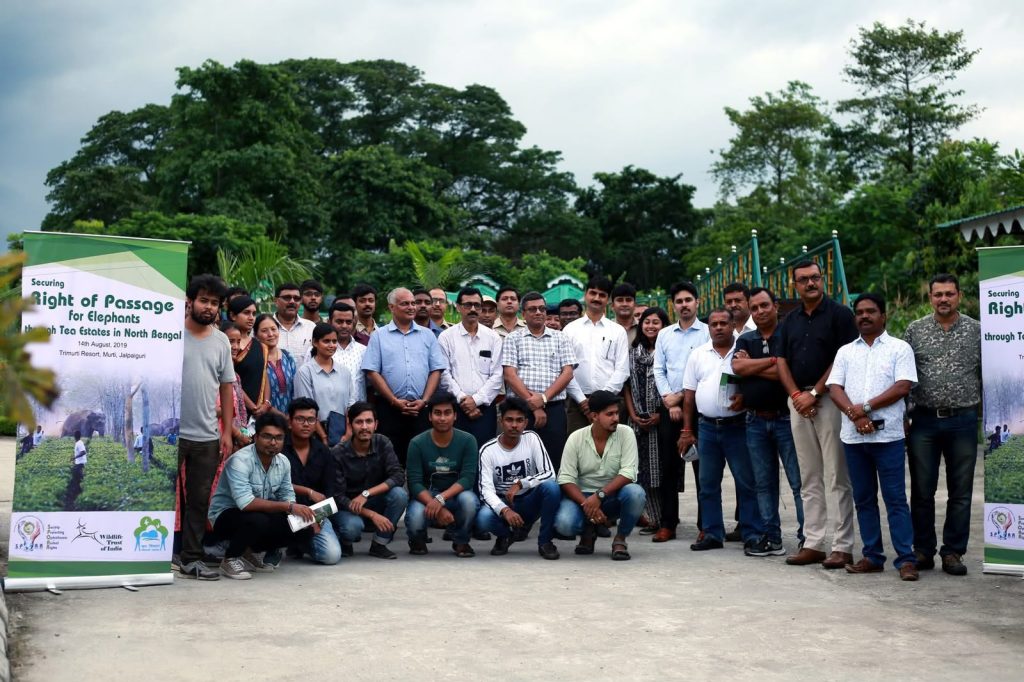
Workshop on Securing Right of Passage through Tea Estate of North Bengal, Aug 2019 | Photograph by SPOAR/WTI
Steps towards conservation commitments
The 2019 discussions brought together perspectives from varied stakeholders, that were not often considered in the same room—tea garden managers, Forest Department officials, local communities and conservation practitioners.
The razor-wire fencing was a particularly important concern and a serious threat to elephants. Its sharp edges can cause severe injuries when elephants attempt to cross or negotiate the fence, while barriers placed along traditional movement routes can divert elephants towards roads, labour lines and settlements. Tea garden representatives shared examples of ongoing initiatives of leaving areas open for elephants and in some cases, committed to removing existing razor wire or not installing it in the future.
The workshop itself was built around finding shared solutions: ensuring safe elephant passage, reducing human and property losses, and promoting elephant-friendly management practices in tea estates. The objective was never to create a one-time agreement. It was to create a culture of continued engagement.
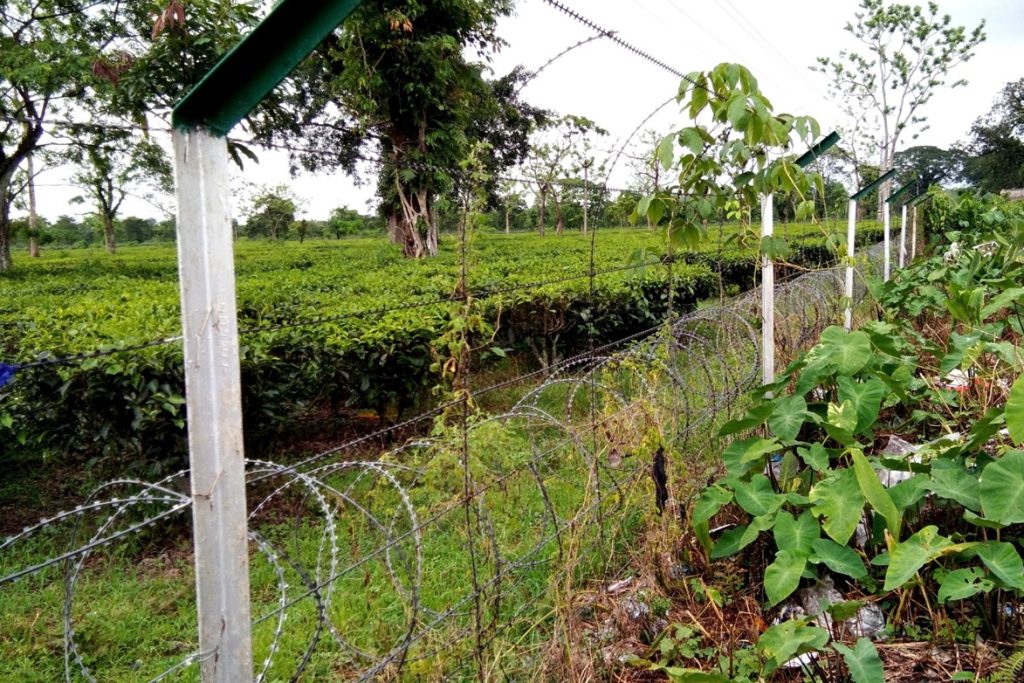
Razor blade fencing alongside tea estates across North Bengal | Photograph by Upasana Ganguly/WTI
A push for a change
Conservation success rarely comes from a single workshop or event. The real change happened in the years that followed. While WTI, SPOAR, the Forest Department and tea estate management continued to engage with the landscape, elephant corridors were also being regularly monitored. Tea estate managers, workers and communities were sensitised to the importance of keeping elephant movement routes open.
At the same time, Primary Response Teams (PRTs) emerged as an important part of the response system. These local teams became the first responders when elephants entered human dominated spaces—helping alert people, manage crowds, inform about elephant movement and reduce negative encounters. PRTs also became the eyes and ears on the ground, helping identify problematic barriers and other risks.
What began in 2019 as a proposal to establish response teams, had by 2026, evolved into an established community-based response network.
Seven years later, hope in the form of change
In 2026, SPOAR and WTI undertook a reassessment of the tea-estate landscape. It provided something that conservation efforts often struggle to demonstrate: a measurable change over time.
In 2019, 291.7 km of fencing had been mapped across the assessed landscape. By 2026, this had reduced to 104.5 km of fencing across the same landscape reflecting a substantial reduction. . This change reflects a combination of factors, including fencing that was removed, deteriorated or not reinstalled, rather than removal alone. Most strikingly, there was approximately 74.2% decline in razor-wire fencing, from about 134.7 km to 34.8 km.
The numbers were more than a statistic.
It represented years of conversations with tea estate managers.
It represented repeated awareness about the risks posed by razor blade fences.
It represented commitments made in 2019 being carried forward.
Finally, and most importantly, it represented a growing recognition that protecting an estate does not have to mean closing an elephant’s route.
The work did not end with the numbers
The 2026 reassessment also revealed that the next generation of risks needs attention. Electrical infrastructure is emerging as a significant concern. The surveys documented 54 power-lines, below the height of 13 feet with 47.4% of them below 10 ft, making them of very high risk and extremely fatal for an elephant.
This changed the question we were asking.
From “Where is the fence?”, the focus shifted to “What could prevent an elephant from moving safely through this landscape?”
The ongoing surveys have therefore become a starting point for joint verification and corrective action involving tea garden management, the Forest Department, West Bengal State Electricity Distribution Company Limited (WBSEDCL) and conservation partners. In other words, the work has moved from identifying risks to creating a system for tracking them through to closure.
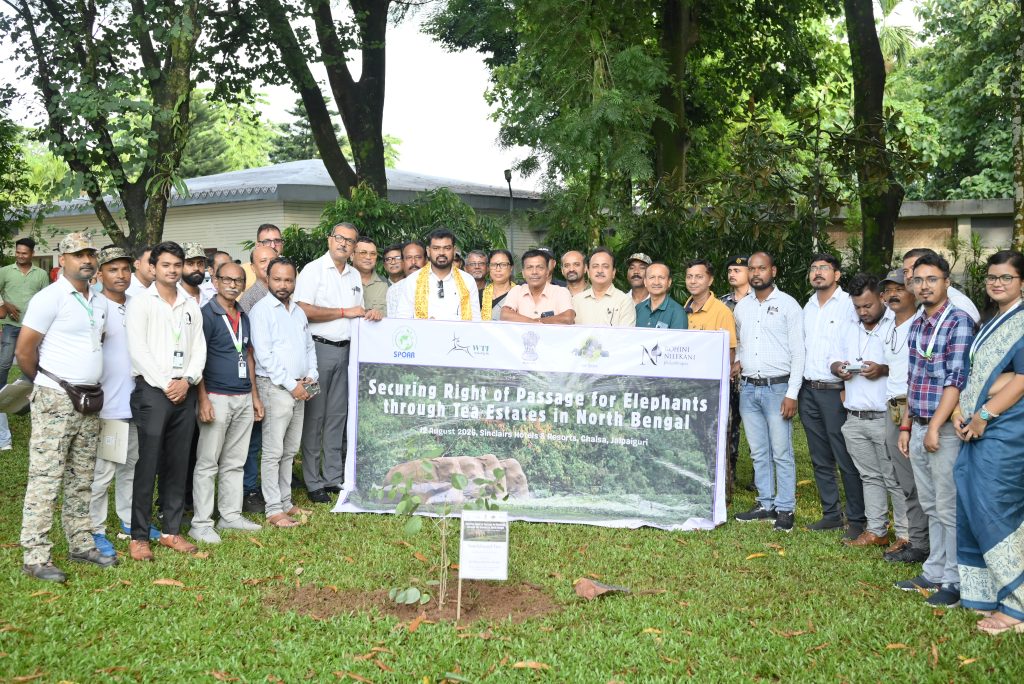
Stakeholder consultation for securing right of passage for elephants through tea estates of North Bengal, Aug 2026 | Photograph by SPOAR
Celebrating the gentle giant
This evolution has also found a wider public platform through WTI’s Gaj Utsav Project, a celebratory initiative which brings together communities, institutions and policymakers around the idea of securing the Right of Passage for elephants. The emphasis has been on shared ownership and coexistence.
During the August 2026 stakeholder consultation in Chalsa, Jalpaiguri in the presence of West Bengal’s Hon’ble Forest and Environment Minister, the Elephant-Friendly Tea Estate Charter, was introduced. The Charter was envisioned not as a set of rules imposed on tea estates, but as a shared working framework—to keep known elephant corridors open, review hazardous fencing, secure electrical infrastructure, strengthen preparedness in labour lines, manage crowds responsibly, and maintain regular monitoring and information sharing. For the team, that was a significant evolution from where we began.
In 2019, we were asking stakeholders to recognise the problem.
In 2026, we are talking about shared standards, shared responsibilities and measurable action.
This Charter gives that conversation a framework. The reassessment gives it evidence. And the people working in these landscapes give it the possibility of lasting change.
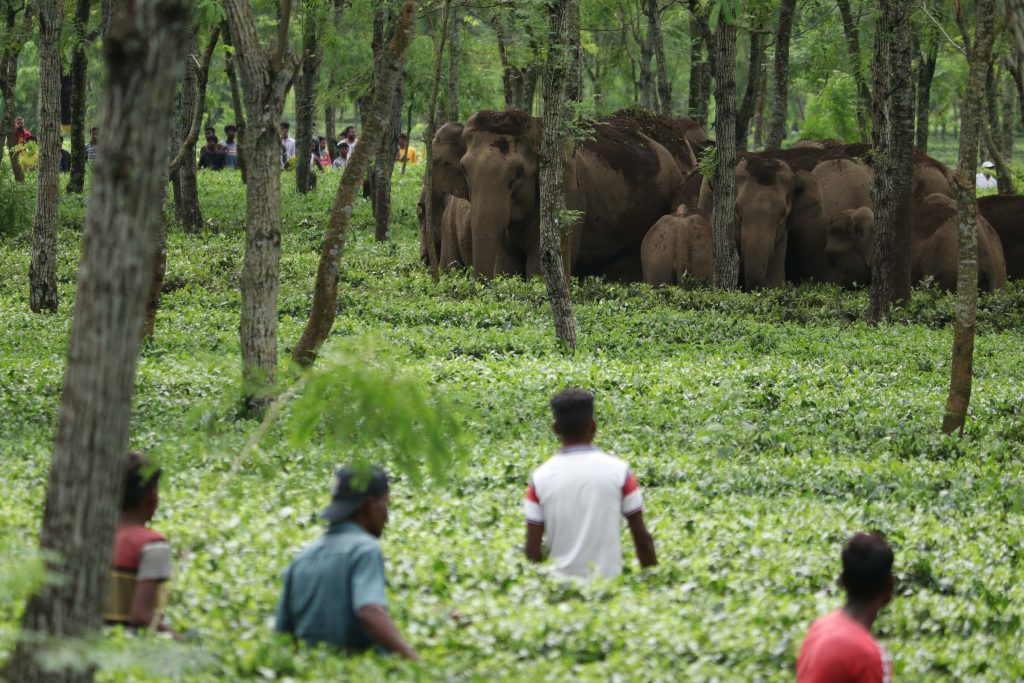
Elephants in tea gardens in North Bengal | Photograph by Sourav Mondal
Habitats do not connect themselves, people do
Probably that is the reason why the theme of Wildlife Week 2026: “Connecting Habitats, Thriving Wildlife”—feels particularly relevant for North Bengal.
A forest officer, a tea estate manager, a field worker, a community responder, a conservationist and an elephant may all occupy the same landscape, often at the same time. The key challenge is to ensure a safe space so that an elephant can pass through without turning its journey into a crisis for people—or itself.
The journey from 2019 to 2026 has shown us that conservation progress is often not linear. It is built through repeated conversations, field verification, changing mindsets and practices and, above all, persistence. Perhaps most encouraging part of the journey has been the willingness of different groups to sit together and ask what still needs to change. While there is still work to be done, North Bengal has already demonstrated how conservation is a shared responsibility.
Story by Upasana Ganguly, Senior Manager and Programme Head, Wildlife Corridors Projects, WTI